

Ready & Packaged Foods
All →Vegetables & Legumes
All →Desserts & Confectionery
All →Meat & Protein
All →Grains & Bakery
All →Beverages
All →Milk & Dairy
All →

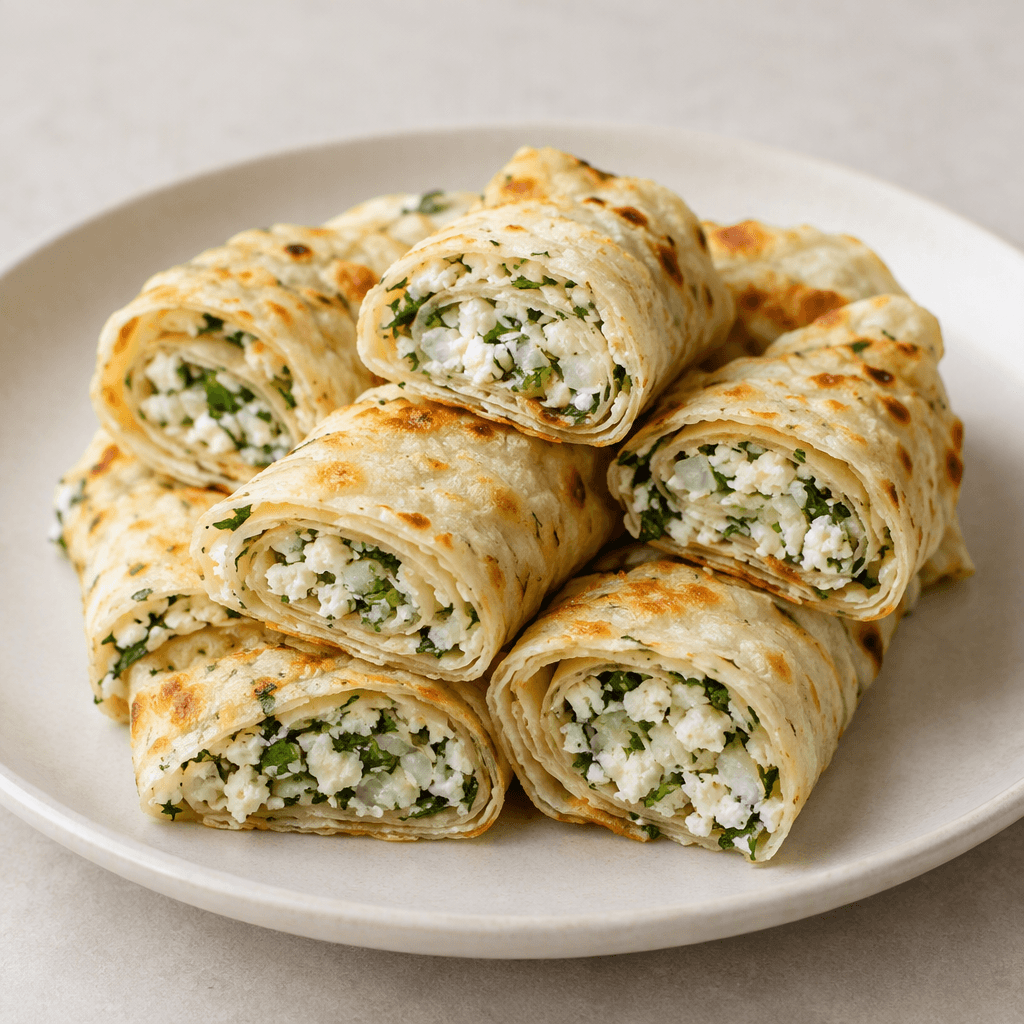
Cheese sikma Calories
Cheese sikma is a traditional Turkish wrap made with flatbread and a filling of melted cheese.
In season: Spring · Summer · Autumn · Winter
CALORIES · 100 G
GI
POTASSIUM · 100 G
FIBER · 100 G
Quick answer
1 piece (medium) of Cheese sikma (120 g) has 312 calories. That works out to 260 calories per 100 g. It contains 38.4 g of carbs, 12.6 g of protein, 12 g of fat and 2.6 g of fiber. Its 264 mg of Calcium covers 26% of the Daily Value. Its glycemic index is 65 (medium), so it raises blood sugar at a moderate pace.
Cheese sikma Nutrition Facts
Selected: 1 piece (medium) · 120 g
312
KCAL / 120G
Carbs
38.4g
· 14% DV
Protein
12.6g
· 25% DV
Fat
12g
· 15% DV
Fiber
2.6g
· 9% DV
DV is the share of the daily value covered, on a 2,000 kcal reference diet.
Calories come from: Carbs 49% · Protein 16% · Fat 35%
Cheese sikma nutrition facts table · 1 piece (medium) (120 g)
| Nutrient | Amount | % DV |
|---|---|---|
| Calories | 312 kcal | |
| Total fat | 12 g | 15% |
| Saturated fat | 6.24 g | 31% |
| Trans fat | 0.06 g | |
| Sodium | 504 mg | 22% |
| Total carbohydrate | 38.4 g | 14% |
| Fiber | 2.6 g | 9% |
| Protein | 12.6 g | 25% |
Calories: Calories measure energy. Average daily need is 2,000 kcal. Excess calories are stored as fat, too few cause weight loss.
Carbs: Your body's primary energy source. The brain runs exclusively on carbs. Daily need: 275g.
Protein: Essential for muscle repair and cell growth. Daily need: 50g. Keeps you full and boosts metabolism.
Fat: Needed for hormone production and vitamin absorption. Daily need: 78g. Limit saturated fats, choose unsaturated.
Fiber: Critical for digestive health and satiety. Daily need: 28g. Stabilizes blood sugar, lowers cholesterol.

Log this food in EatBetter
100,000+ people use it
- Get your daily calorie target
- Snap your meal, log it in seconds
- See every vitamin and mineral

📸 Scan the code to get the app free.

How Many Calories in 1 Medium Cheese sikma?
| Serving | Amount | Calories |
|---|---|---|
| 1 piece (medium) | 120 g | 312 kcal |
| ½ piece (half) | 60 g | 156 kcal |
| 1 piece (small) | 80 g | 208 kcal |
| 100 g | 100 g | 260 kcal |
| 1 serving (medium) | 150 g | 390 kcal |
| 1 piece (large) | 180 g | 468 kcal |
| 1 serving (large) | 200 g | 520 kcal |
| 2 piece (double) | 240 g | 624 kcal |
Calculated from 260 calories per 100 g.
Frequently Asked Questions About Cheese sikma
What is cheese sikma?
Cheese sikma is a Turkish flatbread wrap, usually made by filling thin cooked yufka with cheese and rolling it up. It is commonly served warm, when the cheese softens inside the bread.
How do you make cheese sikma?
To make cheese sikma, cook thin yufka on a griddle or in a dry skillet, add grated cheese while it is still warm, then roll it tightly. Chopped herbs or onion can be added to the filling before rolling.
Where does cheese sikma come from?
Cheese sikma comes from the Turkish tradition of making sikma, especially associated with Mersin and nearby parts of southern Turkey. The name refers to a filled, rolled flatbread, and local versions use different fillings.
What is the difference between cheese sikma and gözleme?
Cheese sikma is typically rolled after thin yufka has been cooked, with cheese added as the filling. Gözleme is usually filled while the dough is raw, folded over, and then cooked on a griddle, giving it a different texture.
What cheese goes in cheese sikma?
Mild Turkish kaşar is a common choice for cheese sikma because it melts readily. Grate it and add it to hot yufka so it softens inside the roll; herbs or finely chopped onion are optional additions.
What do you serve with cheese sikma?
Cheese sikma pairs well with ayran, tea, fresh tomatoes, cucumbers, or olives. In Turkey it can be served for breakfast or as a snack; soup or a salad makes it more of a meal.
How do you reheat cheese sikma?
Reheat cheese sikma in a covered skillet over low heat, turning it once so it warms evenly. The gentle heat softens the cheese without drying the flatbread; avoid high heat, which can make the outside tough before the center warms.
Can you freeze cheese sikma?
Yes, cheese sikma can be frozen once it has cooled completely. Wrap individual pieces or separate them with baking paper in an airtight container, then reheat them in a skillet after thawing for a softer flatbread.
How long does cheese sikma last in the fridge?
Cheese sikma keeps for about two days in the refrigerator when cooled and stored in a sealed container. Reheat it until warm throughout, and expect the flatbread to soften somewhat during storage.
Can you make cheese sikma with tortillas instead of yufka?
Yes, a soft flour tortilla can stand in for yufka when making cheese sikma at home. Warm it briefly in a dry skillet, add the cheese while pliable, then roll it; thicker tortillas produce a softer, less traditional result.
Cheese sikma Vitamins & Minerals
Vitamins
B12
0.6µg · 25% DV
B2
0.26mg · 20% DV
Vitamin A
144µg · 16% DV
B5
0.72mg · 14% DV
Minerals
Calcium
264mg · 26% DV
Phosphorus
168mg · 24% DV
Sodium
504mg · 22% DV
Selenium
8.4µg · 15% DV
Potassium ⭐
132mg · 4% DV
Cheese sikma Glycemic Index
GLYCEMIC INDEX
GLYCEMIC LOAD
Accounts for portion size — a more realistic measure than GI alone.
How to Burn Off Cheese sikma
To burn the 312 calories in 1 piece (medium) (120 g):
🚶
Walking (5 km/h)
🏃
Running (8 km/h)
🚴
Cycling
🏊
Swimming
Times are calculated with the MET equation for a 70 kg adult. Actual burn varies with your weight, age and pace.
What is Cheese sikma?
Cheese sikma is a Turkish flatbread wrap, made by filling thin, griddle-cooked dough with cheese and rolling it up. The version known as kaşarlı sıkma uses kaşar, a mild Turkish semi-hard cheese; herbs or finely chopped onion may also be added, depending on the household or region.
Served warm, it has a lightly toasted exterior and a soft, savoury centre, with the cheese melting into the bread. In Turkey it is enjoyed at breakfast, with tea, or as a quick meal; elsewhere, it works well as a lunch or snack alongside salad. The bread and cheese make it filling, with 10.5 g of protein per 100 g. Add fresh vegetables, or use a modest amount of cheese for a lighter serving.
How Nutritious Is Cheese sikma?
Nutrient density
Medium
How many vitamins, minerals and how much fiber this food carries per calorie. A high score means a lot of nutrition for few calories.
Satiety score
Medium
An EatBetter score computed from fiber, protein and calorie density. A high score means staying full longer on the same calories.
Both scores are calculated per 100 g and do not change with the selected portion. The satiety score is EatBetter's own calculation, not a clinical measure.
Is Cheese sikma Processed?
NOVA 3
Processed
1. Unprocessed
2. Minimally Processed
3. Processed
4. Ultra-Processed
NOVA classifies foods into 4 groups by industrial processing. NOVA 1 (unprocessed) is the healthiest.
Does Cheese sikma Contain Allergens?
Contains these allergens:
Which Diets Is Cheese sikma Good For?
Vegan
— Not suitable
Vegetarian
✓ Suitable
Gluten-Free
— Not suitable
Dairy-Free
— Not suitable
Mediterranean
✓ Suitable
Paleo
— Not suitable
Whole30
— Not suitable
DASH
— Not suitable
Keto
— Not suitable
Low FODMAP
— Not suitable
Cheese sikma Fat Profile
SATURATED
6.24g
MONOUNSATURATED
3.36g
POLYUNSATURATED
0.84g
Omega 6:3 ratio 12:1
Above the ideal 4:1 (12:1).
Compare Cheese sikma
Foods Similar to Cheese sikma
Have another question about Cheese sikma?
Ask the AI nutrition coach — calories, portions, alternatives and more, answered in seconds in the app.

Scan calories with your camera
Instant AI nutrition analysis

Nutrition data compiled from USDA FoodData Central and scientific sources.