

Ready & Packaged Foods
All →Vegetables & Legumes
All →Desserts & Confectionery
All →Meat & Protein
All →Grains & Bakery
All →Beverages
All →Milk & Dairy
All →

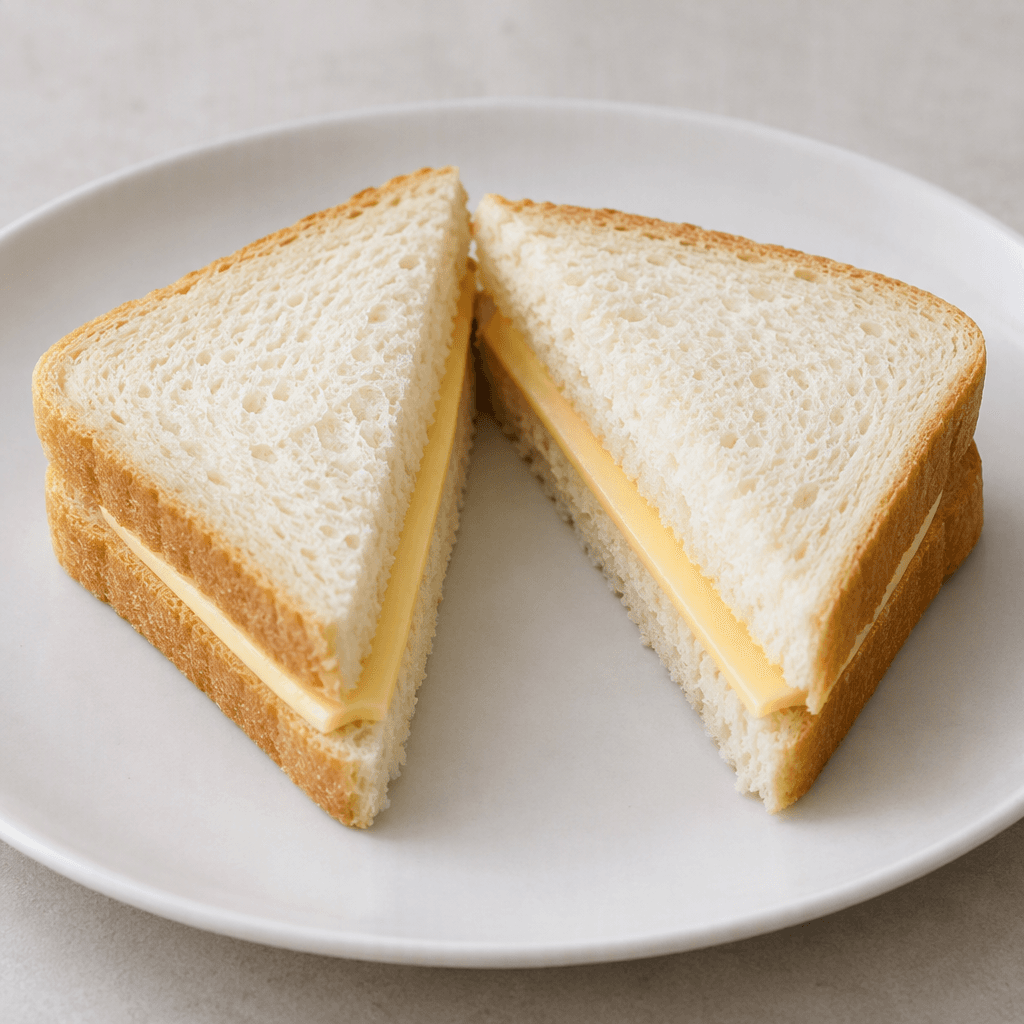
Cheese sandwich Calories
Classic sandwich made with cheese and bread.
CALORIES
GI
POTASSIUM
FIBER
Quick answer
1 piece (medium) of Cheese sandwich (120 g) has 324 calories. That works out to 270 calories per 100 g. It contains 37.2 g of carbs, 12.6 g of protein, 12.6 g of fat and 2.4 g of fiber. Its 0.7 µg of B12 covers 30% of the Daily Value. Its glycemic index is 65 (medium), so it raises blood sugar at a moderate pace.
What is Cheese sandwich?
A Cheese sandwich here means the Turkish kaşarlı sandviç: bread filled with slices of kaşar, a mild, slightly salty Turkish cheese. It can be eaten cold or warmed in a sandwich press until the cheese softens; everyday versions are usually simple. In Turkey, it is a quick breakfast or a filling snack from a bakery or büfe, often enjoyed with tea. Elsewhere, it makes an easy lunchbox option or light meal, especially with salad or soup. Bread supplies much of its energy, while the cheese contributes protein and fat. Add tomato or greens for freshness and a more balanced plate.
Cheese sandwich Nutrition Facts
Selected: 100 g
270
KCAL / 100G
Carbs
31g
· 11% DV
Protein
10.5g
· 21% DV
Fat
10.5g
· 13% DV
Fiber
2g
· 7% DV
DV is the share of the daily value covered, on a 2,000 kcal reference diet.
Calories come from: Carbs 48% · Protein 16% · Fat 36%
Cheese sandwich Vitamins & Minerals
Vitamins
B12
0.6µg · 25% DV
B2
0.22mg · 17% DV
Vitamin A
120µg · 13% DV
B1
0.13mg · 11% DV
Minerals
Calcium
240mg · 24% DV
Sodium
480mg · 21% DV
Phosphorus
130mg · 19% DV
Selenium
7.5µg · 14% DV
How Nutritious Is Cheese sandwich?
Nutrient density
Medium
How many vitamins, minerals and how much fiber this food carries per calorie. A high score means a lot of nutrition for few calories.
Satiety score
Medium
An EatBetter score computed from fiber, protein and calorie density. A high score means staying full longer on the same calories.
Both scores are calculated per 100 g and do not change with the selected portion. The satiety score is EatBetter's own calculation, not a clinical measure.
Cheese sandwich Glycemic Index
GLYCEMIC INDEX
GLYCEMIC LOAD
Accounts for portion size — a more realistic measure than GI alone.
How to Burn Off Cheese sandwich
To burn the 270 calories in 100 g:
🚶
Walking (5 km/h)
🏃
Running (8 km/h)
🚴
Cycling
🏊
Swimming
Times are calculated with the MET equation for a 70 kg adult. Actual burn varies with your weight, age and pace.
Is Cheese sandwich Processed?
NOVA 3
Processed
1. Unprocessed
2. Minimally Processed
3. Processed
4. Ultra-Processed
NOVA classifies foods into 4 groups by industrial processing. NOVA 1 (unprocessed) is the healthiest.
Does Cheese sandwich Contain Allergens?
Contains these allergens:
Which Diets Is Cheese sandwich Good For?
Vegan
— Not suitable
Vegetarian
✓ Suitable
Gluten-Free
— Not suitable
Dairy-Free
— Not suitable
Mediterranean
— Not suitable
Paleo
— Not suitable
Whole30
— Not suitable
DASH
— Not suitable
Keto
— Not suitable
Low FODMAP
— Not suitable
Cheese sandwich Fat Profile
SATURATED
5.2g
MONOUNSATURATED
2.8g
POLYUNSATURATED
0.4g
Omega 6:3 ratio 5.5:1
Above the ideal 4:1 (5.5:1).
Compare Cheese sandwich
Foods Similar to Cheese sandwich
Frequently Asked Questions About Cheese sandwich
How do you make a cheese sandwich?
A cheese sandwich is made by placing cheese between slices of bread. Eat it cold, or toast it in a pan or sandwich press until the cheese melts; adding a little butter or oil to the outside helps the bread brown.
What is the best cheese for a cheese sandwich?
A good melting cheese, such as cheddar, Swiss, mozzarella, or Monterey Jack, works well in a cheese sandwich. Choose a mild cheese for a simple filling or combine a sharper cheese with a milder one for more flavor.
What is the difference between a cheese sandwich and grilled cheese?
A cheese sandwich can be served cold or toasted, while grilled cheese is specifically cooked until the bread is browned and the cheese melts. Grilled cheese is often buttered on the outside before it is cooked in a pan.
How do you stop a cheese sandwich from getting soggy?
Keep wet ingredients such as tomato or pickles away from the bread until serving, and pat them dry before adding them. For a hot cheese sandwich, let steam escape briefly before wrapping it, so trapped moisture does not soften the bread.
What goes well with a cheese sandwich?
Tomato soup is a classic match for a cheese sandwich, especially when the bread is toasted. A green salad, sliced fruit, pickles, or a bowl of vegetable soup also makes a simple side without overpowering the cheese.
Can you make a cheese sandwich ahead of time?
Yes, you can make a cheese sandwich ahead, but it tastes best when assembled shortly before eating. Keep it covered and refrigerated if it contains perishable ingredients, and add juicy vegetables just before serving to keep the bread from becoming damp.
Can you freeze a cheese sandwich?
A cheese sandwich can be frozen, although thawed bread may be softer and some cheeses can change texture. Wrap it tightly, thaw it in the refrigerator, then warm it in a pan or sandwich press to improve the texture.
How do you make a cheese sandwich healthier?
Add vegetables such as spinach, tomato, or peppers, and use whole-grain bread to make a cheese sandwich more filling. A moderate amount of cheese keeps its flavor prominent without making the filling overly rich.
Can you eat a cheese sandwich cold?
Yes, a cheese sandwich can be eaten cold; the cheese does not need to be melted to be safe to eat. Thinly sliced cheese is easier to bite through and gives a more even filling in an uncooked sandwich.
Why does cheese leak out of a grilled cheese sandwich?
Cheese leaks out of a grilled cheese sandwich when the filling reaches the edges or melts faster than the bread browns. Keep the cheese inside the bread’s edges, avoid overfilling, and cook over moderate heat so the bread and cheese finish together.
Have another question about Cheese sandwich?
Ask the AI nutrition coach — calories, portions, alternatives and more, answered in seconds in the app.

Scan calories with your camera
Instant AI nutrition analysis

Nutrition data compiled from USDA FoodData Central and scientific sources.