

Ready & Packaged Foods
All →Vegetables & Legumes
All →Desserts & Confectionery
All →Meat & Protein
All →Grains & Bakery
All →Beverages
All →Milk & Dairy
All →

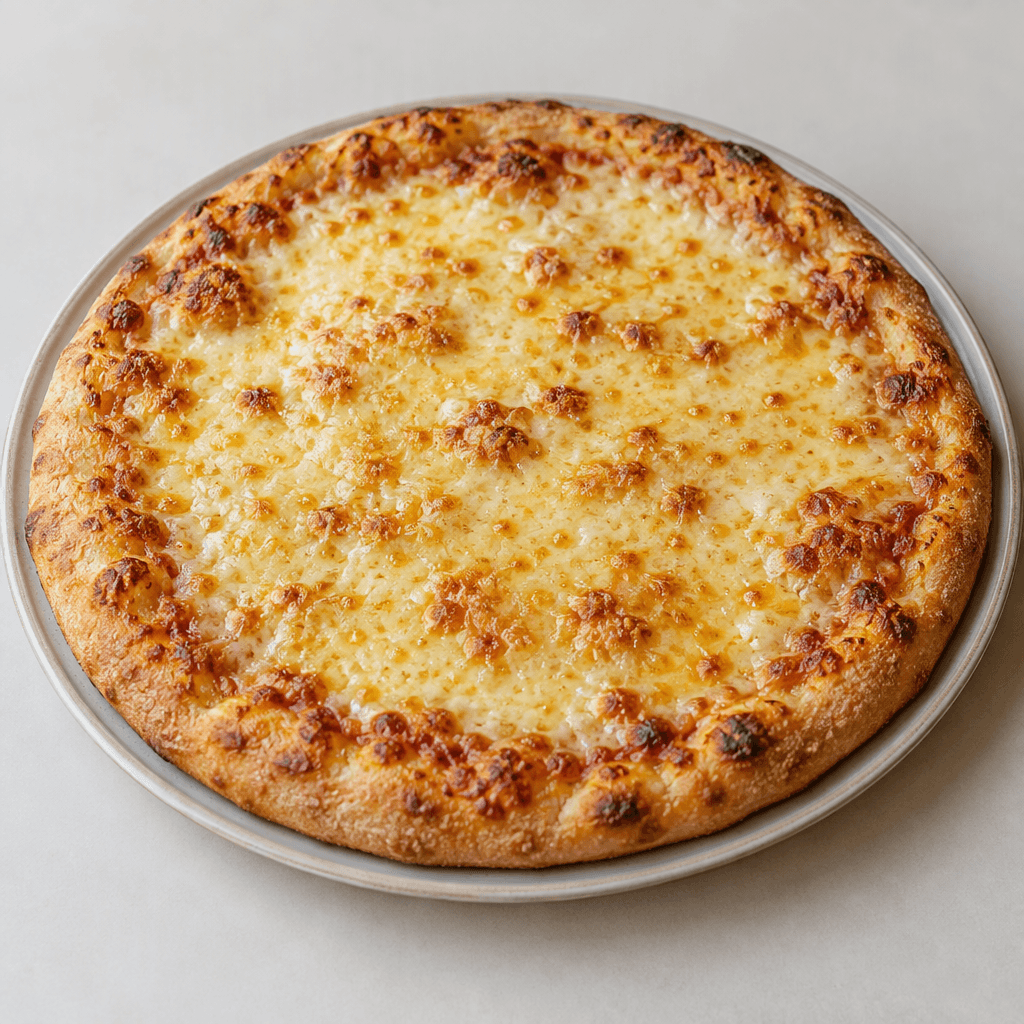
Cheese pizza Calories
Classic pizza dough topped with tomato sauce and cheese.
In season: Spring · Summer · Autumn · Winter
CALORIES
GI
POTASSIUM
FIBER
Quick answer
1 slice (medium) of Cheese pizza (80 g) has 212 calories. That works out to 265 calories per 100 g. It contains 26.4 g of carbs, 8.8 g of protein, 8 g of fat and 1.8 g of fiber. Its 440 mg of Sodium covers 19% of the Daily Value. Its glycemic index is 60 (medium), so it raises blood sugar at a moderate pace.
What is Cheese pizza?
Cheese pizza is made with a yeasted dough base, tomato sauce and a layer of cheese baked until melted and lightly browned. The Turkish-style version uses kaşar, a mild, slightly salty cheese that turns soft and stretchy in the oven.
Serve it hot, cut into slices, as a casual meal or something to share; a green salad makes a fresh contrast to the rich topping. Its dough provides most of the carbohydrates, while the cheese contributes protein and fat, so it is filling rather than especially light. A 100 g portion has 265 kcal. For a lighter plate, pair a slice with vegetables or salad, or choose a thinner crust.
Cheese pizza Nutrition Facts
Selected: 100 g
265
KCAL / 100G
Carbs
33g
· 12% DV
Protein
11g
· 22% DV
Fat
10g
· 13% DV
Fiber
2.2g
· 8% DV
DV is the share of the daily value covered, on a 2,000 kcal reference diet.
Calories come from: Carbs 50% · Protein 17% · Fat 33%
Cheese pizza Vitamins & Minerals
Vitamins
B12
0.5µg · 21% DV
B2
0.22mg · 17% DV
Biotin
5µg · 17% DV
Vitamin A
120µg · 13% DV
Minerals
Sodium
550mg · 24% DV
Phosphorus
150mg · 21% DV
Calcium
180mg · 18% DV
Selenium
10µg · 18% DV
How Nutritious Is Cheese pizza?
Nutrient density
Medium
How many vitamins, minerals and how much fiber this food carries per calorie. A high score means a lot of nutrition for few calories.
Satiety score
Medium
An EatBetter score computed from fiber, protein and calorie density. A high score means staying full longer on the same calories.
Both scores are calculated per 100 g and do not change with the selected portion. The satiety score is EatBetter's own calculation, not a clinical measure.
Cheese pizza Glycemic Index
GLYCEMIC INDEX
GLYCEMIC LOAD
Accounts for portion size — a more realistic measure than GI alone.
How to Burn Off Cheese pizza
To burn the 265 calories in 100 g:
🚶
Walking (5 km/h)
🏃
Running (8 km/h)
🚴
Cycling
🏊
Swimming
Times are calculated with the MET equation for a 70 kg adult. Actual burn varies with your weight, age and pace.
Is Cheese pizza Processed?
NOVA 3
Processed
1. Unprocessed
2. Minimally Processed
3. Processed
4. Ultra-Processed
NOVA classifies foods into 4 groups by industrial processing. NOVA 1 (unprocessed) is the healthiest.
Does Cheese pizza Contain Allergens?
Contains these allergens:
Which Diets Is Cheese pizza Good For?
Vegan
— Not suitable
Vegetarian
✓ Suitable
Gluten-Free
— Not suitable
Dairy-Free
— Not suitable
Mediterranean
— Not suitable
Paleo
— Not suitable
Whole30
— Not suitable
DASH
— Not suitable
Keto
— Not suitable
Low FODMAP
— Not suitable
Cheese pizza Fat Profile
SATURATED
4.5g
MONOUNSATURATED
3.2g
POLYUNSATURATED
1.1g
Omega 6:3 ratio 8:1
Above the ideal 4:1 (8:1).
Compare Cheese pizza
Foods Similar to Cheese pizza
Frequently Asked Questions About Cheese pizza
What is on a cheese pizza?
A classic cheese pizza has pizza dough, tomato sauce and melted cheese, usually mozzarella. Recipes vary: some add other cheeses or herbs, while a plain cheese pizza does not need meat or extra toppings.
How do you make cheese pizza at home?
Spread tomato sauce over pizza dough, add grated cheese and bake in a very hot oven until the crust is browned and the cheese is bubbling. Avoid piling on too much sauce, which can leave the centre soggy.
What cheese is best for cheese pizza?
Low-moisture mozzarella is a popular choice for cheese pizza because it melts evenly and stretches well. A little Parmesan or another flavorful cheese can add depth, but too much can make the topping oily or overpowering.
What is the difference between cheese pizza and Margherita pizza?
Cheese pizza is a broad style topped with tomato sauce and cheese, while a traditional Margherita is specifically made with tomato, mozzarella and basil. Margherita’s basil and mozzarella distinguish it from a basic cheese pizza.
Why does cheese pizza get oily?
Cheese pizza can look oily when fat separates from the cheese as it melts, especially if it is baked too long or topped heavily. Use a moderate amount of cheese and take it out once the cheese is melted and lightly browned.
How long does leftover cheese pizza last in the fridge?
Refrigerate leftover cheese pizza in a covered container once it has cooled, and eat it within three to four days. Don’t leave it at room temperature for more than two hours; reheat slices until hot throughout.
Can you freeze cheese pizza?
Yes, cheese pizza freezes well. Wrap slices separately or place them in an airtight container, then reheat from frozen in an oven or toaster oven for a firmer crust than microwaving usually gives.
How do you reheat cheese pizza without making it soggy?
Reheat cheese pizza in a covered skillet over medium-low heat until the base is crisp and the cheese has melted. For several slices, use an oven; a microwave heats quickly but can soften the crust.
What goes well with cheese pizza?
A crisp green salad, roasted vegetables or a bowl of soup pairs well with cheese pizza. Their freshness and lighter texture balance the rich, melted cheese without competing with its simple flavor.
Is cheese pizza vegetarian?
Cheese pizza can be vegetarian, but some cheeses are made with animal rennet. If you avoid animal-derived rennet, choose a cheese made with microbial or vegetarian rennet; the pizza’s other toppings matter too.
Have another question about Cheese pizza?
Ask the AI nutrition coach — calories, portions, alternatives and more, answered in seconds in the app.

Scan calories with your camera
Instant AI nutrition analysis

Nutrition data compiled from USDA FoodData Central and scientific sources.