

Ready & Packaged Foods
All →Vegetables & Legumes
All →Desserts & Confectionery
All →Meat & Protein
All →Grains & Bakery
All →Beverages
All →Milk & Dairy
All →

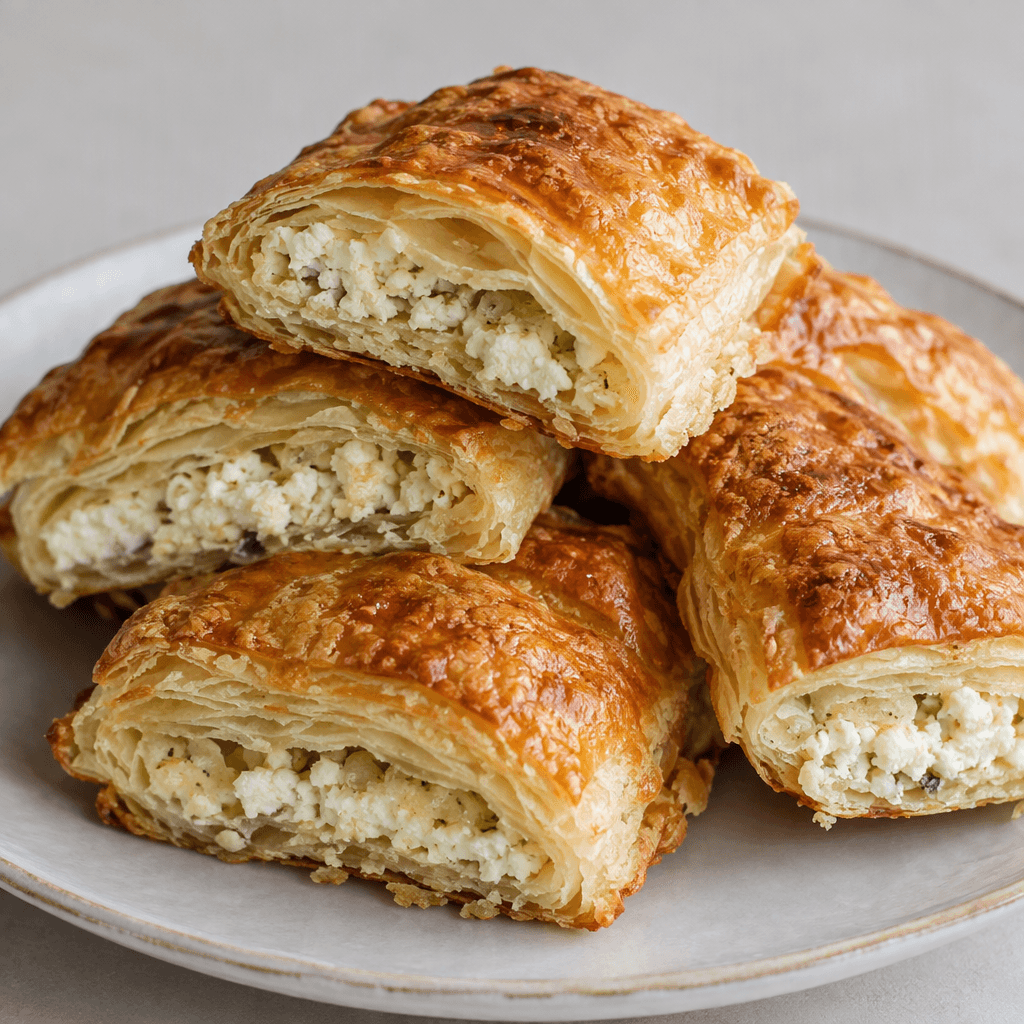
Cheese börek Calories
Traditional Turkish pastry filled with cheese and baked.
In season: Spring · Summer · Autumn · Winter
CALORIES
GI
POTASSIUM
FIBER
Quick answer
1 piece (medium) of Cheese börek (90 g) has 257 calories. That works out to 285 calories per 100 g. It contains 25.7 g of carbs, 8.3 g of protein, 13.1 g of fat and 1.5 g of fiber. Its 468 mg of Sodium covers 20% of the Daily Value. Its glycemic index is 65 (medium), so it raises blood sugar at a moderate pace.
What is Cheese börek?
Cheese börek is a Turkish savoury pastry made by layering thin sheets of yufka with cheese—typically kaşar, a mild, stretchy Turkish cheese—and baking them until golden. The pastry turns crisp and flaky on the outside, while the filling stays soft and savoury. It may be baked as a tray and cut into pieces, or sold as individual portions.
In Turkey, it is often eaten warm for breakfast or as a snack with tea; elsewhere, it also makes an easy light lunch alongside salad. It provides carbohydrates from the pastry, fat from the pastry and cheese, and some protein. For a lighter plate, choose a modest piece and pair it with fresh vegetables.
Cheese börek Nutrition Facts
Selected: 100 g
285
KCAL / 100G
Carbs
28.5g
· 10% DV
Protein
9.2g
· 18% DV
Fat
14.5g
· 19% DV
Fiber
1.7g
· 6% DV
DV is the share of the daily value covered, on a 2,000 kcal reference diet.
Calories come from: Carbs 41% · Protein 13% · Fat 46%
Cheese börek Vitamins & Minerals
Vitamins
B12
0.45µg · 19% DV
B2
0.22mg · 17% DV
Vitamin A
120µg · 13% DV
Biotin
3.2µg · 11% DV
Minerals
Sodium
520mg · 23% DV
Calcium
210mg · 21% DV
Phosphorus
145mg · 21% DV
Selenium
8.5µg · 15% DV
How Nutritious Is Cheese börek?
Nutrient density
Medium
How many vitamins, minerals and how much fiber this food carries per calorie. A high score means a lot of nutrition for few calories.
Satiety score
Low
An EatBetter score computed from fiber, protein and calorie density. A high score means staying full longer on the same calories.
Both scores are calculated per 100 g and do not change with the selected portion. The satiety score is EatBetter's own calculation, not a clinical measure.
Cheese börek Glycemic Index
GLYCEMIC INDEX
GLYCEMIC LOAD
Accounts for portion size — a more realistic measure than GI alone.
How to Burn Off Cheese börek
To burn the 285 calories in 100 g:
🚶
Walking (5 km/h)
🏃
Running (8 km/h)
🚴
Cycling
🏊
Swimming
Times are calculated with the MET equation for a 70 kg adult. Actual burn varies with your weight, age and pace.
Is Cheese börek Processed?
NOVA 3
Processed
1. Unprocessed
2. Minimally Processed
3. Processed
4. Ultra-Processed
NOVA classifies foods into 4 groups by industrial processing. NOVA 1 (unprocessed) is the healthiest.
Does Cheese börek Contain Allergens?
Contains these allergens:
Which Diets Is Cheese börek Good For?
Vegan
— Not suitable
Vegetarian
✓ Suitable
Gluten-Free
— Not suitable
Dairy-Free
— Not suitable
Mediterranean
✓ Suitable
Paleo
— Not suitable
Whole30
— Not suitable
DASH
— Not suitable
Keto
— Not suitable
Low FODMAP
— Not suitable
Cheese börek Fat Profile
SATURATED
6.2g
MONOUNSATURATED
4.9g
POLYUNSATURATED
1.2g
Omega 6:3 ratio 8.9:1
Above the ideal 4:1 (8.9:1).
Compare Cheese börek
Foods Similar to Cheese börek
Frequently Asked Questions About Cheese börek
What is cheese börek made of?
Cheese börek is made with thin pastry sheets layered or folded around a cheese filling, then baked until golden. The filling often uses Turkish white cheese, kaşar, or a mixture; recipes may brush the pastry with oil, butter, or an egg-and-yogurt mixture.
How do you make cheese börek at home?
Layer or roll thin yufka pastry with grated or crumbled cheese, brush the pastry lightly with a coating mixture, and bake until golden and crisp. Seal the edges well so the melted filling stays inside.
What cheese is traditionally used in cheese börek?
Cheese börek can be filled with Turkish white cheese, kaşar, or a combination of the two. White cheese gives a saltier, crumbly filling, while kaşar melts into a stretchy center; avoid very wet cheese that can make the pastry soggy.
Can you freeze cheese börek?
Yes, cheese börek freezes well. Freeze it cooled and portioned in an airtight package, or freeze unbaked börek and bake it later. Thaw refrigerated before reheating, and do not freeze it again after thawing.
How do you reheat cheese börek and keep it crisp?
Reheat cheese börek in an oven or covered skillet until the center is hot; these methods help restore a crisp pastry while melting the cheese. A microwave works in a pinch but tends to make the layers soft.
What should you serve with cheese börek?
Serve cheese börek with Turkish tea for breakfast or a light salad for lunch. Olives, tomatoes, and cucumber are also common accompaniments; a fresh, lightly dressed side balances the rich, flaky pastry.
How long does cheese börek last in the fridge?
Cheese börek keeps in the refrigerator for a few days when cooled and stored in a covered container. Reheat only the portion you plan to eat, and discard it if it has been left at room temperature for an extended period.
Why does the cheese leak out of cheese börek?
Cheese leaks from cheese börek when the pastry is not sealed, the filling is packed too close to the edges, or the cheese melts before the seams hold. Leave a border around the filling and pinch or fold the edges closed.
Is cheese börek usually eaten for breakfast?
Yes, cheese börek is commonly eaten at breakfast in Turkey, often alongside tea, olives, and fresh vegetables. It is also served as a snack or as part of a meal, either warm from the oven or reheated.
What is the difference between cheese börek and spanakopita?
Cheese börek is a Turkish pastry with many regional forms and may contain kaşar or white cheese; spanakopita is a Greek filo pie traditionally centered on spinach and feta. Their pastry layers are similar, but their fillings and customary seasoning differ.
Have another question about Cheese börek?
Ask the AI nutrition coach — calories, portions, alternatives and more, answered in seconds in the app.

Scan calories with your camera
Instant AI nutrition analysis

Nutrition data compiled from USDA FoodData Central and scientific sources.