

Ready & Packaged Foods
All →Vegetables & Legumes
All →Desserts & Confectionery
All →Meat & Protein
All →Grains & Bakery
All →Beverages
All →Milk & Dairy
All →

Mixed berries Calories
Rich in antioxidants, low calorie, high fiber
In season: Spring · Summer · Autumn
CALORIES
GI
POTASSIUM
FIBER
Quick answer
1 cup (medium) of Mixed berries (140 g) has 70 calories. That works out to 50 calories per 100 g. It contains 16.8 g of carbs, 1.4 g of protein, 0.4 g of fat and 4.9 g of fiber. Its 49 mg of Vitamin C covers 54% of the Daily Value. Its glycemic index is 40 (low), so it raises blood sugar slowly.
What is Mixed berries?
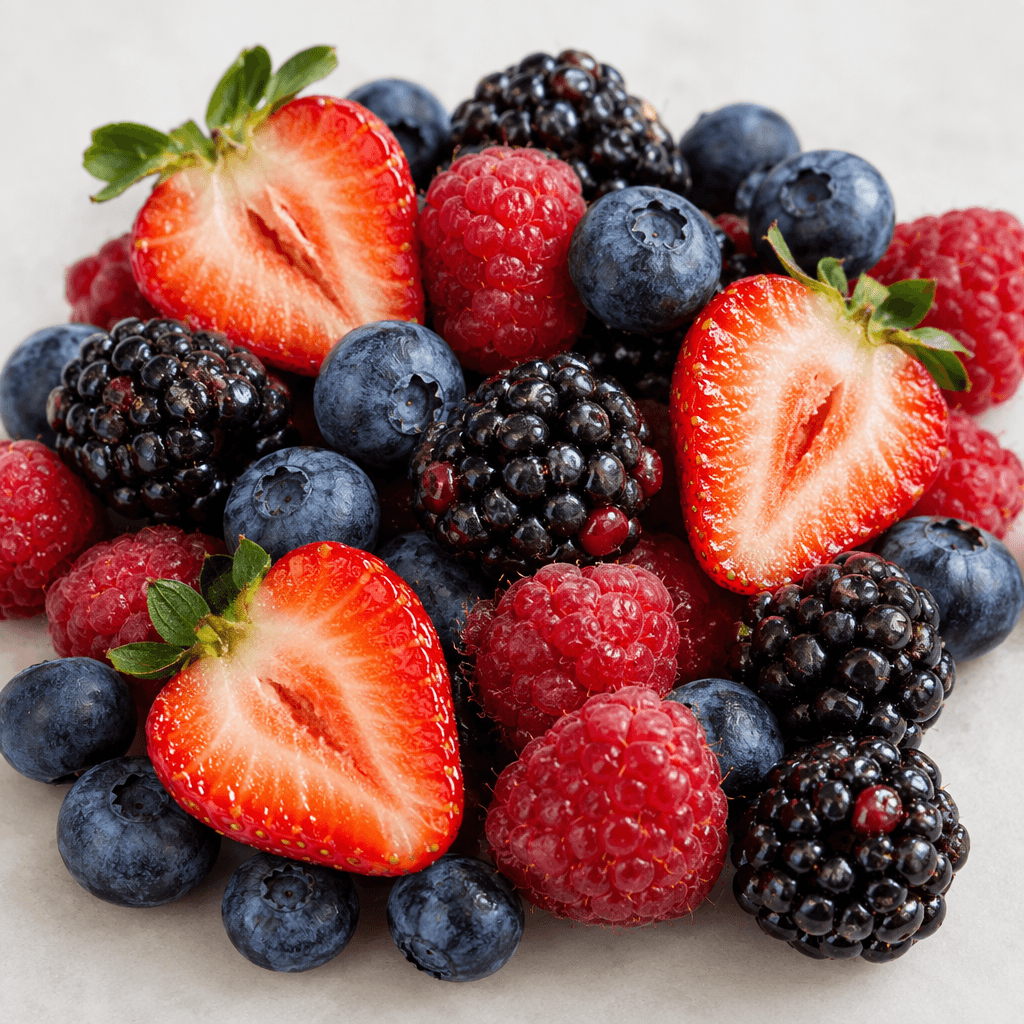
Mixed berries brings together fruits such as blueberries, raspberries, blackberries and strawberries. They are commonly eaten fresh by the handful, stirred into yoghurt or porridge, or used in smoothies, baking and desserts. Depending on the season and where you live, you may find them fresh or frozen; frozen berries are handy for blending or cooking.
Their flavour ranges from sweet to pleasantly tart, with tender raspberries and strawberries alongside the firmer pop of blueberries and blackberries. Mixed berries provide fibre while being relatively low in calories, making them a light snack or a colourful addition to breakfast. Pair them with plain yoghurt or oats, or spoon them over pancakes; a little citrus can brighten the fruit without needing much added sugar.
Mixed berries Nutrition Facts
Selected: 100 g
50
KCAL / 100G
Carbs
12g
· 4% DV
Protein
1g
· 2% DV
Fat
0.3g
· 0% DV
Fiber
3.5g
· 13% DV
DV is the share of the daily value covered, on a 2,000 kcal reference diet.
Calories come from: Carbs 88% · Protein 7% · Fat 5%

Log this food in EatBetter
100,000+ people use it
- Get your daily calorie target
- Snap your meal, log it in seconds
- See every vitamin and mineral

📸 Scan the code to get the app free.

Mixed berries Vitamins & Minerals
Vitamins
Vitamin C
35mg · 39% DV
Vitamin K
20µg · 17% DV
Vitamin E
1.1mg · 7% DV
Folate
25µg · 6% DV
Minerals
Potassium ⭐
150mg · 4% DV
Magnesium
15mg · 4% DV
Manganese
0mg · 0% DV
Copper
0mg · 0% DV
How Nutritious Is Mixed berries?
Nutrient density
High
How many vitamins, minerals and how much fiber this food carries per calorie. A high score means a lot of nutrition for few calories.
Satiety score
Medium
An EatBetter score computed from fiber, protein and calorie density. A high score means staying full longer on the same calories.
Both scores are calculated per 100 g and do not change with the selected portion. The satiety score is EatBetter's own calculation, not a clinical measure.
Mixed berries Glycemic Index
GLYCEMIC INDEX
GLYCEMIC LOAD
Accounts for portion size — a more realistic measure than GI alone.
How to Burn Off Mixed berries
To burn the 50 calories in 100 g:
🚶
Walking (5 km/h)
🏃
Running (8 km/h)
🚴
Cycling
🏊
Swimming
Times are calculated with the MET equation for a 70 kg adult. Actual burn varies with your weight, age and pace.
Is Mixed berries Processed?
NOVA 1
Unprocessed
1. Unprocessed
2. Minimally Processed
3. Processed
4. Ultra-Processed
NOVA classifies foods into 4 groups by industrial processing. NOVA 1 (unprocessed) is the healthiest.
Does Mixed berries Contain Allergens?
No known major allergens
Which Diets Is Mixed berries Good For?
Vegan
✓ Suitable
Vegetarian
✓ Suitable
Gluten-Free
✓ Suitable
Dairy-Free
— Not suitable
Mediterranean
✓ Suitable
Paleo
✓ Suitable
Whole30
— Not suitable
DASH
— Not suitable
Keto
— Not suitable
Low FODMAP
— Not suitable
Mixed berries Fat Profile
SATURATED
0.02g
MONOUNSATURATED
0.04g
POLYUNSATURATED
0.12g
Omega 6:3 ratio 2:1
Below the ideal 4:1 — a good omega balance.
Compare Mixed berries
Foods Similar to Mixed berries
Frequently Asked Questions About Mixed berries
Are mixed berries good for you?
Yes, mixed berries are a nutritious fruit choice. Blueberries, raspberries, blackberries and strawberries provide fiber and naturally occurring plant compounds; enjoy them as part of meals or snacks rather than relying on them as a treatment for any condition.
How should you store mixed berries?
Store mixed berries unwashed in a dry, breathable container in the refrigerator. Remove crushed or moldy fruit, and wash the rest just before eating; trapped moisture and damaged berries can make the whole batch spoil faster.
Can you freeze mixed berries?
Yes, mixed berries freeze well. Rinse and dry them thoroughly, spread them in a single layer on a tray until firm, then transfer them to a sealed freezer container. This keeps them from freezing into one large clump.
Should you wash mixed berries before storing them?
No, wash mixed berries just before eating, not before storage. Extra moisture encourages mold and makes delicate raspberries and blackberries deteriorate sooner; if you have already rinsed them, dry them carefully before refrigerating.
Are frozen mixed berries as nutritious as fresh ones?
Yes, frozen mixed berries can be a nutritious alternative to fresh ones. They are often frozen soon after harvest, and freezing preserves many of their nutrients; use them straight from the freezer in smoothies or thaw them in the refrigerator.
Can you put mixed berries in a smoothie?
Yes, mixed berries work well in smoothies. Blend them with milk, yogurt or a plant-based drink; frozen berries make the smoothie thicker and colder, while fresh berries give it a lighter texture.
How do you keep mixed berries from getting soggy in oatmeal?
Add mixed berries to oatmeal after cooking if you want them to hold their shape. Stirring them into very hot oats breaks down the softer raspberries and strawberries, while adding them on top keeps more texture.
Can you eat mixed berries every day?
Yes, most people can enjoy mixed berries every day as part of a varied diet. Add them to breakfast or have them as a snack; anyone managing a medical diet should follow the serving guidance they have been given.
How do you thaw frozen mixed berries without making them mushy?
Thaw frozen mixed berries slowly in the refrigerator in a covered container. They will soften as they thaw, so they may not keep their fresh-berry texture; use them in yogurt, oatmeal or baking if they release juice.
Can mixed berries be used in baking?
Yes, mixed berries can be baked into muffins, crumbles and other desserts. Tossing them with a little flour before folding them into batter can help limit sinking, and frozen berries can usually go in without thawing.
Have another question about Mixed berries?
Ask the AI nutrition coach — calories, portions, alternatives and more, answered in seconds in the app.

Scan calories with your camera
Instant AI nutrition analysis

Nutrition data compiled from USDA FoodData Central and scientific sources.