

Ready & Packaged Foods
All →Vegetables & Legumes
All →Desserts & Confectionery
All →Meat & Protein
All →Grains & Bakery
All →Beverages
All →Milk & Dairy
All →

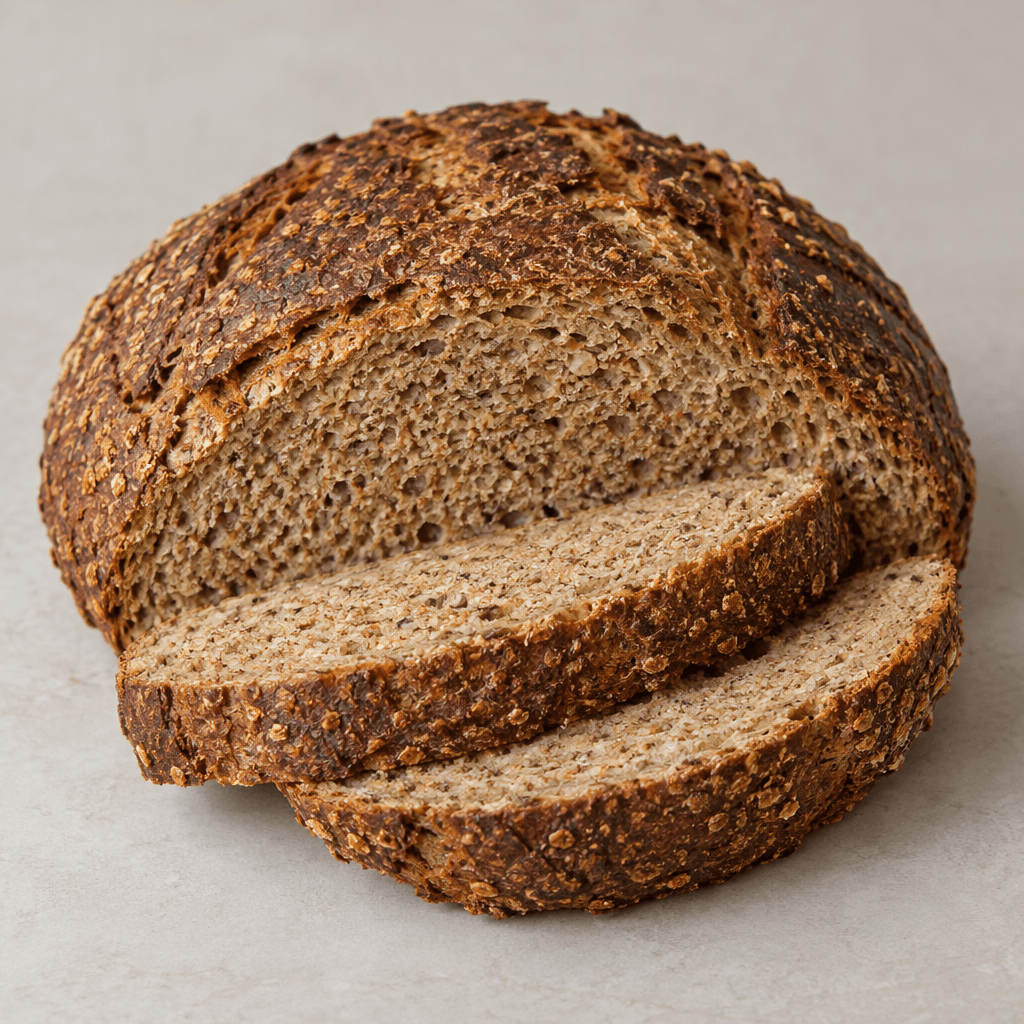
Karakilcik Bread Calories
High fiber, traditional Turkish wheat, low glycemic index
In season: Spring · Summer · Autumn · Winter
CALORIES
GI
POTASSIUM
FIBER
Quick answer
1 slice (medium) of Karakilcik Bread (35 g) has 81 calories. That works out to 230 calories per 100 g. It contains 15.1 g of carbs, 3 g of protein, 0.8 g of fat and 2.3 g of fiber. Its 0.4 mg of Manganese covers 17% of the Daily Value. Its glycemic index is 45 (medium), so it raises blood sugar at a moderate pace.
What is Karakilcik Bread?
Made with flour from karakılçık, a traditional Turkish wheat, Karakilcik Bread is typically a whole-grain loaf with a dense crumb and a sturdy, dark crust. Recipes vary, but the dough is commonly raised with yeast or sourdough, and bran flecks add to its rustic look.
Its robust, gently nutty wheat flavour suits a simple Turkish-style breakfast with cheese, olives and tomatoes, or a slice alongside soup and vegetable dishes. It is a filling, fibre-rich bread; its firm texture also makes it good for toasting. Pair a slice with fresh vegetables or a light spread when you want a less substantial meal.
Karakilcik Bread Nutrition Facts
Selected: 100 g
230
KCAL / 100G
Carbs
43g
· 16% DV
Protein
8.5g
· 17% DV
Fat
2.2g
· 3% DV
Fiber
6.5g
· 23% DV
DV is the share of the daily value covered, on a 2,000 kcal reference diet.
Calories come from: Carbs 76% · Protein 15% · Fat 9%
Karakilcik Bread Vitamins & Minerals
Vitamins
B1
0.32mg · 27% DV
B3
3.5mg · 22% DV
Folate
38µg · 10% DV
B5
0.45mg · 9% DV
Minerals
Manganese
1mg · 43% DV
Selenium
13µg · 24% DV
Sodium
390mg · 17% DV
Phosphorus
120mg · 17% DV
How Nutritious Is Karakilcik Bread?
Nutrient density
Medium
How many vitamins, minerals and how much fiber this food carries per calorie. A high score means a lot of nutrition for few calories.
Satiety score
High
An EatBetter score computed from fiber, protein and calorie density. A high score means staying full longer on the same calories.
Both scores are calculated per 100 g and do not change with the selected portion. The satiety score is EatBetter's own calculation, not a clinical measure.
Karakilcik Bread Glycemic Index
GLYCEMIC INDEX
GLYCEMIC LOAD
Accounts for portion size — a more realistic measure than GI alone.
How to Burn Off Karakilcik Bread
To burn the 230 calories in 100 g:
🚶
Walking (5 km/h)
🏃
Running (8 km/h)
🚴
Cycling
🏊
Swimming
Times are calculated with the MET equation for a 70 kg adult. Actual burn varies with your weight, age and pace.
Is Karakilcik Bread Processed?
NOVA 2
Minimally Processed
1. Unprocessed
2. Minimally Processed
3. Processed
4. Ultra-Processed
NOVA classifies foods into 4 groups by industrial processing. NOVA 1 (unprocessed) is the healthiest.
Does Karakilcik Bread Contain Allergens?
Contains these allergens:
Which Diets Is Karakilcik Bread Good For?
Vegan
✓ Suitable
Vegetarian
✓ Suitable
Gluten-Free
— Not suitable
Dairy-Free
— Not suitable
Mediterranean
✓ Suitable
Paleo
— Not suitable
Whole30
— Not suitable
DASH
— Not suitable
Keto
— Not suitable
Low FODMAP
— Not suitable
Karakilcik Bread Fat Profile
SATURATED
0.45g
MONOUNSATURATED
0.25g
POLYUNSATURATED
0.75g
Omega 6:3 ratio 18.3:1
Above the ideal 4:1 (18.3:1).
Compare Karakilcik Bread
Foods Similar to Karakilcik Bread
Frequently Asked Questions About Karakilcik Bread
What is Karakilcik Bread?
Karakilcik Bread is a traditional-style loaf made with flour from Karakılçık, a Turkish wheat variety. It is typically darker and denser than white bread, with a pronounced wheat flavor and visible bran.
Is Karakilcik Bread whole grain?
Karakilcik Bread is commonly made with whole-grain Karakılçık flour, which retains more of the wheat kernel than refined white flour. Recipes and commercial loaves can vary, so the ingredient list is the best way to confirm a particular loaf.
How does Karakilcik Bread taste?
Karakilcik Bread has a hearty, wheat-forward flavor, often with a mild earthy or nutty note. Its crumb is denser and less airy than many white sandwich breads, so it works especially well toasted or with substantial toppings.
Is Karakilcik Bread sourdough?
Not necessarily. Karakilcik Bread describes bread made with Karakılçık wheat, not a specific fermentation method; some bakers use sourdough, while others use commercial yeast. Look for “sourdough” on the product description if that matters to you.
Is Karakilcik Bread better for you than white bread?
Karakilcik Bread made with whole-grain flour generally provides more fiber and a less refined option than white bread. That can support fullness, but it is not automatically the better choice for every meal or eating pattern.
Can people with diabetes eat Karakilcik Bread?
Many people with diabetes can include Karakilcik Bread, but it still contains carbohydrates and can raise blood glucose. Its lower glycemic index does not make portion size irrelevant; ask your clinician or dietitian how it fits your individual plan.
How do you bake Karakilcik Bread at home?
To bake Karakilcik Bread, combine Karakılçık flour with water, salt, and yeast or sourdough starter, then knead, let the dough rise, and bake it. Whole-grain flour absorbs water differently, so adjust the dough’s hydration as needed.
How should you store Karakilcik Bread?
Keep Karakilcik Bread in a bread box or paper bag at room temperature, away from heat and moisture. Its dense crumb can dry out over time; avoid sealing a warm loaf, since trapped moisture encourages mold.
Can you freeze Karakilcik Bread?
Yes, Karakilcik Bread freezes well. Slice the loaf first, pack the slices airtight, and freeze them; you can toast slices straight from frozen or let them thaw at room temperature.
What can you serve with Karakilcik Bread?
Serve Karakilcik Bread with soups, stews, cheeses, eggs, or roasted vegetables. Its robust flavor and firm crumb hold up well to dips and spreads, making it a practical choice for open-faced sandwiches too.
Have another question about Karakilcik Bread?
Ask the AI nutrition coach — calories, portions, alternatives and more, answered in seconds in the app.

Scan calories with your camera
Instant AI nutrition analysis

Nutrition data compiled from USDA FoodData Central and scientific sources.