

Ready & Packaged Foods
All →Vegetables & Legumes
All →Desserts & Confectionery
All →Meat & Protein
All →Grains & Bakery
All →Beverages
All →Milk & Dairy
All →

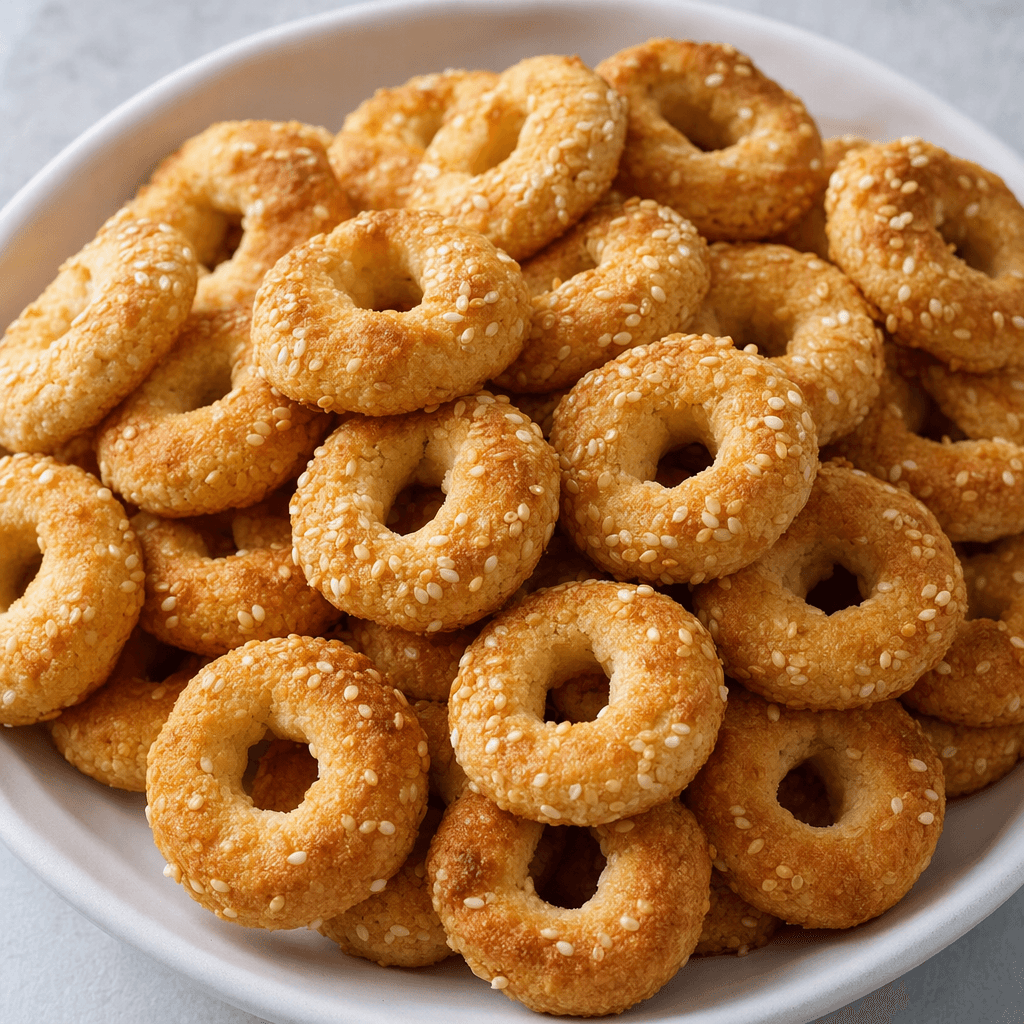
Small Kandil Simidi Calories
Small size, sesame-coated, traditional Turkish kandil simidi
In season: Spring · Summer · Autumn · Winter
CALORIES · 100 G
GI
POTASSIUM · 100 G
FIBER · 100 G
Quick answer
1 piece (small) of Small Kandil Simidi (18 g) has 86 calories. That works out to 480 calories per 100 g. It contains 10.1 g of carbs, 1.6 g of protein, 4.3 g of fat and 0.6 g of fiber. Its 0.1 mg of Manganese covers 5% of the Daily Value. Its glycemic index is 65 (medium), so it raises blood sugar at a moderate pace.
Small Kandil Simidi Nutrition Facts
Selected: 1 piece (small) · 18 g
86
KCAL / 18G
Carbs
10.1g
· 4% DV
Protein
1.6g
· 3% DV
Fat
4.3g
· 6% DV
Fiber
0.6g
· 2% DV
DV is the share of the daily value covered, on a 2,000 kcal reference diet.
Calories come from: Carbs 47% · Protein 7% · Fat 46%
Small Kandil Simidi nutrition facts table · 1 piece (small) (18 g)
| Nutrient | Amount | % DV |
|---|---|---|
| Calories | 86 kcal | |
| Total fat | 4.3 g | 6% |
| Saturated fat | 1.35 g | 7% |
| Trans fat | 0.02 g | |
| Sodium | 117 mg | 5% |
| Total carbohydrate | 10.1 g | 4% |
| Fiber | 0.6 g | 2% |
| Protein | 1.6 g | 3% |
Calories: Calories measure energy. Average daily need is 2,000 kcal. Excess calories are stored as fat, too few cause weight loss.
Carbs: Your body's primary energy source. The brain runs exclusively on carbs. Daily need: 275g.
Protein: Essential for muscle repair and cell growth. Daily need: 50g. Keeps you full and boosts metabolism.
Fat: Needed for hormone production and vitamin absorption. Daily need: 78g. Limit saturated fats, choose unsaturated.
Fiber: Critical for digestive health and satiety. Daily need: 28g. Stabilizes blood sugar, lowers cholesterol.

Log this food in EatBetter
100,000+ people use it
- Get your daily calorie target
- Snap your meal, log it in seconds
- See every vitamin and mineral

📸 Scan the code to get the app free.

How Many Calories in 1 Small Kandil Simidi?
| Serving | Amount | Calories |
|---|---|---|
| 1 piece (small) | 18 g | 86 kcal |
| 1 piece (medium) | 30 g | 144 kcal |
| 2 piece (small) | 36 g | 173 kcal |
| 1 piece (large) | 45 g | 216 kcal |
| 1 serving (triple) | 54 g | 259 kcal |
| 5 piece (small) | 90 g | 432 kcal |
| 100 g | 100 g | 480 kcal |
| 10 piece (small) | 180 g | 864 kcal |
Calculated from 480 calories per 100 g.
Frequently Asked Questions About Small Kandil Simidi
What is Small Kandil Simidi?
Small Kandil Simidi is a bite-sized Turkish ring-shaped pastry traditionally shared on kandil nights, special religious nights observed in Turkey. It is usually crisp and coated with sesame, unlike the larger, bread-like everyday simit.
When do people eat Small Kandil Simidi?
People traditionally serve Small Kandil Simidi on kandil nights, including Regaip, Miraç, Berat and Mevlid. It is commonly offered to visitors or shared with neighbours, often alongside tea.
What is Small Kandil Simidi made of?
Small Kandil Simidi is commonly made with flour, fat or butter, egg, sesame and sometimes mahlep, an aromatic spice. Recipes may also use yogurt, vinegar or a raising agent, so the exact texture and flavour vary.
How is Small Kandil Simidi different from regular Turkish simit?
Small Kandil Simidi is smaller and generally crisper than regular Turkish simit. Everyday simit is usually a yeasted, bread-like ring dipped in a molasses mixture before baking; kandil versions often use a different dough and may include mahlep.
How do you make Small Kandil Simidi at home?
To make Small Kandil Simidi, knead a dough with flour, fat, egg and, if desired, mahlep; shape it into small rings, brush with egg and coat with sesame. Bake until crisp, following a recipe for the specific dough proportions.
Why is Small Kandil Simidi given out on kandil nights?
Small Kandil Simidi is shared as part of the Turkish custom of offering food and hospitality on kandil nights. People may make it at home for neighbours or serve it to guests; it is a cultural tradition rather than a religious requirement.
Why is Small Kandil Simidi so crunchy?
Small Kandil Simidi is meant to have a crisp bite in many traditional recipes. A relatively firm dough and thorough baking help create that texture; a simidi that turns unusually hard may have been overbaked or left exposed to air.
How should you store Small Kandil Simidi to keep it crisp?
Let Small Kandil Simidi cool completely, then keep it in an airtight container in a cool, dry place. Humidity and exposure to air can soften it; briefly reheating softened pieces in the oven may restore some crispness.
Can you freeze Small Kandil Simidi dough?
Yes, you can freeze shaped Small Kandil Simidi dough before baking. Freeze the rings separately first, then transfer them to a sealed container; thaw before brushing with egg, coating with sesame and baking.
What do you serve with Small Kandil Simidi?
Small Kandil Simidi is most often served with Turkish tea. Its crisp, sesame-coated texture makes it a customary snack for visitors on kandil nights, and it can be arranged on a shared plate for guests.
Small Kandil Simidi Vitamins & Minerals
Vitamins
B1
0.03mg · 3% DV
B3
0.38mg · 2% DV
B2
0.02mg · 2% DV
B5
0.07mg · 1% DV
Minerals
Sodium
117mg · 5% DV
Manganese
0.11mg · 5% DV
Copper
0.03mg · 3% DV
Phosphorus
20mg · 3% DV
Potassium ⭐
22mg · 1% DV
Small Kandil Simidi Glycemic Index
GLYCEMIC INDEX
GLYCEMIC LOAD
Accounts for portion size — a more realistic measure than GI alone.
How to Burn Off Small Kandil Simidi
To burn the 86 calories in 1 piece (small) (18 g):
🚶
Walking (5 km/h)
🏃
Running (8 km/h)
🚴
Cycling
🏊
Swimming
Times are calculated with the MET equation for a 70 kg adult. Actual burn varies with your weight, age and pace.
What is Small Kandil Simidi?
Small Kandil Simidi is a bite-sized version of the sesame-coated ring biscuit traditionally made and shared in Turkey on kandil nights, special religious observances. The dough is shaped into small rings and baked; recipes vary, but often include flour and fat, with spices such as mahlep sometimes lending a subtle aroma.
Its exterior is lightly crisp, while the inside is dry and crumbly, with a savoury, gently spiced flavour. In Turkey it is commonly offered to visitors or neighbours on kandil nights and enjoyed with tea; it also works as a small snack at other times. It is energy-dense, with most of its energy coming from carbohydrates and fat, while sesame contributes some protein and fibre. Pair one with fruit or yoghurt for a more rounded snack, or serve it alongside tea when sharing with guests.
How Nutritious Is Small Kandil Simidi?
Nutrient density
Low
How many vitamins, minerals and how much fiber this food carries per calorie. A high score means a lot of nutrition for few calories.
Satiety score
Low
An EatBetter score computed from fiber, protein and calorie density. A high score means staying full longer on the same calories.
Both scores are calculated per 100 g and do not change with the selected portion. The satiety score is EatBetter's own calculation, not a clinical measure.
Is Small Kandil Simidi Processed?
NOVA 3
Processed
1. Unprocessed
2. Minimally Processed
3. Processed
4. Ultra-Processed
NOVA classifies foods into 4 groups by industrial processing. NOVA 1 (unprocessed) is the healthiest.
Does Small Kandil Simidi Contain Allergens?
Contains these allergens:
Which Diets Is Small Kandil Simidi Good For?
Vegan
— Not suitable
Vegetarian
✓ Suitable
Gluten-Free
— Not suitable
Dairy-Free
— Not suitable
Mediterranean
— Not suitable
Paleo
— Not suitable
Whole30
— Not suitable
DASH
— Not suitable
Keto
— Not suitable
Low FODMAP
— Not suitable
Small Kandil Simidi Fat Profile
SATURATED
1.35g
MONOUNSATURATED
1.66g
POLYUNSATURATED
0.56g
Omega 6:3 ratio 26:1
Above the ideal 4:1 (26:1).
Compare Small Kandil Simidi
Foods Similar to Small Kandil Simidi
Have another question about Small Kandil Simidi?
Ask the AI nutrition coach — calories, portions, alternatives and more, answered in seconds in the app.

Scan calories with your camera
Instant AI nutrition analysis

Nutrition data compiled from USDA FoodData Central and scientific sources.