

Ready & Packaged Foods
All →Vegetables & Legumes
All →Desserts & Confectionery
All →Meat & Protein
All →Grains & Bakery
All →Beverages
All →Milk & Dairy
All →

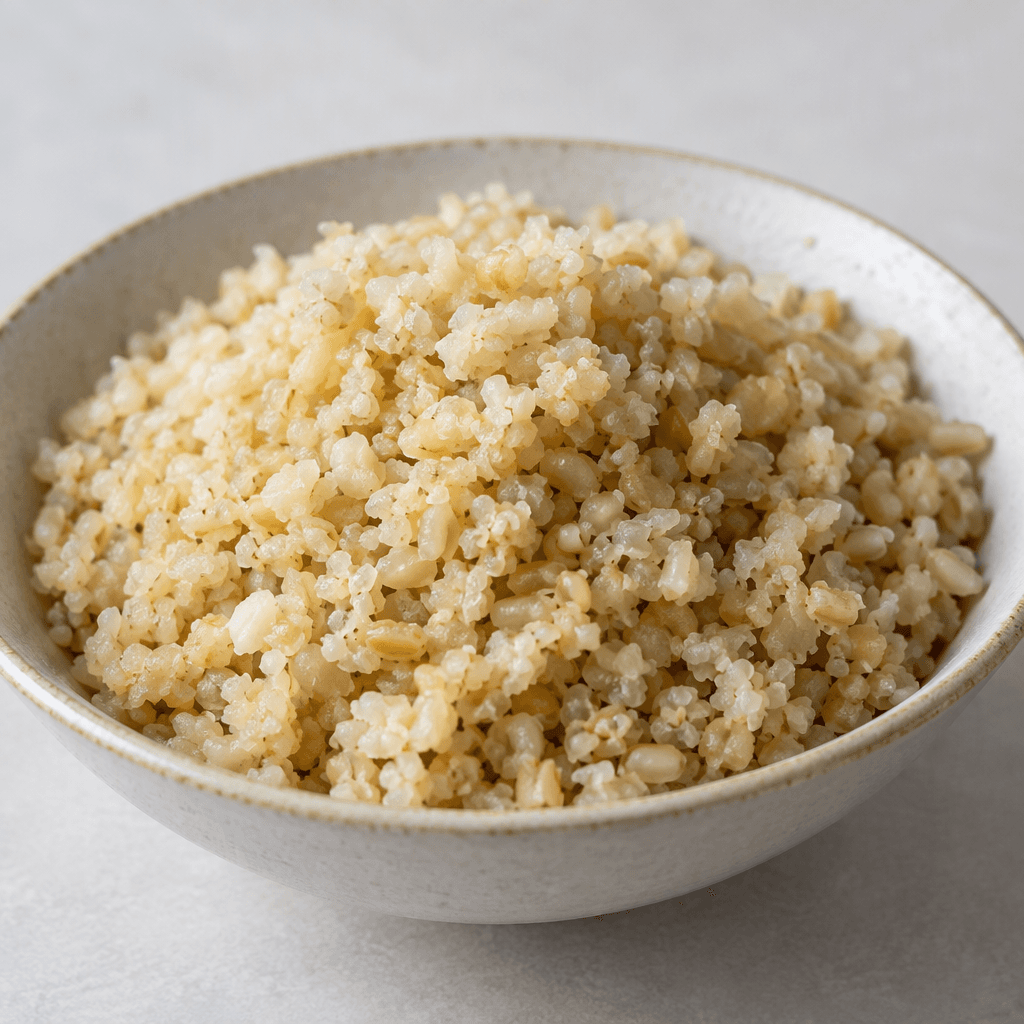
Kalojen Calories
Low-confidence match; item identity is unclear.
CALORIES · 100 G
GI
POTASSIUM · 100 G
FIBER · 100 G
Quick answer
1 slice (medium) of Kalojen (30 g) has 80 calories. That works out to 265 calories per 100 g. It contains 14.7 g of carbs, 2.7 g of protein, 1 g of fat and 0.8 g of fiber. Its 6.6 µg of Selenium covers 12% of the Daily Value. Its glycemic index is 75 (high), so it raises blood sugar quickly.
Kalojen Nutrition Facts
Selected: 1 slice (medium) · 30 g
80
KCAL / 30G
Carbs
14.7g
· 5% DV
Protein
2.7g
· 5% DV
Fat
1g
· 1% DV
Fiber
0.8g
· 3% DV
DV is the share of the daily value covered, on a 2,000 kcal reference diet.
Calories come from: Carbs 75% · Protein 14% · Fat 11%
Kalojen nutrition facts table · 1 slice (medium) (30 g)
| Nutrient | Amount | % DV |
|---|---|---|
| Calories | 80 kcal | |
| Total fat | 1 g | 1% |
| Saturated fat | 0.21 g | 1% |
| Trans fat | 0.01 g | |
| Sodium | 147 mg | 6% |
| Total carbohydrate | 14.7 g | 5% |
| Fiber | 0.8 g | 3% |
| Protein | 2.7 g | 5% |
Calories: Calories measure energy. Average daily need is 2,000 kcal. Excess calories are stored as fat, too few cause weight loss.
Carbs: Your body's primary energy source. The brain runs exclusively on carbs. Daily need: 275g.
Protein: Essential for muscle repair and cell growth. Daily need: 50g. Keeps you full and boosts metabolism.
Fat: Needed for hormone production and vitamin absorption. Daily need: 78g. Limit saturated fats, choose unsaturated.
Fiber: Critical for digestive health and satiety. Daily need: 28g. Stabilizes blood sugar, lowers cholesterol.

Log this food in EatBetter
100,000+ people use it
- Get your daily calorie target
- Snap your meal, log it in seconds
- See every vitamin and mineral

📸 Scan the code to get the app free.

How Many Calories in 1 Slice of Kalojen?
| Serving | Amount | Calories |
|---|---|---|
| 1 slice (medium) | 30 g | 80 kcal |
| 1 slice (thin) | 20 g | 53 kcal |
| 1 slice (thick) | 40 g | 106 kcal |
| 1 piece (small) | 50 g | 133 kcal |
| 2 slice (double) | 60 g | 159 kcal |
| 1 piece (medium) | 90 g | 239 kcal |
| 100 g | 100 g | 265 kcal |
| 1 serving (large) | 120 g | 318 kcal |
Calculated from 265 calories per 100 g.
Frequently Asked Questions About Kalojen
What is Kalojen?
Kalojen is not a clearly identifiable, widely recognized grain or bread name. It is listed as a grain and given a slice-sized serving, which suggests a bread-like product, but those details do not establish its exact identity.
Is Kalojen a type of bread?
Kalojen may be bread-like, but the name alone does not confirm that it is bread or identify a particular style. Its listing as a grain and its slice-based serving are clues, not a definitive product description.
What does processed mean for Kalojen?
Kalojen is classified as processed in the product information. That tells you its processing category, but the name and available details do not specify the ingredients or manufacturing steps behind that classification.
How should you store Kalojen?
If Kalojen is a bread-like sliced product, keep it sealed in a cool, dry place to slow drying and reduce exposure to moisture. Follow any package instructions, since Kalojen’s exact product identity is unclear.
Can you freeze Kalojen?
If Kalojen is a sliced bread-like product, you can freeze it in an airtight package, ideally with slices separated for easier portioning. Because its exact identity is uncertain, check the packaging for product-specific storage advice.
Can you toast Kalojen?
If Kalojen has the texture of sliced bread, you can toast it. Its precise type is unclear, so check it early the first time you toast it; different grain products brown and crisp at different rates.
Why does Kalojen go stale?
If Kalojen is bread-like, it can become stale as its texture changes and it loses moisture over time. Staleness is different from mold: discard it if you see mold rather than trying to toast or cut around it.
What goes well with Kalojen for breakfast?
If Kalojen is a bread-like grain product, it can be served with eggs, cheese, or vegetables at breakfast. Since its exact flavor and texture are not established, try it plain first or lightly toasted to see what pairs well.
Can you eat Kalojen during Ramadan at suhoor?
Yes, if Kalojen is a bread-like grain product, it can be part of suhoor. Pairing it with protein-rich food such as eggs or yogurt and some vegetables makes for a more varied meal; the product’s exact identity is unclear.
Can people with diabetes eat Kalojen?
People with diabetes can include Kalojen, but portion size matters because it is listed as a grain product containing carbohydrates. The product’s exact identity and the rest of the meal affect its impact; ask your clinician or dietitian for advice tailored to you.
Kalojen Vitamins & Minerals
Vitamins
B1
0.11mg · 9% DV
B3
1.14mg · 7% DV
Folate
25.5µg · 6% DV
B2
0.06mg · 5% DV
Minerals
Selenium
6.6µg · 12% DV
Manganese
0.15mg · 7% DV
Sodium
147mg · 6% DV
Iron
0.96mg · 5% DV
Potassium ⭐
35mg · 1% DV
Kalojen Glycemic Index
GLYCEMIC INDEX
GLYCEMIC LOAD
Accounts for portion size — a more realistic measure than GI alone.
How to Burn Off Kalojen
To burn the 80 calories in 1 slice (medium) (30 g):
🚶
Walking (5 km/h)
🏃
Running (8 km/h)
🚴
Cycling
🏊
Swimming
Times are calculated with the MET equation for a 70 kg adult. Actual burn varies with your weight, age and pace.
What is Kalojen?
Kalojen is listed as a grain food, and its serving is described as a medium slice, suggesting a sliceable product. The name alone does not make clear which grain it contains or whether it belongs to a particular regional tradition, so it would be misleading to assign it a specific recipe or origin.
In Turkey, sliced grain foods are commonly served at breakfast with cheese, olives or eggs, and may also be eaten with tea or used for a sandwich. Kalojen can be approached in the same practical way. It is mainly a source of carbohydrates, with some protein and fibre. Pair it with eggs, yoghurt or vegetables for a more balanced meal.
How Nutritious Is Kalojen?
Nutrient density
Low
How many vitamins, minerals and how much fiber this food carries per calorie. A high score means a lot of nutrition for few calories.
Satiety score
Medium
An EatBetter score computed from fiber, protein and calorie density. A high score means staying full longer on the same calories.
Both scores are calculated per 100 g and do not change with the selected portion. The satiety score is EatBetter's own calculation, not a clinical measure.
Is Kalojen Processed?
NOVA 3
Processed
1. Unprocessed
2. Minimally Processed
3. Processed
4. Ultra-Processed
NOVA classifies foods into 4 groups by industrial processing. NOVA 1 (unprocessed) is the healthiest.
Does Kalojen Contain Allergens?
Contains these allergens:
Which Diets Is Kalojen Good For?
Vegan
✓ Suitable
Vegetarian
✓ Suitable
Gluten-Free
— Not suitable
Dairy-Free
— Not suitable
Mediterranean
— Not suitable
Paleo
— Not suitable
Whole30
— Not suitable
DASH
— Not suitable
Keto
— Not suitable
Low FODMAP
— Not suitable
Kalojen Fat Profile
SATURATED
0.21g
MONOUNSATURATED
0.24g
POLYUNSATURATED
0.36g
Omega 6:3 ratio 33:1
Above the ideal 4:1 (33:1).
Compare Kalojen
Foods Similar to Kalojen
Have another question about Kalojen?
Ask the AI nutrition coach — calories, portions, alternatives and more, answered in seconds in the app.

Scan calories with your camera
Instant AI nutrition analysis

Nutrition data compiled from USDA FoodData Central and scientific sources.