

Ready & Packaged Foods
All →Vegetables & Legumes
All →Desserts & Confectionery
All →Meat & Protein
All →Grains & Bakery
All →Beverages
All →Milk & Dairy
All →

Jujube Calories
Vitamin C, fiber, antioxidant
In season: Autumn · Winter
CALORIES
GI
POTASSIUM
FIBER
Quick answer
1 piece (medium) of Jujube (25 g) has 20 calories. That works out to 79 calories per 100 g. It contains 5.1 g of carbs, 0.3 g of protein, 0.1 g of fat and 0.9 g of fiber. Its 17.3 mg of Vitamin C covers 19% of the Daily Value. Its glycemic index is 20 (low), so it raises blood sugar slowly.
What is Jujube?
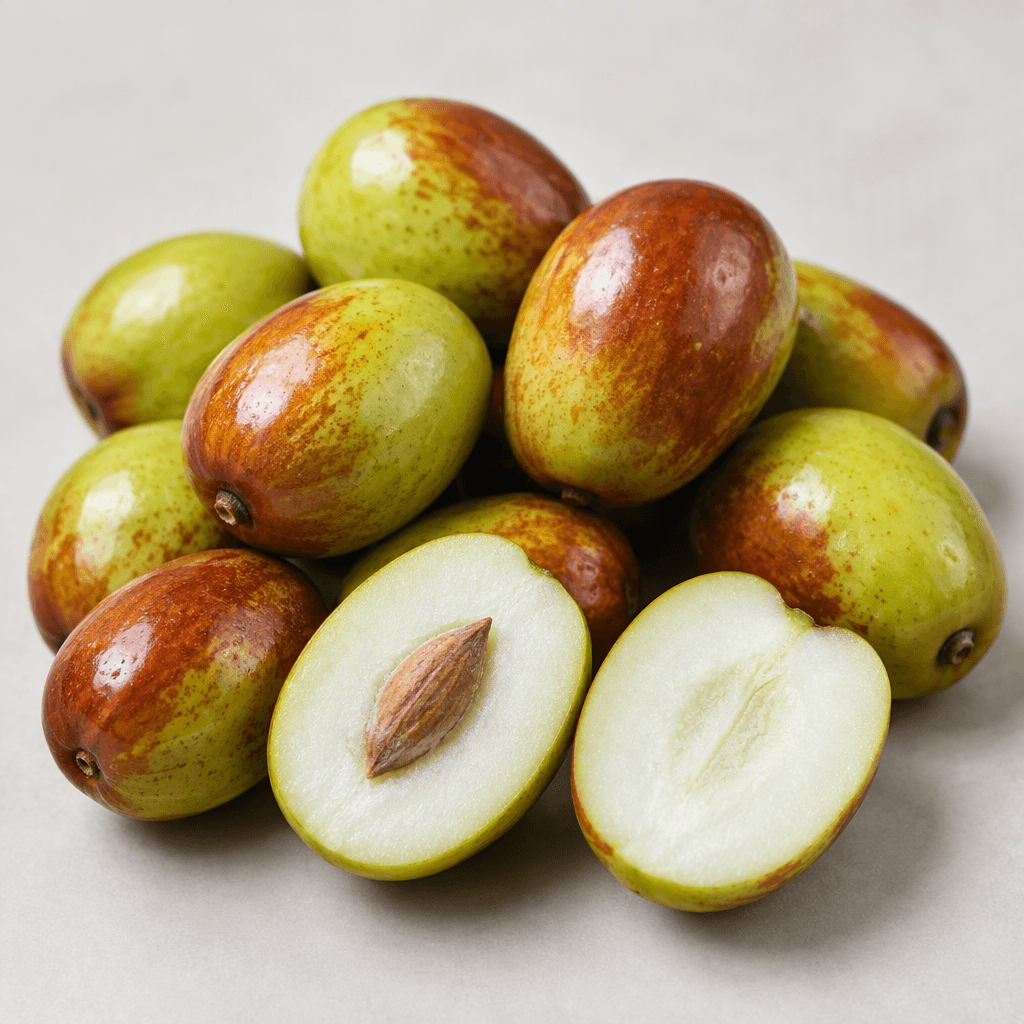
Jujube is the small, oval fruit of the jujube tree, with pale, firm flesh and a single hard stone. Often called a Chinese date, it is cultivated across parts of Asia and the Mediterranean, and is enjoyed both fresh and dried. Fresh fruit is usually green, turning reddish brown as it ripens.
Its crisp bite and mild, apple-like sweetness make fresh jujubes easy to eat as a snack; dried ones become chewier and sweeter, and are used in snacks, teas and cooking in several Asian food traditions. For English-speaking shoppers, they can be eaten out of hand or added to porridge and fruit bowls. Jujube offers fibre alongside its natural carbohydrates; choose the fresh fruit for a lighter, juicier bite.
Jujube Nutrition Facts
Selected: 100 g
79
KCAL / 100G
Carbs
20.2g
· 7% DV
Protein
1.2g
· 2% DV
Fat
0.2g
· 0% DV
Fiber
3.6g
· 13% DV
DV is the share of the daily value covered, on a 2,000 kcal reference diet.
Calories come from: Carbs 92% · Protein 5% · Fat 3%
Jujube Vitamins & Minerals
Vitamins
Vitamin C
69mg · 77% DV
B5
0.6mg · 12% DV
B3
0.9mg · 6% DV
B6
0.08mg · 5% DV
Minerals
Potassium ⭐
250mg · 7% DV
Iron
1mg · 6% DV
Phosphorus
23mg · 3% DV
Calcium
21mg · 2% DV
How Nutritious Is Jujube?
Nutrient density
High
How many vitamins, minerals and how much fiber this food carries per calorie. A high score means a lot of nutrition for few calories.
Satiety score
Medium
An EatBetter score computed from fiber, protein and calorie density. A high score means staying full longer on the same calories.
Both scores are calculated per 100 g and do not change with the selected portion. The satiety score is EatBetter's own calculation, not a clinical measure.
Jujube Glycemic Index
GLYCEMIC INDEX
GLYCEMIC LOAD
Accounts for portion size — a more realistic measure than GI alone.
How to Burn Off Jujube
To burn the 79 calories in 100 g:
🚶
Walking (5 km/h)
🏃
Running (8 km/h)
🚴
Cycling
🏊
Swimming
Times are calculated with the MET equation for a 70 kg adult. Actual burn varies with your weight, age and pace.
Is Jujube Processed?
NOVA 1
Unprocessed
1. Unprocessed
2. Minimally Processed
3. Processed
4. Ultra-Processed
NOVA classifies foods into 4 groups by industrial processing. NOVA 1 (unprocessed) is the healthiest.
Does Jujube Contain Allergens?
No known major allergens
Which Diets Is Jujube Good For?
Vegan
✓ Suitable
Vegetarian
✓ Suitable
Gluten-Free
✓ Suitable
Dairy-Free
— Not suitable
Mediterranean
✓ Suitable
Paleo
✓ Suitable
Whole30
— Not suitable
DASH
— Not suitable
Keto
— Not suitable
Low FODMAP
— Not suitable
Jujube Fat Profile
SATURATED
0.03g
MONOUNSATURATED
0.04g
POLYUNSATURATED
0.05g
Omega 6:3 ratio 3:1
Below the ideal 4:1 — a good omega balance.
Compare Jujube
Foods Similar to Jujube
Frequently Asked Questions About Jujube
What does a jujube taste like?
Fresh jujubes are crisp and mildly sweet, with a texture often compared to an apple. As they ripen and turn reddish brown, they become softer and sweeter; dried jujubes are chewier and taste more like dates.
How do you eat a jujube?
Wash a fresh jujube and eat the flesh raw, avoiding its hard pit. You can slice it into salads, cook it into compote, or snack on dried jujubes; remove the pit before serving pieces to children.
What are the health benefits of jujube fruit?
Jujube provides vitamin C and fiber, along with antioxidant compounds. It can be part of a varied diet, but claims that jujube fruit cures illness or reliably treats a health condition are not established.
How can you tell when a jujube is ripe?
A jujube is ripening when its smooth green skin changes to reddish brown. Green fruit is usually firmer and less sweet, while darker fruit tends to be softer and sweeter; choose based on the texture you prefer.
Can you eat the pit of a jujube?
No, the jujube’s long, hard pit is not eaten. Cut or bite around it and discard it; remove the pit before giving jujube pieces to young children to reduce the risk of choking.
How should you store fresh jujubes?
Keep fresh jujubes unwashed in a breathable container in the refrigerator, and wash them just before eating. Remove bruised or spoiled fruit, and keep dried jujubes sealed in a cool, dry place to prevent them from absorbing moisture.
Can you freeze jujubes?
Yes, jujubes can be frozen. Wash and dry them thoroughly, then freeze them whole or pit them first in a sealed freezer-safe container. Their texture may soften after thawing, so use thawed fruit in smoothies or cooked dishes.
Are fresh and dried jujubes different?
Yes. Fresh jujubes are juicy, crisp, and mildly sweet, while dried jujubes are denser, chewier, and more concentrated in flavor. Dried fruit is convenient as a snack or for simmering in tea and compote.
Is jujube the same as a date?
No. Jujube and date are different fruits from different plants, although dried jujubes can resemble dates in color, chewiness, and sweetness. Fresh jujubes are typically crisp, unlike the soft flesh of a ripe date.
Does jujube help you sleep?
Eating jujube fruit has not been shown to reliably improve sleep. Some traditional remedies use jujube, but that does not establish a sleep benefit from the fruit itself; avoid treating it as a substitute for proven care.
Have another question about Jujube?
Ask the AI nutrition coach — calories, portions, alternatives and more, answered in seconds in the app.

Scan calories with your camera
Instant AI nutrition analysis

Nutrition data compiled from USDA FoodData Central and scientific sources.