

Ready & Packaged Foods
All →Vegetables & Legumes
All →Desserts & Confectionery
All →Meat & Protein
All →Grains & Bakery
All →Beverages
All →Milk & Dairy
All →

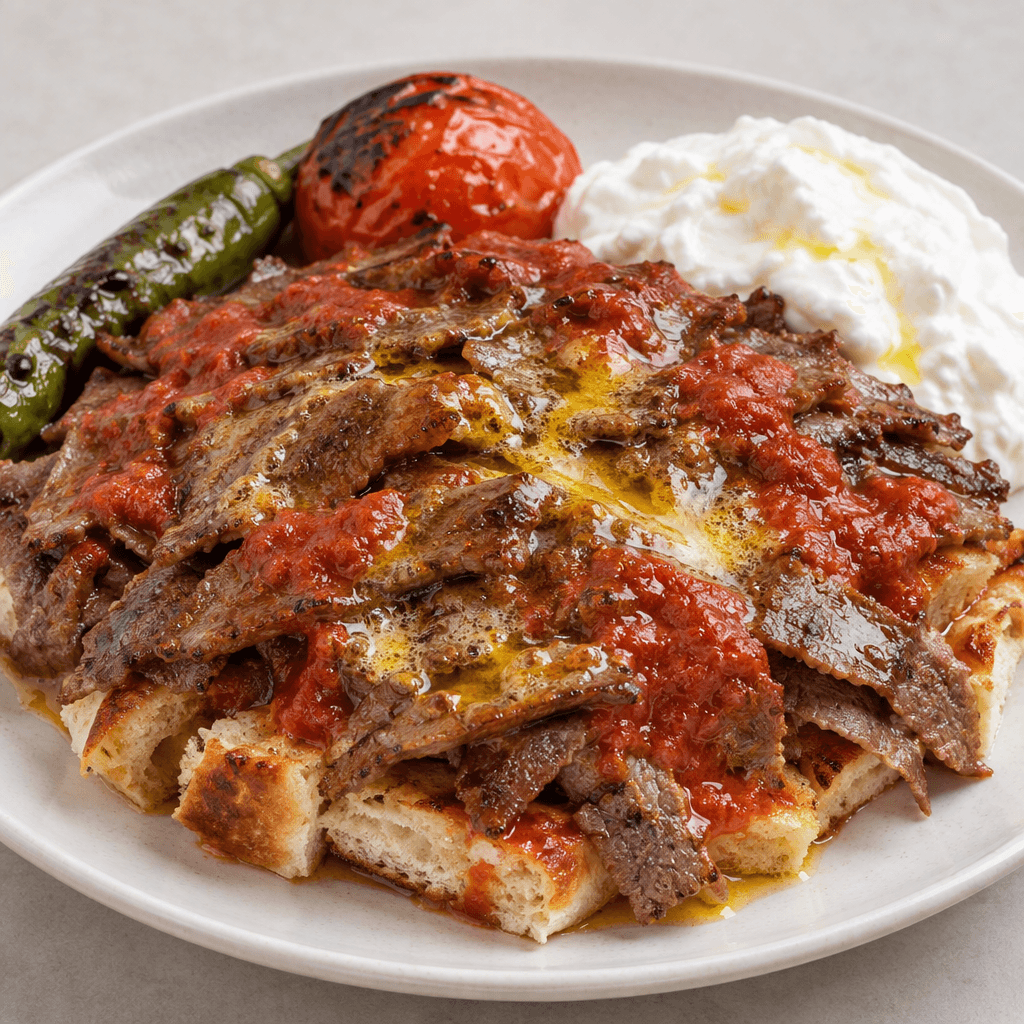
Iskender Doner Calories
Traditional Turkish dish with doner meat, yogurt, butter, and pita bread
In season: Spring · Summer · Autumn · Winter
CALORIES
GI
POTASSIUM
FIBER
Quick answer
1 serving (medium) of Iskender Doner (350 g) has 735 calories. That works out to 210 calories per 100 g. It contains 63 g of carbs, 40.3 g of protein, 36.8 g of fat and 4.2 g of fiber. Its 2.4 µg of B12 covers 102% of the Daily Value. Its glycemic index is 65 (medium), so it raises blood sugar at a moderate pace.
What is Iskender Doner?
Iskender Doner is a Bursa-born Turkish dish of thinly sliced döner meat served over bite-sized pieces of pide. It is topped with tomato sauce and melted butter, with thick yogurt alongside; grilled tomato and green pepper often complete the plate.
The bread softens as it soaks up the sauce, while the savory meat and rich butter are balanced by cool, tangy yogurt. In Turkey it is commonly eaten hot as a substantial lunch or dinner, and Turkish restaurants abroad serve it much the same way. Meat provides protein, while the pide and butter make it a hearty, filling meal. For a lighter plate, ask for less butter and add a side salad.
Iskender Doner Nutrition Facts
Selected: 100 g
210
KCAL / 100G
Carbs
18g
· 7% DV
Protein
11.5g
· 23% DV
Fat
10.5g
· 13% DV
Fiber
1.2g
· 4% DV
DV is the share of the daily value covered, on a 2,000 kcal reference diet.
Calories come from: Carbs 34% · Protein 22% · Fat 44%

Log this food in EatBetter
100,000+ people use it
- Get your daily calorie target
- Snap your meal, log it in seconds
- See every vitamin and mineral

📸 Scan the code to get the app free.

Iskender Doner Vitamins & Minerals
Vitamins
B12
0.7µg · 29% DV
B2
0.19mg · 15% DV
B3
2.1mg · 13% DV
B5
0.65mg · 13% DV
Minerals
Sodium
420mg · 18% DV
Zinc
2mg · 18% DV
Phosphorus
110mg · 16% DV
Selenium
7.5µg · 14% DV
Potassium ⭐
185mg · 5% DV
How Nutritious Is Iskender Doner?
Nutrient density
Medium
How many vitamins, minerals and how much fiber this food carries per calorie. A high score means a lot of nutrition for few calories.
Satiety score
Medium
An EatBetter score computed from fiber, protein and calorie density. A high score means staying full longer on the same calories.
Both scores are calculated per 100 g and do not change with the selected portion. The satiety score is EatBetter's own calculation, not a clinical measure.
Iskender Doner Glycemic Index
GLYCEMIC INDEX
GLYCEMIC LOAD
Accounts for portion size — a more realistic measure than GI alone.
How to Burn Off Iskender Doner
To burn the 210 calories in 100 g:
🚶
Walking (5 km/h)
🏃
Running (8 km/h)
🚴
Cycling
🏊
Swimming
Times are calculated with the MET equation for a 70 kg adult. Actual burn varies with your weight, age and pace.
Is Iskender Doner Processed?
NOVA 3
Processed
1. Unprocessed
2. Minimally Processed
3. Processed
4. Ultra-Processed
NOVA classifies foods into 4 groups by industrial processing. NOVA 1 (unprocessed) is the healthiest.
Does Iskender Doner Contain Allergens?
Contains these allergens:
Which Diets Is Iskender Doner Good For?
Vegan
— Not suitable
Vegetarian
— Not suitable
Gluten-Free
— Not suitable
Dairy-Free
— Not suitable
Mediterranean
✓ Suitable
Paleo
— Not suitable
Whole30
— Not suitable
DASH
— Not suitable
Keto
— Not suitable
Low FODMAP
— Not suitable
Iskender Doner Fat Profile
SATURATED
4.1g
MONOUNSATURATED
3.7g
POLYUNSATURATED
0.7g
Omega 6:3 ratio 5.5:1
Above the ideal 4:1 (5.5:1).
Compare Iskender Doner
Foods Similar to Iskender Doner
Frequently Asked Questions About Iskender Doner
What is Iskender Doner?
Iskender Doner is a Turkish dish of thinly sliced doner meat served over bite-size pieces of pide bread, with tomato sauce, yogurt, and melted butter. Grilled tomato and green pepper are common accompaniments.
How is Iskender Doner traditionally served?
Iskender Doner is traditionally plated over small pieces of pide so they catch the tomato sauce and butter. The meat goes on top, with yogurt alongside or at the edge and hot melted butter added just before serving.
What meat is used in Iskender Doner?
Iskender Doner is commonly made with beef, though some versions use a beef-and-lamb blend. The meat is cooked on a vertical rotisserie, shaved into thin slices, and served over pide.
What is the difference between Iskender Doner and doner kebab?
Iskender Doner is a particular way of serving doner meat: over pide with tomato sauce, yogurt, and melted butter. Doner kebab can simply mean the rotisserie meat served in bread or a wrap, without those toppings.
What sauce goes on Iskender Doner?
Iskender Doner is topped with a warm tomato-based sauce, often made by cooking tomato with butter and seasoning. It is spooned over the pide and meat; melted butter is usually added separately at the table or just before serving.
Why is yogurt served with Iskender Doner?
Yogurt adds a cool, tangy contrast to the hot meat, tomato sauce, and butter in Iskender Doner. It is often placed beside the meat rather than stirred into the sauce, so diners can combine each bite as they like.
Where did Iskender Doner originate?
Iskender Doner is associated with Bursa, Turkey, and is named after İskender Efendi, who is credited with developing this style of serving doner in the 19th century. It is now served throughout Turkey and abroad.
What should you serve with Iskender Doner?
Iskender Doner is often served with grilled tomato and green pepper, and ayran is a traditional drink alongside it. Since pide and yogurt are already part of the dish, a fresh salad is a simple additional side.
Can you reheat leftover Iskender Doner?
Yes, leftover Iskender Doner can be reheated, but warm the meat, pide, and sauce gently and add the yogurt afterward. A skillet or low oven helps avoid making the bread soggy; refrigerate leftovers promptly in a covered container.
Can Iskender Doner fit into a weight-loss diet?
Yes, Iskender Doner can fit into a weight-loss diet, but its pide and buttery topping make it a substantial meal. A smaller portion and less added butter are practical ways to make it lighter.
Have another question about Iskender Doner?
Ask the AI nutrition coach — calories, portions, alternatives and more, answered in seconds in the app.

Scan calories with your camera
Instant AI nutrition analysis

Nutrition data compiled from USDA FoodData Central and scientific sources.