

Ready & Packaged Foods
All →Vegetables & Legumes
All →Desserts & Confectionery
All →Meat & Protein
All →Grains & Bakery
All →Beverages
All →Milk & Dairy
All →

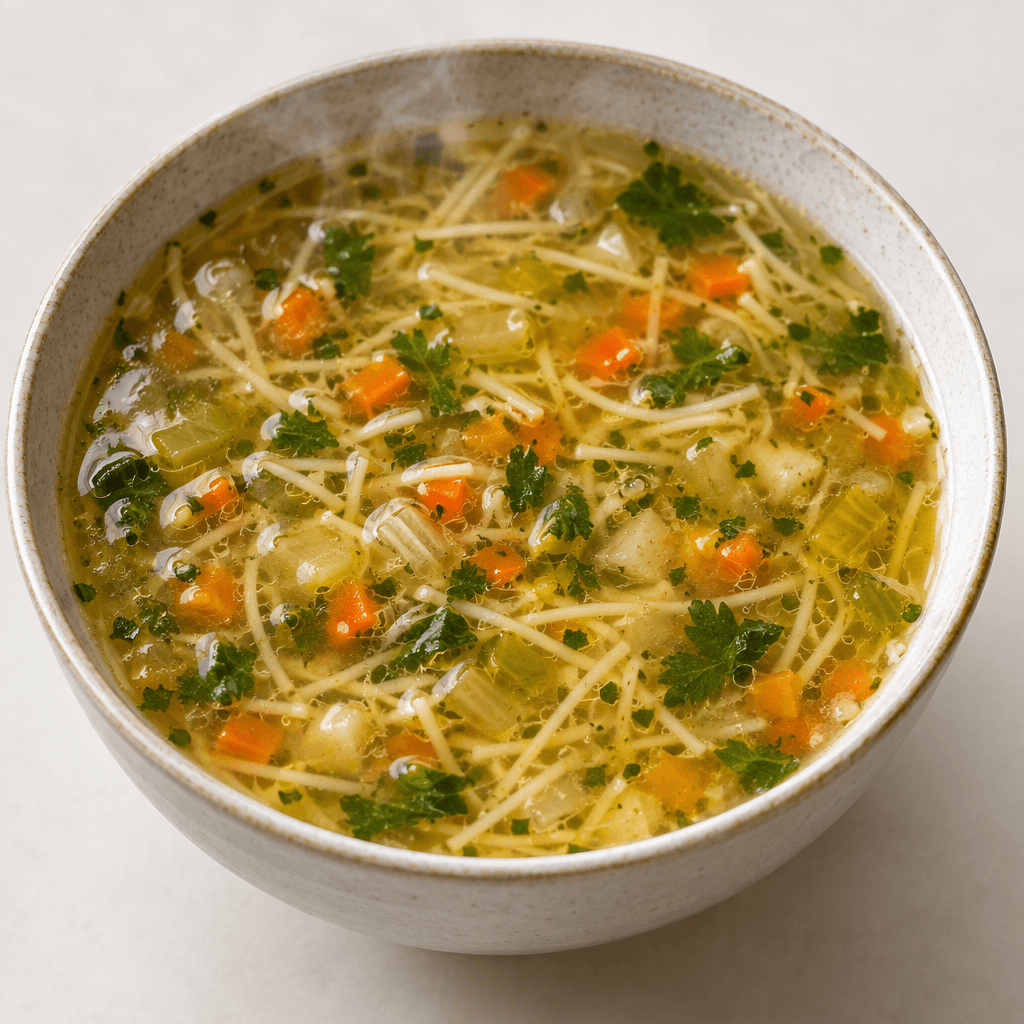
Instant Soup Calories
Convenient, quick to prepare, often salty and contains additives
In season: Winter · Autumn
CALORIES
GI
POTASSIUM
FIBER
Quick answer
1 cup (medium) of Instant Soup (250 g) has 850 calories. That works out to 340 calories per 100 g. It contains 152.5 g of carbs, 17.5 g of protein, 17.5 g of fat and 6.3 g of fiber. Its 5500 mg of Sodium covers 239% of the Daily Value. Its glycemic index is 65 (high), so it raises blood sugar quickly.
What is Instant Soup?
Instant Soup is a packaged convenience product, usually made from a dried soup mix that may include noodles, small vegetable pieces and seasonings. You prepare it by adding hot water; the exact ingredients and style vary, from clear broths to thicker soups.
Its appeal is speed: the rehydrated ingredients make a light, warming cup that works as a quick snack, a simple starter or an easy option at a desk or while travelling. It is commonly eaten on its own or with bread, depending on the meal. Nutritionally, it is generally carbohydrate-led, with modest protein, and many varieties are quite salty. For a more substantial bowl, add fresh vegetables or beans; use less of the seasoning mix if you prefer a milder, less salty taste.
Instant Soup Nutrition Facts
Selected: 100 g
340
KCAL / 100G
Carbs
61g
· 22% DV
Protein
7g
· 14% DV
Fat
7g
· 9% DV
Fiber
2.5g
· 9% DV
DV is the share of the daily value covered, on a 2,000 kcal reference diet.
Calories come from: Carbs 73% · Protein 8% · Fat 19%

Log this food in EatBetter
100,000+ people use it
- Get your daily calorie target
- Snap your meal, log it in seconds
- See every vitamin and mineral

📸 Scan the code to get the app free.

Instant Soup Vitamins & Minerals
Vitamins
Vitamin A
120µg · 13% DV
Biotin
2.5µg · 8% DV
B2
0.09mg · 7% DV
B3
1.1mg · 7% DV
Minerals
Sodium
2200mg · 96% DV
Phosphorus
60mg · 9% DV
Potassium ⭐
210mg · 6% DV
Copper
0mg · 0% DV
How Nutritious Is Instant Soup?
Nutrient density
Low
How many vitamins, minerals and how much fiber this food carries per calorie. A high score means a lot of nutrition for few calories.
Satiety score
Low
An EatBetter score computed from fiber, protein and calorie density. A high score means staying full longer on the same calories.
Both scores are calculated per 100 g and do not change with the selected portion. The satiety score is EatBetter's own calculation, not a clinical measure.
Instant Soup Glycemic Index
GLYCEMIC INDEX
GLYCEMIC LOAD
Accounts for portion size — a more realistic measure than GI alone.
How to Burn Off Instant Soup
To burn the 340 calories in 100 g:
🚶
Walking (5 km/h)
🏃
Running (8 km/h)
🚴
Cycling
🏊
Swimming
Times are calculated with the MET equation for a 70 kg adult. Actual burn varies with your weight, age and pace.
Is Instant Soup Processed?
NOVA 4
Ultra-Processed
1. Unprocessed
2. Minimally Processed
3. Processed
4. Ultra-Processed
NOVA classifies foods into 4 groups by industrial processing. NOVA 1 (unprocessed) is the healthiest.
Does Instant Soup Contain Allergens?
Contains these allergens:
Which Diets Is Instant Soup Good For?
Vegan
— Not suitable
Vegetarian
✓ Suitable
Gluten-Free
— Not suitable
Dairy-Free
— Not suitable
Mediterranean
— Not suitable
Paleo
— Not suitable
Whole30
— Not suitable
DASH
— Not suitable
Keto
— Not suitable
Low FODMAP
— Not suitable
Instant Soup Fat Profile
SATURATED
2.5g
MONOUNSATURATED
2.2g
POLYUNSATURATED
1.2g
Omega 6:3 ratio 9:1
Above the ideal 4:1 (9:1).
Compare Instant Soup
Foods Similar to Instant Soup
Frequently Asked Questions About Instant Soup
How much water do you add to instant soup?
Use the amount of water specified for that instant soup, since packet sizes and recipes vary. Adding too little makes it overly concentrated, while too much can leave it thin and dilute the seasoning.
Can you make instant soup in the microwave?
Yes, you can make instant soup in the microwave if the product directions allow it. Use a microwave-safe bowl, stir well, and heat in short intervals to reduce splattering; never microwave the packet itself.
What is instant soup made of?
Instant soup commonly contains dried vegetables, noodles or other starches, salt, and seasonings. Some varieties also include oils, thickeners, or flavor enhancers; ingredients differ by flavor and product.
How do you make instant soup taste better?
Add fresh ingredients to give instant soup more flavor and texture. Stir in chopped vegetables or mushrooms while heating, then finish with herbs, pepper, or a squeeze of lemon. Add salt sparingly because many varieties are already salty.
Can you add milk to instant soup?
You can add milk to instant soup when the directions recommend it, especially for varieties designed to be creamy. Replacing all the water with milk in other types can change the texture and may keep the powder from dissolving smoothly.
How should you store an opened packet of instant soup?
Keep opened instant soup powder in an airtight container in a cool, dry place. Moisture can make the powder clump and affect its quality; use the date on the package as a guide.
How long does prepared instant soup last in the fridge?
Prepared instant soup can be kept in the refrigerator if you transfer leftovers to a covered container promptly. Reheat only the portion you plan to eat, and discard soup that has been left at room temperature for too long or looks or smells unusual.
Is instant soup healthy?
Instant soup can be convenient, but many varieties are high in salt and may offer less variety than soup made with fresh ingredients. Add vegetables or beans and choose water alongside it to make the meal more balanced.
Can you eat instant soup every day?
You can eat instant soup regularly, but making it an everyday staple may mean getting too much salt and too little variety. Rotate it with homemade soups and meals built around vegetables, grains, and protein foods.
Is instant soup good when you have a cold?
Instant soup can be a warm, easy-to-eat option when you have a cold, but it does not cure the illness. Keep drinking fluids, and choose a less salty variety if you find salty foods make you thirstier.
Have another question about Instant Soup?
Ask the AI nutrition coach — calories, portions, alternatives and more, answered in seconds in the app.

Scan calories with your camera
Instant AI nutrition analysis

Nutrition data compiled from USDA FoodData Central and scientific sources.