

Ready & Packaged Foods
All →Vegetables & Legumes
All →Desserts & Confectionery
All →Meat & Protein
All →Grains & Bakery
All →Beverages
All →Milk & Dairy
All →

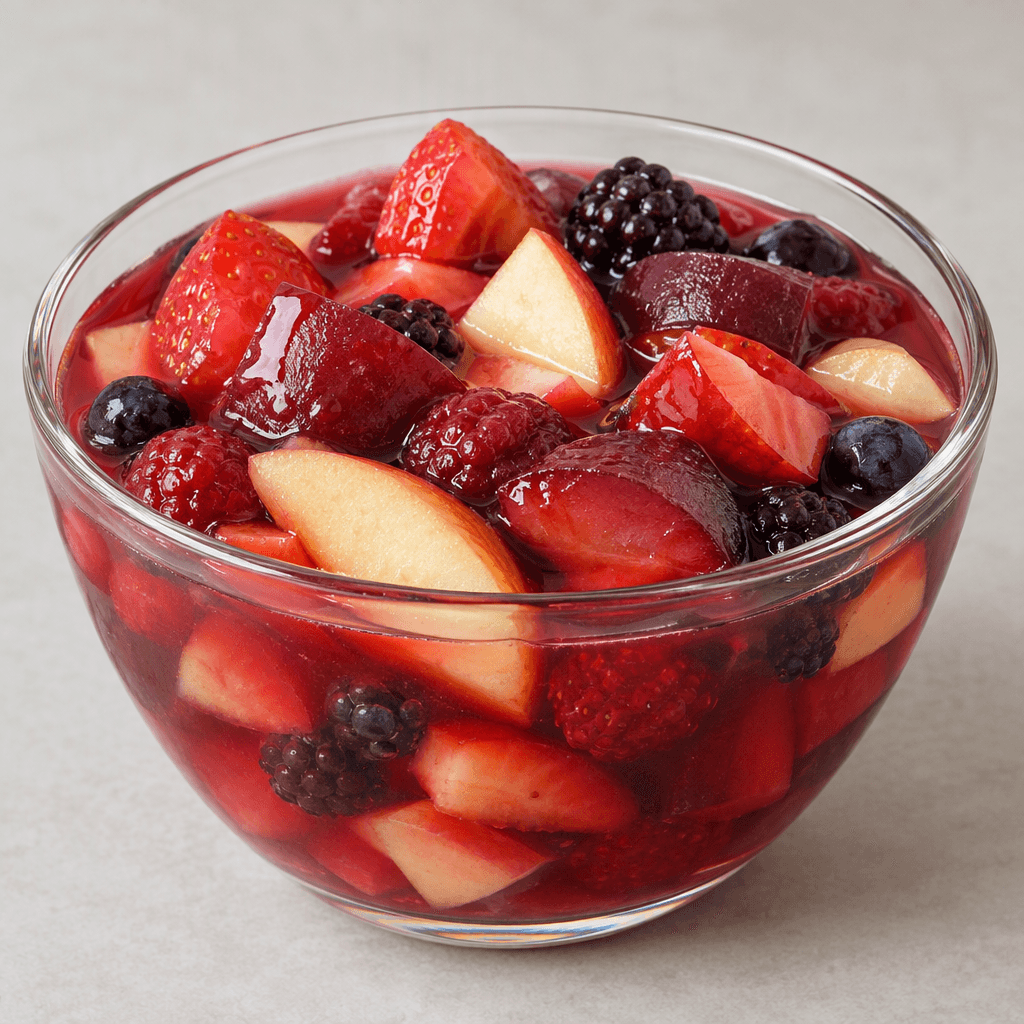
Compote Calories
Traditional fruit dessert, fruits cooked in sweetened water
In season: Spring · Summer · Autumn · Winter
CALORIES
GI
POTASSIUM
FIBER
Quick answer
1 cup (medium) of Compote (150 g) has 128 calories. That works out to 85 calories per 100 g. It contains 31.5 g of carbs, 0.5 g of protein, 0.2 g of fat and 2.3 g of fiber. Its 0 mg of Copper covers 5% of the Daily Value. Its glycemic index is 65 (medium), so it raises blood sugar at a moderate pace.
What is Compote?
Compote, known in Turkey as hoşaf, is made by simmering dried fruit—often apricots, raisins, plums or pears—in water, sometimes with added sugar. The fruit softens but stays in pieces, while the cooking liquid takes on its colour and flavour.
In Turkish home cooking it is usually served chilled, alongside a meal such as pilaf or as a simple dessert; it also appears on Ramadan iftar tables. Depending on the fruit, it tastes sweet or gently tart, with tender fruit in a light syrup. It is mainly a source of carbohydrate, with 21 g per 100 g. You can make it less sweet by using little or no added sugar.
Compote Nutrition Facts
Selected: 100 g
85
KCAL / 100G
Carbs
21g
· 8% DV
Protein
0.3g
· 1% DV
Fat
0.1g
· 0% DV
Fiber
1.5g
· 5% DV
DV is the share of the daily value covered, on a 2,000 kcal reference diet.
Calories come from: Carbs 98% · Protein 1% · Fat 1%
Compote Vitamins & Minerals
Vitamins
B1
0.02mg · 2% DV
B2
0.02mg · 2% DV
B5
0.08mg · 2% DV
B6
0.04mg · 2% DV
Minerals
Phosphorus
12mg · 2% DV
Potassium ⭐
70mg · 2% DV
Calcium
8mg · 1% DV
Magnesium
5mg · 1% DV
How Nutritious Is Compote?
Nutrient density
Medium
How many vitamins, minerals and how much fiber this food carries per calorie. A high score means a lot of nutrition for few calories.
Satiety score
Medium
An EatBetter score computed from fiber, protein and calorie density. A high score means staying full longer on the same calories.
Both scores are calculated per 100 g and do not change with the selected portion. The satiety score is EatBetter's own calculation, not a clinical measure.
Compote Glycemic Index
GLYCEMIC INDEX
GLYCEMIC LOAD
Accounts for portion size — a more realistic measure than GI alone.
How to Burn Off Compote
To burn the 85 calories in 100 g:
🚶
Walking (5 km/h)
🏃
Running (8 km/h)
🚴
Cycling
🏊
Swimming
Times are calculated with the MET equation for a 70 kg adult. Actual burn varies with your weight, age and pace.
Is Compote Processed?
NOVA 3
Processed
1. Unprocessed
2. Minimally Processed
3. Processed
4. Ultra-Processed
NOVA classifies foods into 4 groups by industrial processing. NOVA 1 (unprocessed) is the healthiest.
Does Compote Contain Allergens?
No known major allergens
Which Diets Is Compote Good For?
Vegan
✓ Suitable
Vegetarian
✓ Suitable
Gluten-Free
✓ Suitable
Dairy-Free
— Not suitable
Mediterranean
✓ Suitable
Paleo
— Not suitable
Whole30
— Not suitable
DASH
— Not suitable
Keto
— Not suitable
Low FODMAP
— Not suitable
Compote Fat Profile
SATURATED
0.02g
MONOUNSATURATED
0.01g
POLYUNSATURATED
0.03g
Omega 6:3 ratio 2:1
Below the ideal 4:1 — a good omega balance.
Compare Compote
Foods Similar to Compote
Frequently Asked Questions About Compote
What is compote?
Compote is fruit cooked gently in water or syrup until tender while often remaining in pieces. It can be served as a dessert or spooned over foods such as yogurt, porridge, and pancakes.
How do you make compote?
To make compote, simmer chopped fruit with a little water until it softens but still holds some shape. Add sugar or spices if desired, then serve warm or chill it before serving.
What is the difference between compote and jam?
Compote is usually cooked briefly and keeps recognizable pieces of fruit in a loose syrup. Jam is cooked down to a thicker, more uniform spread and is generally made for preserving.
Which fruits are best for compote?
Apples, pears, berries, plums, cherries, and peaches all work well in compote. Use one fruit or combine varieties; firmer pieces may need to cook longer than soft berries.
Can you make compote without sugar?
Yes, compote can be made without added sugar. Ripe fruit releases sweetness as it cooks, while a splash of water helps prevent sticking; taste it near the end before deciding whether to sweeten it.
How do you thicken compote?
To thicken compote, simmer it uncovered so some liquid evaporates, or mash a few cooked fruit pieces into the syrup. Avoid prolonged cooking if you want the remaining fruit chunks to keep their shape.
How long does compote last in the fridge?
Homemade compote typically keeps for about three to four days in a covered container in the refrigerator. Use a clean spoon when serving, and discard it if its smell, appearance, or taste changes.
Can you freeze compote?
Yes, compote can be frozen in an airtight, freezer-safe container. Leave a little room for expansion, thaw it in the refrigerator, and expect softer fruit after thawing, especially if it was already very tender.
Should compote be served warm or cold?
Compote can be served warm or cold. Warm compote pairs well with pancakes or oatmeal, while chilled compote is often served as a dessert or alongside yogurt.
What can you serve with compote?
Compote pairs well with plain yogurt, oatmeal, pancakes, waffles, and rice pudding. A spoonful can also accompany roasted meats when made with tart fruit and little or no added sugar.
Have another question about Compote?
Ask the AI nutrition coach — calories, portions, alternatives and more, answered in seconds in the app.

Scan calories with your camera
Instant AI nutrition analysis

Nutrition data compiled from USDA FoodData Central and scientific sources.