

Ready & Packaged Foods
All →Vegetables & Legumes
All →Desserts & Confectionery
All →Meat & Protein
All →Grains & Bakery
All →Beverages
All →Milk & Dairy
All →

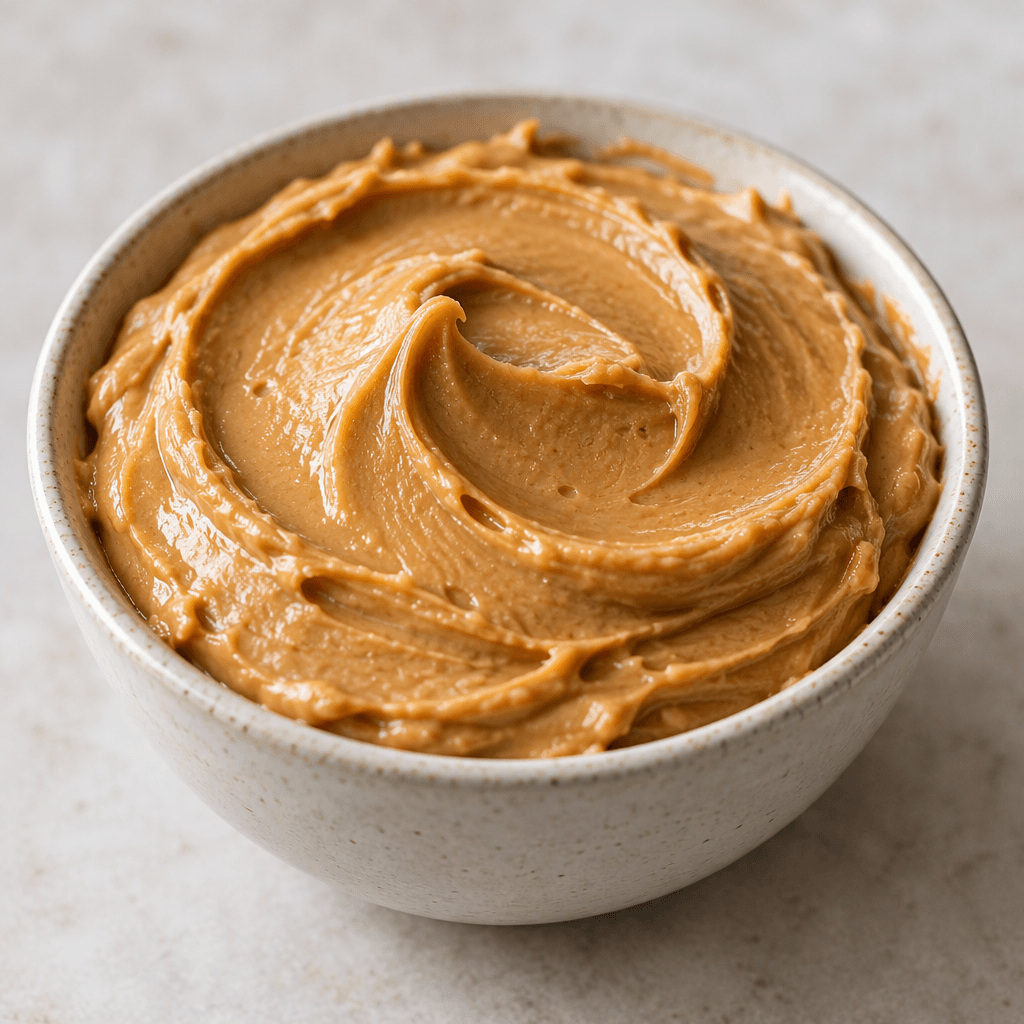
Honey peanut butter (unsweetened) Calories
Made with natural honey and roasted peanuts, no added sugar
CALORIES · 100 G
GI
POTASSIUM · 100 G
FIBER · 100 G
Quick answer
2 tablespoon (medium) of Honey peanut butter (unsweetened) (32 g) has 182 calories. That works out to 570 calories per 100 g. It contains 7 g of carbs, 7 g of protein, 14.1 g of fat and 2.1 g of fiber. Its 4.2 mg of B3 covers 26% of the Daily Value. Its glycemic index is 35 (low), so it raises blood sugar slowly.
Honey peanut butter (unsweetened) Nutrition Facts
Selected: 2 tablespoon (medium) · 32 g
182
KCAL / 32G
Carbs
7g
· 3% DV
Protein
7g
· 14% DV
Fat
14.1g
· 18% DV
Fiber
2.1g
· 8% DV
DV is the share of the daily value covered, on a 2,000 kcal reference diet.
Calories come from: Carbs 15% · Protein 15% · Fat 70%
Honey peanut butter (unsweetened) nutrition facts table · 2 tablespoon (medium) (32 g)
| Nutrient | Amount | % DV |
|---|---|---|
| Calories | 182 kcal | |
| Total fat | 14.1 g | 18% |
| Saturated fat | 2.4 g | 12% |
| Trans fat | 0 g | |
| Sodium | 1.92 mg | 0% |
| Total carbohydrate | 7 g | 3% |
| Fiber | 2.1 g | 8% |
| Protein | 7 g | 14% |
Calories: Calories measure energy. Average daily need is 2,000 kcal. Excess calories are stored as fat, too few cause weight loss.
Carbs: Your body's primary energy source. The brain runs exclusively on carbs. Daily need: 275g.
Protein: Essential for muscle repair and cell growth. Daily need: 50g. Keeps you full and boosts metabolism.
Fat: Needed for hormone production and vitamin absorption. Daily need: 78g. Limit saturated fats, choose unsaturated.
Fiber: Critical for digestive health and satiety. Daily need: 28g. Stabilizes blood sugar, lowers cholesterol.

Log this food in EatBetter
100,000+ people use it
- Get your daily calorie target
- Snap your meal, log it in seconds
- See every vitamin and mineral

📸 Scan the code to get the app free.

How Many Calories in 2 Tablespoons of Honey peanut butter (unsweetened)?
| Serving | Amount | Calories |
|---|---|---|
| 2 tablespoon (medium) | 32 g | 182 kcal |
| 1 tablespoon (small) | 16 g | 91 kcal |
| 1 piece (small) | 20 g | 114 kcal |
| 1 ounce (medium) | 28 g | 160 kcal |
| 1 serving (medium) | 32 g | 182 kcal |
| 3 tablespoon (large) | 48 g | 274 kcal |
| 100 g | 100 g | 570 kcal |
| 1 cup (large) | 250 g | 1425 kcal |
Calculated from 570 calories per 100 g.
Frequently Asked Questions About Honey peanut butter (unsweetened)
Does honey peanut butter (unsweetened) contain sugar?
Yes. Honey naturally contains sugars, so “unsweetened” generally means no extra table sugar was added, not that the spread is sugar-free. Check the ingredient list to see whether honey is the only sweetener.
How do you make honey peanut butter (unsweetened) at home?
Blend roasted peanuts until creamy, then mix in honey gradually to make honey peanut butter (unsweetened). Add only enough honey to suit your taste; adding it before the peanuts release their oils can make blending less smooth.
How should you store honey peanut butter (unsweetened) after opening?
Keep honey peanut butter (unsweetened) tightly covered in a cool, dry place, unless its label says to refrigerate it. Refrigeration can make it firmer, so let it sit out briefly before spreading.
Why does the oil separate in honey peanut butter (unsweetened)?
Oil can rise to the top of honey peanut butter (unsweetened) because peanuts naturally release oil and the spread may not contain stabilizers. Stir it thoroughly with a clean spoon before serving; discard it if it smells rancid or shows mold.
What can you eat with honey peanut butter (unsweetened)?
Honey peanut butter (unsweetened) works well on toast, with apple slices, or stirred into oatmeal. Since the honey already adds sweetness, it usually needs no extra jam or syrup.
Can people with diabetes eat honey peanut butter (unsweetened)?
Honey peanut butter (unsweetened) still contains honey’s natural sugars, which can affect blood glucose. Whether it fits depends on your meal plan and treatment, so ask your doctor or dietitian how to portion it.
Is honey peanut butter (unsweetened) different from regular peanut butter?
Yes. Honey peanut butter (unsweetened) includes honey for sweetness, while plain peanut butter does not. The word “unsweetened” does not mean the honey has no sugar; it usually means no additional sweetener was used.
Can you bake with honey peanut butter (unsweetened)?
Yes, honey peanut butter (unsweetened) can go into cookies, bars, or cake batter. Honey adds moisture and sweetness, so the finished texture and browning may differ; adjust other sweeteners and liquids in the recipe.
Does honey peanut butter (unsweetened) need to be refrigerated?
Not necessarily. Honey peanut butter (unsweetened) can usually be kept in a cool, dry cupboard, but follow the storage directions on its package. Refrigerating it can reduce oil separation but also make it harder to spread.
Can honey peanut butter (unsweetened) be used instead of honey and peanut butter separately?
Yes, honey peanut butter (unsweetened) combines both ingredients in one spread, so it can replace them in simple toppings or sandwiches. In recipes, remember that it also adds peanut solids and oil, which separate honey alone would not.
Honey peanut butter (unsweetened) Vitamins & Minerals
Vitamins
B3
4.16mg · 26% DV
Biotin
5.76µg · 19% DV
Vitamin E
2.08mg · 14% DV
B1
0.16mg · 13% DV
Minerals
Manganese
0.58mg · 25% DV
Copper
0.22mg · 24% DV
Phosphorus
109mg · 16% DV
Magnesium
54mg · 13% DV
Potassium ⭐
211mg · 6% DV
Sodium
1.92mg · 0% DV
Honey peanut butter (unsweetened) Glycemic Index
GLYCEMIC INDEX
GLYCEMIC LOAD
Accounts for portion size — a more realistic measure than GI alone.
How to Burn Off Honey peanut butter (unsweetened)
To burn the 182 calories in 2 tablespoon (medium) (32 g):
🚶
Walking (5 km/h)
🏃
Running (8 km/h)
🚴
Cycling
🏊
Swimming
Times are calculated with the MET equation for a 70 kg adult. Actual burn varies with your weight, age and pace.
What is Honey peanut butter (unsweetened)?
Honey peanut butter (unsweetened) is a spread made by blending roasted peanuts with natural honey. “Unsweetened” here means no added sugar; honey still contributes its own natural sugars. It has a thick, creamy texture and a sweet, nutty flavour, with the roasted peanuts balancing the honey.
In the United States, peanut butter is a familiar choice on toast and in sandwiches, and it is also spooned into oatmeal or paired with fruit. Elsewhere, it works just as easily as a breakfast spread or a snack with apple or banana slices. It is filling and provides protein and fat, with 22 g of protein per 100 g. Use a modest layer if you want to keep the portion lighter, or stir a little into plain yoghurt.
How Nutritious Is Honey peanut butter (unsweetened)?
Nutrient density
Medium
How many vitamins, minerals and how much fiber this food carries per calorie. A high score means a lot of nutrition for few calories.
Satiety score
High
An EatBetter score computed from fiber, protein and calorie density. A high score means staying full longer on the same calories.
Both scores are calculated per 100 g and do not change with the selected portion. The satiety score is EatBetter's own calculation, not a clinical measure.
Is Honey peanut butter (unsweetened) Processed?
NOVA 3
Processed
1. Unprocessed
2. Minimally Processed
3. Processed
4. Ultra-Processed
NOVA classifies foods into 4 groups by industrial processing. NOVA 1 (unprocessed) is the healthiest.
Does Honey peanut butter (unsweetened) Contain Allergens?
Contains these allergens:
Which Diets Is Honey peanut butter (unsweetened) Good For?
Vegan
— Not suitable
Vegetarian
✓ Suitable
Gluten-Free
✓ Suitable
Dairy-Free
— Not suitable
Mediterranean
✓ Suitable
Paleo
— Not suitable
Whole30
— Not suitable
DASH
— Not suitable
Keto
— Not suitable
Low FODMAP
— Not suitable
Honey peanut butter (unsweetened) Fat Profile
SATURATED
2.4g
MONOUNSATURATED
7.04g
POLYUNSATURATED
4.32g
Compare Honey peanut butter (unsweetened)
Foods Similar to Honey peanut butter (unsweetened)
Have another question about Honey peanut butter (unsweetened)?
Ask the AI nutrition coach — calories, portions, alternatives and more, answered in seconds in the app.

Scan calories with your camera
Instant AI nutrition analysis

Nutrition data compiled from USDA FoodData Central and scientific sources.