

Ready & Packaged Foods
All →Vegetables & Legumes
All →Desserts & Confectionery
All →Meat & Protein
All →Grains & Bakery
All →Beverages
All →Milk & Dairy
All →

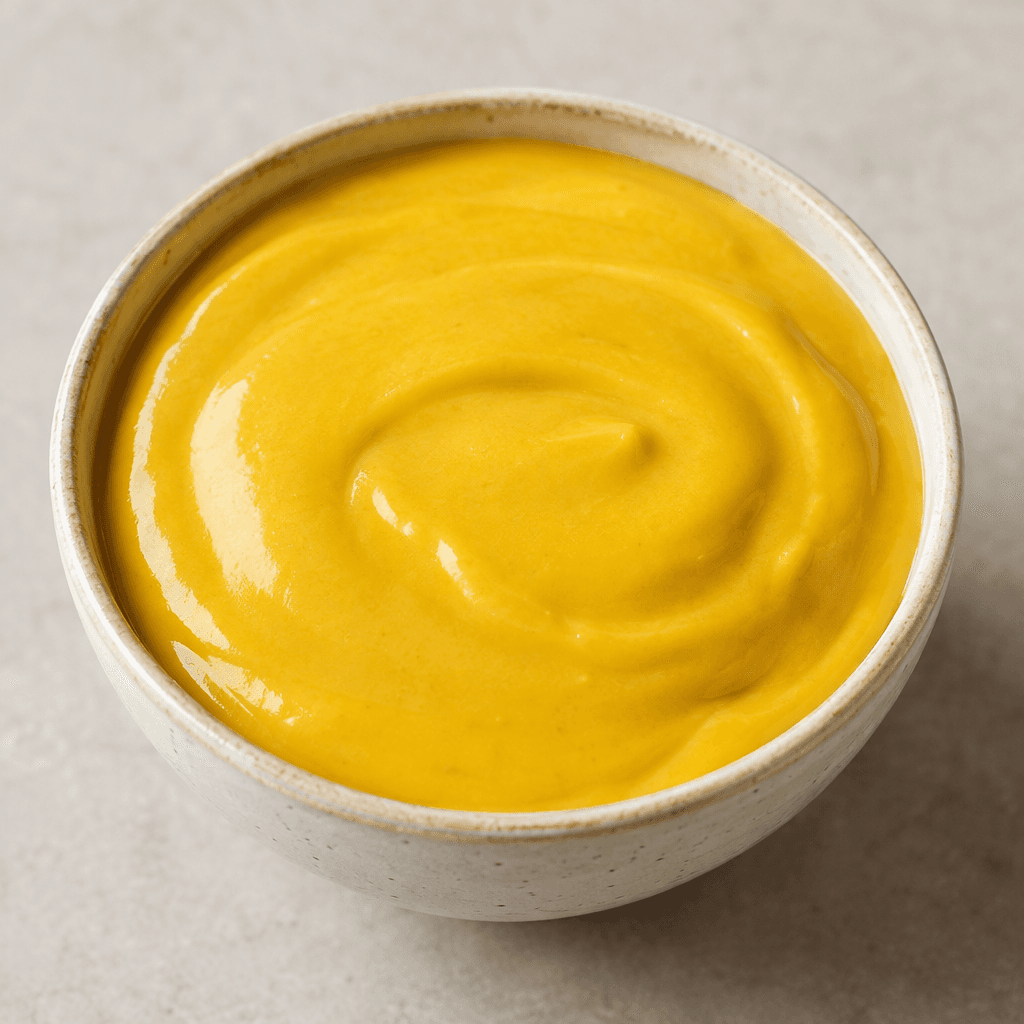
Honey Mustard Calories
Sweet and tangy sauce, popular for salads and sandwiches
In season: Spring · Summer · Autumn · Winter
CALORIES
GI
POTASSIUM
FIBER
Quick answer
1 tablespoon (medium) of Honey Mustard (18 g) has 47 calories. That works out to 260 calories per 100 g. It contains 9.5 g of carbs, 0.2 g of protein, 1 g of fat and 0.3 g of fiber. Its 144 mg of Sodium covers 6% of the Daily Value. Its glycemic index is 55 (medium), so it raises blood sugar at a moderate pace.
What is Honey Mustard?
Honey mustard blends mustard’s sharp, savoury bite with honey’s sweetness. Depending on the recipe, it may also include vinegar and other seasonings; the result is often a smooth, glossy sauce with a sweet-tangy taste. It works well in sandwiches and burgers, as a dressing for salads, or as a dip for chicken tenders and fries. In Turkey, you may also see it served alongside crispy snacks or used to add a sweet-savoury note to a chicken sandwich.
Its nutritional profile is led by carbohydrates, while protein is low. Because the sweetness can make it easy to use generously, start with a small spoonful and add more to taste. For a lighter, creamier dressing, mix a little with plain yogurt.
Honey Mustard Nutrition Facts
Selected: 100 g
260
KCAL / 100G
Carbs
53g
· 19% DV
Protein
1.2g
· 2% DV
Fat
5.5g
· 7% DV
Fiber
1.5g
· 5% DV
DV is the share of the daily value covered, on a 2,000 kcal reference diet.
Calories come from: Carbs 80% · Protein 2% · Fat 18%
Honey Mustard Vitamins & Minerals
Vitamins
B1
0.03mg · 3% DV
B2
0.02mg · 2% DV
B6
0.04mg · 2% DV
Biotin
0.6µg · 2% DV
Minerals
Sodium
800mg · 35% DV
Phosphorus
22mg · 3% DV
Calcium
18mg · 2% DV
Magnesium
8mg · 2% DV
How Nutritious Is Honey Mustard?
Nutrient density
Low
How many vitamins, minerals and how much fiber this food carries per calorie. A high score means a lot of nutrition for few calories.
Satiety score
Low
An EatBetter score computed from fiber, protein and calorie density. A high score means staying full longer on the same calories.
Both scores are calculated per 100 g and do not change with the selected portion. The satiety score is EatBetter's own calculation, not a clinical measure.
Honey Mustard Glycemic Index
GLYCEMIC INDEX
GLYCEMIC LOAD
Accounts for portion size — a more realistic measure than GI alone.
How to Burn Off Honey Mustard
To burn the 260 calories in 100 g:
🚶
Walking (5 km/h)
🏃
Running (8 km/h)
🚴
Cycling
🏊
Swimming
Times are calculated with the MET equation for a 70 kg adult. Actual burn varies with your weight, age and pace.
Is Honey Mustard Processed?
NOVA 3
Processed
1. Unprocessed
2. Minimally Processed
3. Processed
4. Ultra-Processed
NOVA classifies foods into 4 groups by industrial processing. NOVA 1 (unprocessed) is the healthiest.
Does Honey Mustard Contain Allergens?
No known major allergens
Which Diets Is Honey Mustard Good For?
Vegan
— Not suitable
Vegetarian
✓ Suitable
Gluten-Free
— Not suitable
Dairy-Free
— Not suitable
Mediterranean
— Not suitable
Paleo
— Not suitable
Whole30
— Not suitable
DASH
— Not suitable
Keto
— Not suitable
Low FODMAP
— Not suitable
Honey Mustard Fat Profile
SATURATED
0.7g
MONOUNSATURATED
2.1g
POLYUNSATURATED
2.3g
Omega 6:3 ratio 4:1
Below the ideal 4:1 — a good omega balance.
Compare Honey Mustard
Foods Similar to Honey Mustard
Frequently Asked Questions About Honey Mustard
What is Honey Mustard made of?
Honey Mustard is usually made by mixing mustard with honey and a little vinegar or lemon juice. Some versions include oil, mayonnaise, or yogurt for a creamier texture, so the sweetness and sharpness vary between recipes and brands.
How do you make Honey Mustard at home?
Mix mustard with honey and a small splash of vinegar or lemon juice to make Honey Mustard. For a creamy dip, stir in mayonnaise or Greek yogurt. Taste as you go and adjust the honey and mustard to get the balance you like.
What should you serve with Honey Mustard?
Honey Mustard pairs well with chicken tenders, roasted potatoes, burgers, and crunchy vegetables. Serve it as a dip or spread it in a sandwich; its sweet tang also complements grilled chicken and pork without needing another sauce.
Can you use Honey Mustard as a salad dressing?
Yes, Honey Mustard works as a salad dressing. Thin it with olive oil and a little lemon juice or vinegar, then toss it with the greens just before serving. It is especially popular on salads with chicken, cabbage, or apples.
Can you bake chicken with Honey Mustard?
Yes, Honey Mustard makes a flavorful coating for baked chicken. Brush it on before baking or near the end of cooking; the honey can brown quickly, so watch the surface and cover the chicken if it darkens too fast.
What is the difference between Honey Mustard and Dijon mustard?
Honey Mustard is sweetened with honey and often used as a dip or dressing, while Dijon mustard is generally sharper and less sweet. They are not interchangeable without changing a dish’s flavor; Dijon can be mixed with honey to make a quick version.
How should you store Honey Mustard after opening?
Store opened bottled Honey Mustard in the refrigerator with the lid tightly closed. Use a clean utensil when serving and follow the storage directions on the container, since ingredients and recommended handling can differ between products.
How long does homemade Honey Mustard last in the fridge?
Keep homemade Honey Mustard in a sealed container in the refrigerator and use it within a few days. Versions made with mayonnaise or yogurt are especially perishable; discard the sauce if its smell, appearance, or texture changes.
Can Honey Mustard be used as a marinade?
Yes, Honey Mustard can be used to marinate chicken, pork, or vegetables. Refrigerate food while it marinates, and do not reuse marinade that touched raw meat unless you bring it to a full boil first.
What can you use instead of Honey Mustard?
A quick substitute for Honey Mustard is plain mustard mixed with honey; add a little vinegar or lemon juice if you want more tang. For a less sweet alternative, use Dijon mustard, keeping in mind that the finished dish will taste sharper.
Have another question about Honey Mustard?
Ask the AI nutrition coach — calories, portions, alternatives and more, answered in seconds in the app.

Scan calories with your camera
Instant AI nutrition analysis

Nutrition data compiled from USDA FoodData Central and scientific sources.