

Ready & Packaged Foods
All →Vegetables & Legumes
All →Desserts & Confectionery
All →Meat & Protein
All →Grains & Bakery
All →Beverages
All →Milk & Dairy
All →

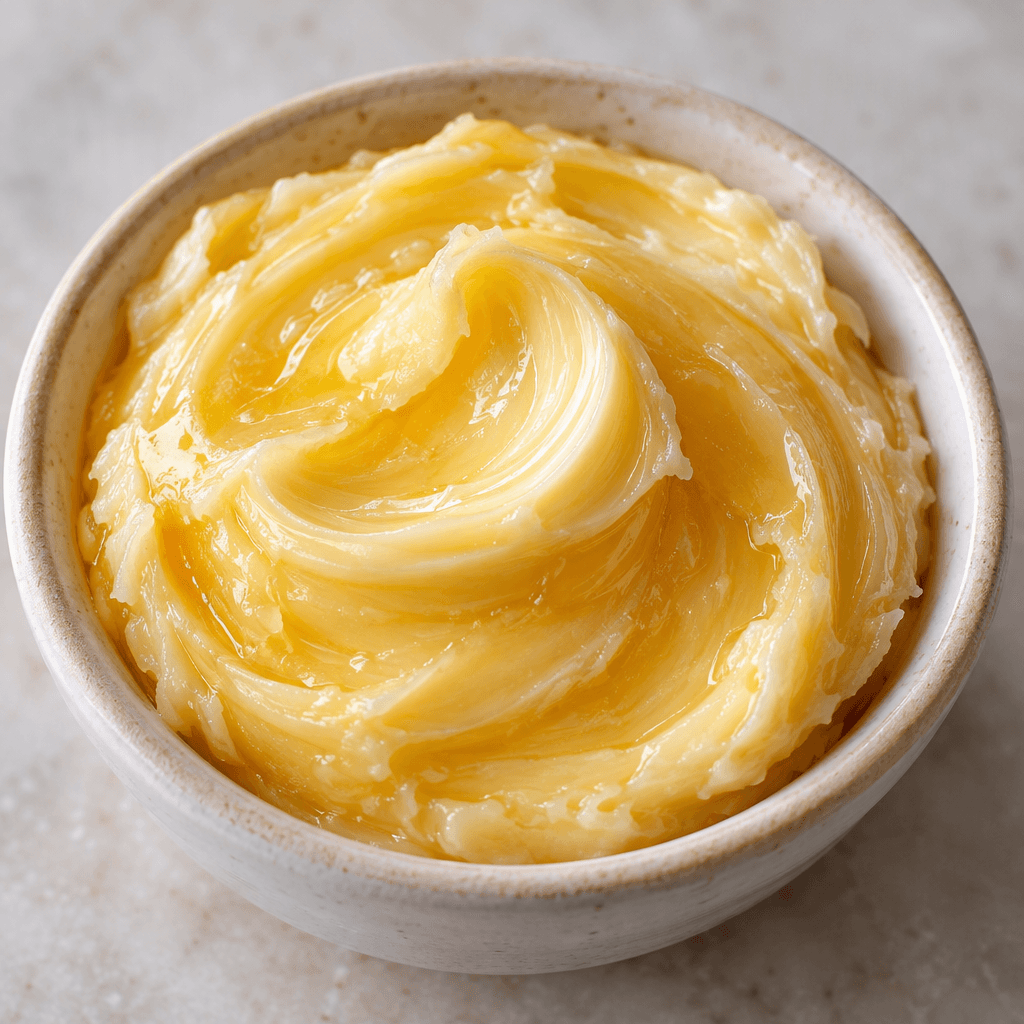
Honey butter mixture Calories
Energy-dense blend of honey and butter
CALORIES
GI
POTASSIUM
FIBER
Quick answer
1 tablespoon (medium) of Honey butter mixture (20 g) has 108 calories. That works out to 541 calories per 100 g. It contains 8.2 g of carbs, 0.1 g of protein, 8.5 g of fat and 0 g of fiber. Its 68.4 µg of Vitamin A covers 8% of the Daily Value. Its glycemic index is 48 (medium), so it raises blood sugar at a moderate pace.
What is Honey butter mixture?
Honey butter mixture combines softened butter with honey to make a smooth, spreadable blend. Its sweet, floral notes meet the rich, creamy taste of butter, and it is easy to mix at home. In the United States and elsewhere, it is commonly spread on toast, biscuits, cornbread or pancakes, served at breakfast or alongside a meal. A little also works as a topping for warm bread.
It is energy-dense, with most of its calories coming from fat and carbohydrates, so a thin layer brings plenty of flavour. For a lighter serving, spread it sparingly or use a little less butter when making it. The choice of honey—from mild to strongly flavoured—can change the balance of sweetness and aroma.
Honey butter mixture Nutrition Facts
Selected: 100 g
541
KCAL / 100G
Carbs
40.9g
· 15% DV
Protein
0.4g
· 1% DV
Fat
42.5g
· 54% DV
Fiber
0g
· 0% DV
DV is the share of the daily value covered, on a 2,000 kcal reference diet.
Calories come from: Carbs 30% · Protein 0% · Fat 70%
Honey butter mixture Vitamins & Minerals
Vitamins
Vitamin A
342µg · 38% DV
Vitamin E
1.2mg · 8% DV
Vitamin D
1µg · 5% DV
B12
0.1µg · 4% DV
Minerals
Sodium
305mg · 13% DV
Selenium
1.5µg · 3% DV
Iodine
3µg · 2% DV
Phosphorus
16mg · 2% DV
How Nutritious Is Honey butter mixture?
Nutrient density
Low
How many vitamins, minerals and how much fiber this food carries per calorie. A high score means a lot of nutrition for few calories.
Satiety score
Low
An EatBetter score computed from fiber, protein and calorie density. A high score means staying full longer on the same calories.
Both scores are calculated per 100 g and do not change with the selected portion. The satiety score is EatBetter's own calculation, not a clinical measure.
Honey butter mixture Glycemic Index
GLYCEMIC INDEX
GLYCEMIC LOAD
Accounts for portion size — a more realistic measure than GI alone.
How to Burn Off Honey butter mixture
To burn the 541 calories in 100 g:
🚶
Walking (5 km/h)
🏃
Running (8 km/h)
🚴
Cycling
🏊
Swimming
Times are calculated with the MET equation for a 70 kg adult. Actual burn varies with your weight, age and pace.
Is Honey butter mixture Processed?
NOVA 3
Processed
1. Unprocessed
2. Minimally Processed
3. Processed
4. Ultra-Processed
NOVA classifies foods into 4 groups by industrial processing. NOVA 1 (unprocessed) is the healthiest.
Does Honey butter mixture Contain Allergens?
Contains these allergens:
Which Diets Is Honey butter mixture Good For?
Vegan
— Not suitable
Vegetarian
✓ Suitable
Gluten-Free
✓ Suitable
Dairy-Free
— Not suitable
Mediterranean
— Not suitable
Paleo
— Not suitable
Whole30
— Not suitable
DASH
— Not suitable
Keto
— Not suitable
Low FODMAP
— Not suitable
Honey butter mixture Fat Profile
SATURATED
26.6g
MONOUNSATURATED
10.8g
POLYUNSATURATED
1.3g
Omega 6:3 ratio 12:1
Above the ideal 4:1 (12:1).
Compare Honey butter mixture
Foods Similar to Honey butter mixture
Frequently Asked Questions About Honey butter mixture
How do you make a honey butter mixture?
A honey butter mixture is made by stirring honey into softened butter until smooth. Keep the butter soft rather than melted; melted butter can leave the mixture greasy and less spreadable.
What is the best ratio for a honey butter mixture?
A useful starting ratio for a honey butter mixture is two parts butter to one part honey. Add more honey gradually if you prefer it sweeter, while checking that the mixture still holds its shape.
What do you eat a honey butter mixture with?
A honey butter mixture is commonly spread on toast, biscuits, cornbread, or pancakes. It also works as a finishing spread on warm rolls; add it after cooking so it melts without scorching.
Does a honey butter mixture need to be refrigerated?
Yes, refrigerate a honey butter mixture in a covered container because it contains butter. Let only the amount you plan to serve soften briefly, rather than leaving the whole batch out for extended periods.
How long does a honey butter mixture last in the fridge?
A homemade honey butter mixture is best used within about one to two weeks when kept covered and refrigerated. Use a clean utensil each time, and discard it if its smell or appearance changes.
Can you freeze a honey butter mixture?
Yes, a honey butter mixture can be frozen in a tightly sealed, freezer-safe container. Thaw it in the refrigerator and stir it again before serving; do not refreeze it after thawing.
Why is my honey butter mixture grainy or separated?
A honey butter mixture can turn grainy when the honey crystallizes, or look separated if the butter was too warm when mixed. Let it soften gently and stir again; avoid heating it until oily.
Can you make a honey butter mixture with salted butter?
Yes, salted butter works in a honey butter mixture and gives the sweetness a savory contrast. Taste it before adding any extra salt, since the butter may already provide enough.
Can a honey butter mixture replace butter in baking?
Not as a direct one-for-one replacement: a honey butter mixture also adds honey, which changes a recipe’s sweetness and moisture. Use it as a spread, or choose a baking recipe specifically designed for honey.
Does a honey butter mixture raise blood sugar?
Yes, a honey butter mixture can raise blood sugar because honey supplies carbohydrates. The butter does not cancel out that effect, so people managing diabetes should account for it in their meal plan.
Have another question about Honey butter mixture?
Ask the AI nutrition coach — calories, portions, alternatives and more, answered in seconds in the app.

Scan calories with your camera
Instant AI nutrition analysis

Nutrition data compiled from USDA FoodData Central and scientific sources.