

Ready & Packaged Foods
All →Vegetables & Legumes
All →Desserts & Confectionery
All →Meat & Protein
All →Grains & Bakery
All →Beverages
All →Milk & Dairy
All →

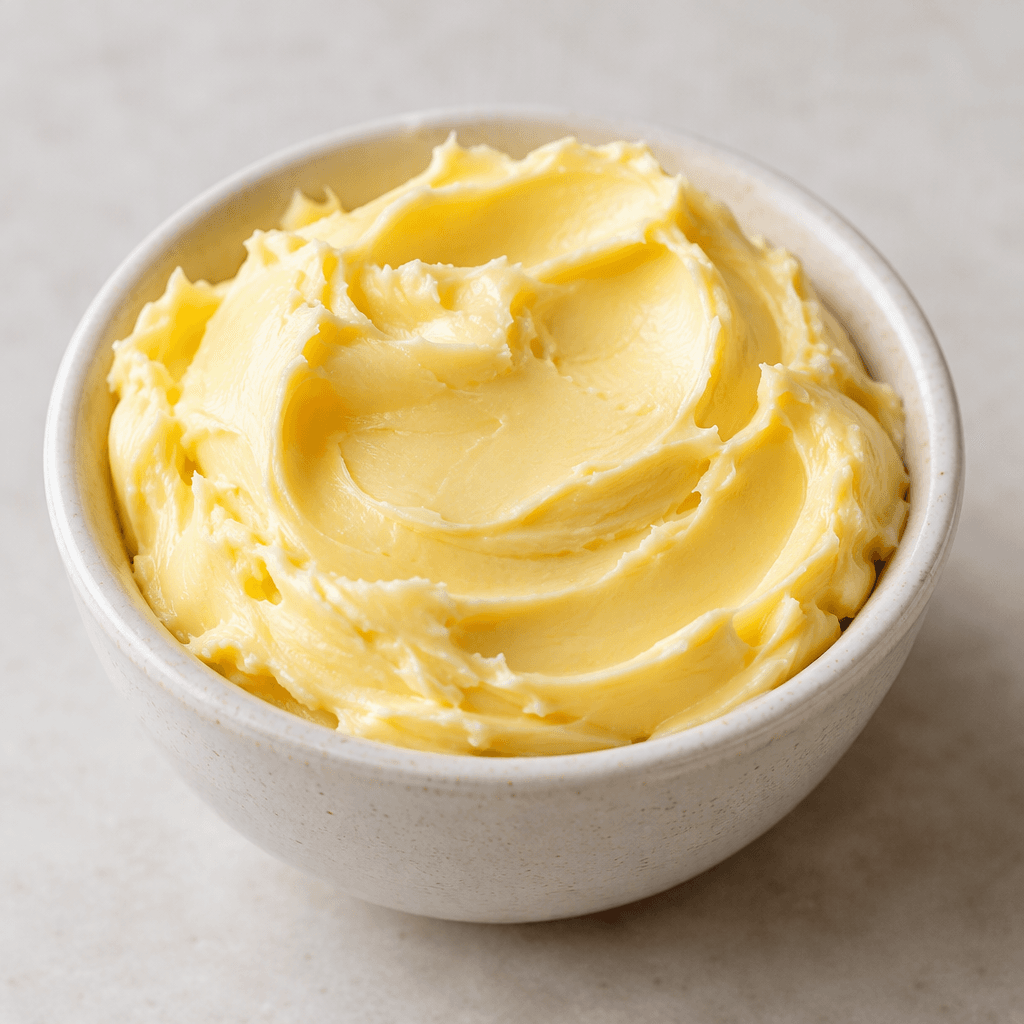
Honey butter Calories
Blend of butter and honey, energy-dense, sweet and creamy
In season: Spring · Summer · Autumn · Winter
CALORIES
GI
POTASSIUM
FIBER
Quick answer
1 tablespoon (medium) of Honey butter (15 g) has 65 calories. That works out to 430 calories per 100 g. It contains 5.3 g of carbs, 0.1 g of protein, 4.8 g of fat and 0 g of fiber. Its glycemic index is 65 (medium), so it raises blood sugar at a moderate pace.
What is Honey butter?
Honey butter is a sweet spread made by blending butter with honey, often whipped until soft and easy to spread. It is especially familiar in the United States, where it is served with warm biscuits and cornbread, and it also works on toast or pancakes. Its creamy texture balances buttery richness with honey’s floral sweetness.
The blend is energy-dense, with much of its nutrition coming from fat and carbohydrates, so a thin layer usually goes a long way. Try it with plain bread, oatmeal or warm rolls, or pair it with something tart, such as fresh berries, to balance the sweetness. For a less sugary spread, use less honey when mixing.
Honey butter Nutrition Facts
Selected: 100 g
430
KCAL / 100G
Carbs
35g
· 13% DV
Protein
0.5g
· 1% DV
Fat
32g
· 41% DV
Fiber
0g
· 0% DV
DV is the share of the daily value covered, on a 2,000 kcal reference diet.
Calories come from: Carbs 33% · Protein 0% · Fat 67%
Honey butter Vitamins & Minerals
Vitamins
Vitamin A
250µg · 28% DV
Vitamin E
1.2mg · 8% DV
B5
0.25mg · 5% DV
Biotin
1.5µg · 5% DV
Minerals
Calcium
18mg · 2% DV
Selenium
1µg · 2% DV
Phosphorus
15mg · 2% DV
Magnesium
3mg · 1% DV
How Nutritious Is Honey butter?
Nutrient density
Low
How many vitamins, minerals and how much fiber this food carries per calorie. A high score means a lot of nutrition for few calories.
Satiety score
Low
An EatBetter score computed from fiber, protein and calorie density. A high score means staying full longer on the same calories.
Both scores are calculated per 100 g and do not change with the selected portion. The satiety score is EatBetter's own calculation, not a clinical measure.
Honey butter Glycemic Index
GLYCEMIC INDEX
GLYCEMIC LOAD
Accounts for portion size — a more realistic measure than GI alone.
How to Burn Off Honey butter
To burn the 430 calories in 100 g:
🚶
Walking (5 km/h)
🏃
Running (8 km/h)
🚴
Cycling
🏊
Swimming
Times are calculated with the MET equation for a 70 kg adult. Actual burn varies with your weight, age and pace.
Is Honey butter Processed?
NOVA 3
Processed
1. Unprocessed
2. Minimally Processed
3. Processed
4. Ultra-Processed
NOVA classifies foods into 4 groups by industrial processing. NOVA 1 (unprocessed) is the healthiest.
Does Honey butter Contain Allergens?
Contains these allergens:
Which Diets Is Honey butter Good For?
Vegan
— Not suitable
Vegetarian
✓ Suitable
Gluten-Free
— Not suitable
Dairy-Free
— Not suitable
Mediterranean
✓ Suitable
Paleo
— Not suitable
Whole30
— Not suitable
DASH
— Not suitable
Keto
— Not suitable
Low FODMAP
— Not suitable
Honey butter Fat Profile
SATURATED
20g
MONOUNSATURATED
8g
POLYUNSATURATED
0.3g
Omega 6:3 ratio 3.1:1
Below the ideal 4:1 — a good omega balance.
Compare Honey butter
Foods Similar to Honey butter
Frequently Asked Questions About Honey butter
What is honey butter?
Honey butter is a sweet spread made by blending softened butter with honey. It is commonly served with bread, biscuits, pancakes, or cornbread, and may be whipped for a lighter texture.
How do you make honey butter?
To make honey butter, beat softened butter and honey together until smooth and fluffy. Avoid melting the butter first; melted butter can leave the mixture greasy rather than creamy and easy to spread.
What do you eat honey butter with?
Honey butter goes well with biscuits, cornbread, toast, pancakes, waffles, and dinner rolls. It can also be served alongside roasted sweet potatoes or spread over warm baked goods just before eating.
How should you store honey butter?
Store homemade honey butter in a covered container in the refrigerator. Let only the amount you plan to use soften at room temperature, and use a clean utensil to avoid introducing crumbs or other food.
Can you freeze honey butter?
Yes, honey butter can be frozen in an airtight container. Thaw it in the refrigerator, then stir or whip it again if the texture looks uneven after thawing.
Can honey butter replace regular butter in baking?
Sometimes, but honey butter is not a direct substitute in every baking recipe because it adds sweetness and moisture as well as fat. It works best in recipes where a honey flavor is welcome.
Is honey butter the same as honey whipped with butter?
They are essentially the same combination, though honey butter may be dense or whipped depending on how it is prepared. Whipping softened butter incorporates air; simply mixing it with honey makes a smoother, heavier spread.
Can you put honey butter on cornbread?
Yes, honey butter is a popular topping for cornbread. Spread it over a warm slice so it softens into the crumb, or serve it on the side so each person can add as much as they like.
Can you cook with honey butter?
Yes, honey butter can be used to finish foods such as roasted vegetables or warm rolls, but it can scorch if heated hard because it contains honey and dairy. Add it near the end of cooking or serve it at the table.
Can babies eat honey butter?
No, babies younger than 12 months should not eat honey butter because it contains honey, which can cause infant botulism. Mixing honey with butter does not remove this risk.
Have another question about Honey butter?
Ask the AI nutrition coach — calories, portions, alternatives and more, answered in seconds in the app.

Scan calories with your camera
Instant AI nutrition analysis

Nutrition data compiled from USDA FoodData Central and scientific sources.