

Ready & Packaged Foods
All →Vegetables & Legumes
All →Desserts & Confectionery
All →Meat & Protein
All →Grains & Bakery
All →Beverages
All →Milk & Dairy
All →

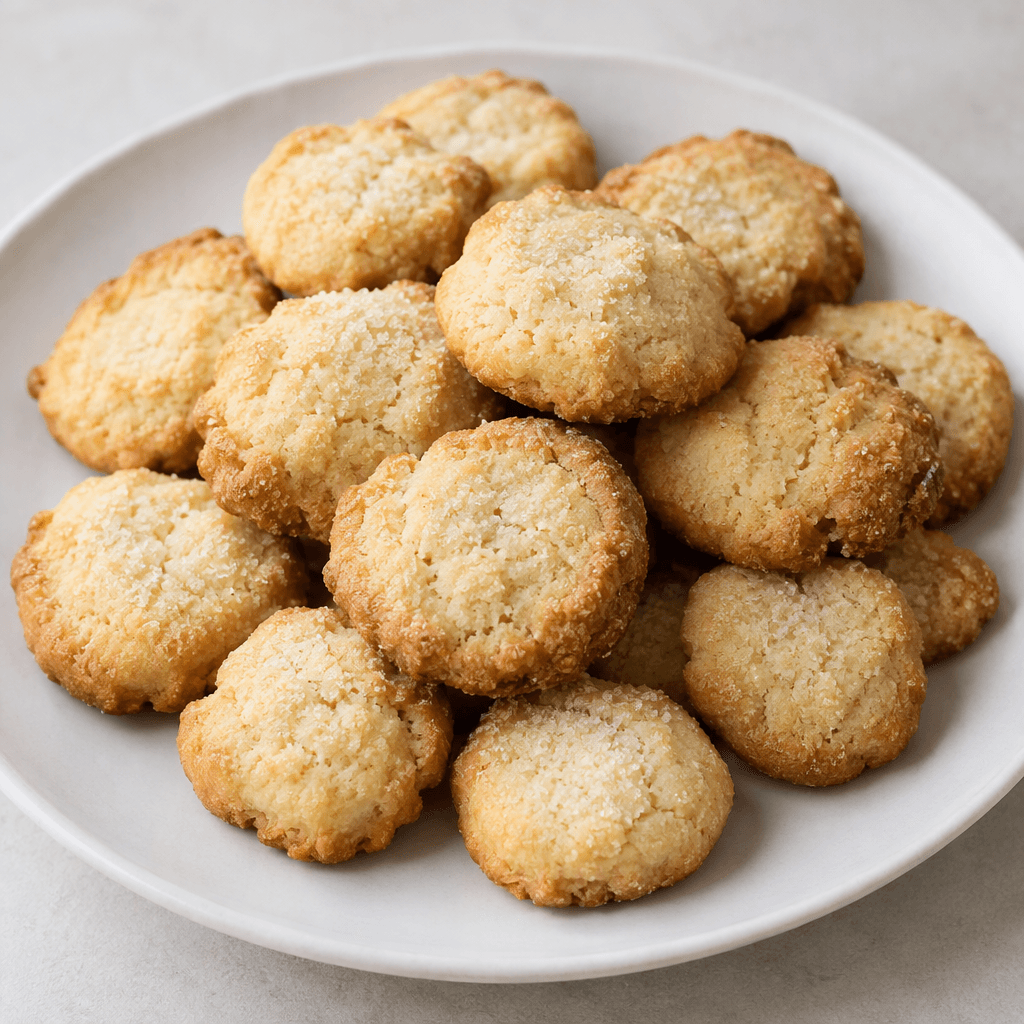
Homemade Cookies Calories
Classic homemade cookies, typically made with flour, sugar, butter, and eggs.
In season: Autumn · Winter
CALORIES
GI
POTASSIUM
FIBER
Quick answer
2 piece (medium) of Homemade Cookies (40 g) has 188 calories. That works out to 470 calories per 100 g. It contains 26 g of carbs, 2.2 g of protein, 8 g of fat and 0.9 g of fiber. Its 1.8 µg of Biotin covers 6% of the Daily Value. Its glycemic index is 70 (high), so it raises blood sugar quickly.
What is Homemade Cookies?
Homemade Cookies here refers to anne kurabiyesi, a familiar Turkish home-style biscuit usually made with flour, sugar, butter or another fat, and eggs. Recipes vary between households, sometimes including yoghurt or citrus zest. Baked until lightly golden, they tend to have a crumbly, tender middle and a gently crisp edge, with a simple buttery sweetness.
In Turkey, they are often served with tea at an afternoon break, and they also go well with coffee. For readers elsewhere, they make an easy sweet to share with a hot drink. They are mainly a carbohydrate-rich treat rather than a protein-focused snack; a smaller portion alongside unsweetened tea or coffee keeps the pairing simple.
Homemade Cookies Nutrition Facts
Selected: 100 g
470
KCAL / 100G
Carbs
65g
· 24% DV
Protein
5.5g
· 11% DV
Fat
20g
· 26% DV
Fiber
2.2g
· 8% DV
DV is the share of the daily value covered, on a 2,000 kcal reference diet.
Calories come from: Carbs 56% · Protein 5% · Fat 39%
Homemade Cookies Vitamins & Minerals
Vitamins
Biotin
4.5µg · 15% DV
B2
0.17mg · 13% DV
B1
0.12mg · 10% DV
Vitamin A
85µg · 9% DV
Minerals
Selenium
7µg · 13% DV
Iron
2mg · 11% DV
Sodium
220mg · 10% DV
Phosphorus
65mg · 9% DV
How Nutritious Is Homemade Cookies?
Nutrient density
Low
How many vitamins, minerals and how much fiber this food carries per calorie. A high score means a lot of nutrition for few calories.
Satiety score
Low
An EatBetter score computed from fiber, protein and calorie density. A high score means staying full longer on the same calories.
Both scores are calculated per 100 g and do not change with the selected portion. The satiety score is EatBetter's own calculation, not a clinical measure.
Homemade Cookies Glycemic Index
GLYCEMIC INDEX
GLYCEMIC LOAD
Accounts for portion size — a more realistic measure than GI alone.
How to Burn Off Homemade Cookies
To burn the 470 calories in 100 g:
🚶
Walking (5 km/h)
🏃
Running (8 km/h)
🚴
Cycling
🏊
Swimming
Times are calculated with the MET equation for a 70 kg adult. Actual burn varies with your weight, age and pace.
Is Homemade Cookies Processed?
NOVA 3
Processed
1. Unprocessed
2. Minimally Processed
3. Processed
4. Ultra-Processed
NOVA classifies foods into 4 groups by industrial processing. NOVA 1 (unprocessed) is the healthiest.
Does Homemade Cookies Contain Allergens?
Contains these allergens:
Which Diets Is Homemade Cookies Good For?
Vegan
— Not suitable
Vegetarian
— Not suitable
Gluten-Free
— Not suitable
Dairy-Free
— Not suitable
Mediterranean
— Not suitable
Paleo
— Not suitable
Whole30
— Not suitable
DASH
— Not suitable
Keto
— Not suitable
Low FODMAP
— Not suitable
Homemade Cookies Fat Profile
SATURATED
8.5g
MONOUNSATURATED
6.2g
POLYUNSATURATED
2.1g
Omega 6:3 ratio 40:1
Above the ideal 4:1 (40:1).
Compare Homemade Cookies
Foods Similar to Homemade Cookies
Frequently Asked Questions About Homemade Cookies
Why do homemade cookies spread too much?
Homemade cookies often spread when the butter is very soft, the dough is warm, or the baking tray is still hot. Chill the shaped dough before baking and use a cool tray to help the cookies hold their shape.
How do you keep homemade cookies soft?
To keep homemade cookies soft, take them out before they become firm all the way through; they continue setting as they cool. Once completely cool, store them in an airtight container at room temperature.
Why are homemade cookies hard?
Homemade cookies are usually hard because they were overbaked or the dough contained too much flour. Measure flour carefully and remove the cookies when the edges are set but the centers still feel slightly soft.
Can you freeze homemade cookie dough?
Yes, homemade cookie dough freezes well. Shape it into portions first, seal them in a freezer-safe container, and thaw them in the refrigerator before baking so the dough is easy to handle.
How long do homemade cookies last?
Homemade cookies keep best in an airtight container at room temperature, away from heat and moisture. Their texture and freshness gradually decline, so freeze extras rather than keeping them exposed to air.
Why do homemade cookies crack on top?
Homemade cookies can crack as the dough expands in the oven, and small surface cracks are usually harmless. If the cracks are unusually deep, the dough may be too dry; add flour gradually when mixing.
Should you use softened or melted butter for homemade cookies?
For classic homemade cookies, softened butter is generally easier to cream with sugar and helps the dough hold its shape. Melted butter changes the dough’s texture and can make cookies spread more.
How can you tell when homemade cookies are done baking?
Homemade cookies are usually ready when their edges look set and lightly golden while the centers remain a little soft. Let them rest on the tray briefly; they firm up as they cool.
Can you make homemade cookies without eggs?
Yes, you can make homemade cookies without eggs, but the texture may be more crumbly because eggs help bind the dough. Use a tested egg-free cookie recipe rather than simply leaving the eggs out.
What makes homemade cookies taste like they came from a bakery?
For bakery-style homemade cookies, use fresh ingredients, measure the flour accurately, and avoid overbaking. Letting the dough rest before baking can also help the flavors develop and make the finished texture more consistent.
Have another question about Homemade Cookies?
Ask the AI nutrition coach — calories, portions, alternatives and more, answered in seconds in the app.

Scan calories with your camera
Instant AI nutrition analysis

Nutrition data compiled from USDA FoodData Central and scientific sources.