

Ready & Packaged Foods
All →Vegetables & Legumes
All →Desserts & Confectionery
All →Meat & Protein
All →Grains & Bakery
All →Beverages
All →Milk & Dairy
All →

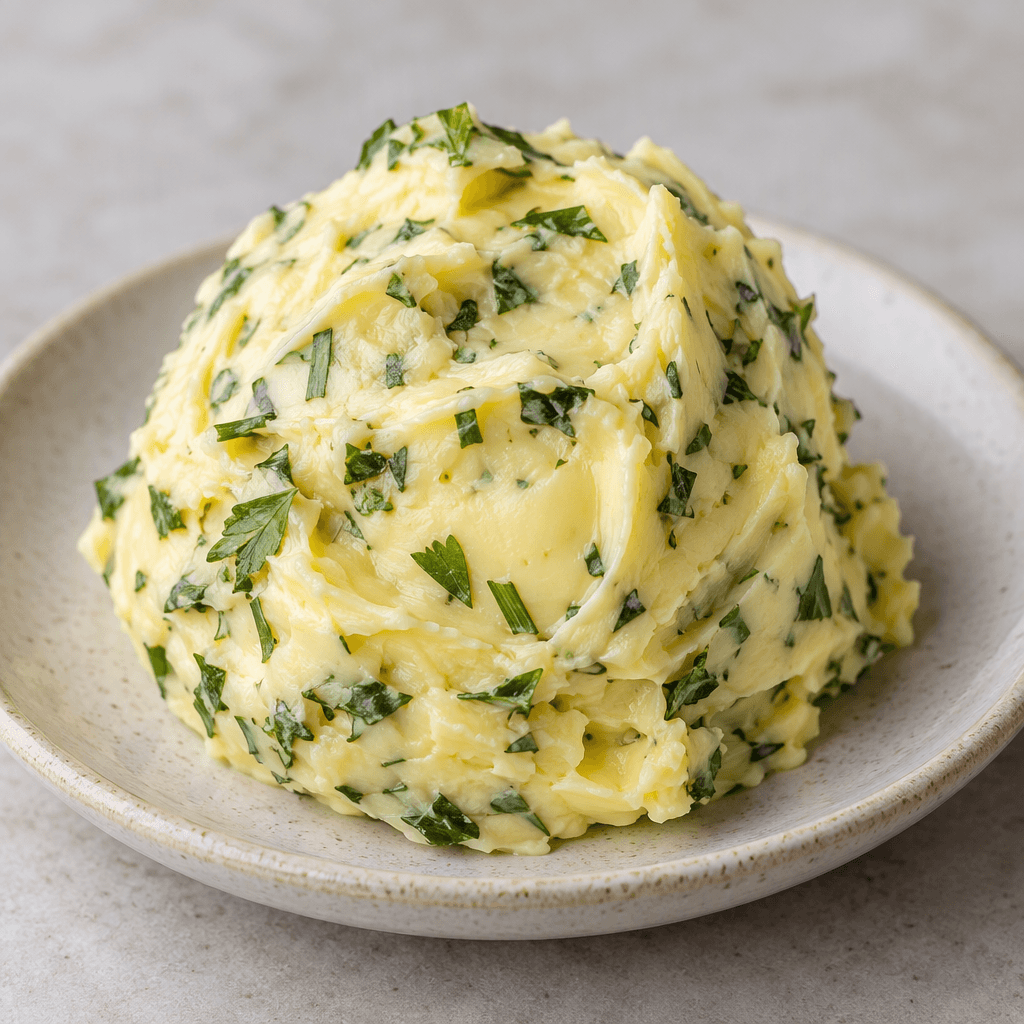
Herbed butter Calories
Butter blended with fresh herbs, aromatic and flavorful
In season: Spring · Summer · Autumn · Winter
CALORIES
GI
POTASSIUM
FIBER
Quick answer
1 tablespoon (medium) of Herbed butter (15 g) has 109 calories. That works out to 725 calories per 100 g. It contains 0.2 g of carbs, 0.1 g of protein, 12.1 g of fat and 0 g of fiber. Its 97.5 µg of Vitamin A covers 11% of the Daily Value. Its glycemic index is 0 (low), so it raises blood sugar slowly.
What is Herbed butter?
Herbed butter is softened butter blended with finely chopped fresh herbs. Parsley, chives, dill or thyme are common choices, and the mixture can be shaped into a log or served soft so it melts easily over warm food.
Its rich, creamy taste is lifted by the herbs’ fresh, savoury aroma. It is often served with bread, grilled meat, fish or vegetables; a small pat also adds flavour to potatoes or corn. Herbed butter is chiefly a source of fat, with 80.5 g of fat per 100 g. Use a little at a time, or mix in extra herbs and lemon zest for a brighter, less buttery-tasting spread.
Herbed butter Nutrition Facts
Selected: 100 g
725
KCAL / 100G
Carbs
1.2g
· 0% DV
Protein
0.8g
· 2% DV
Fat
80.5g
· 103% DV
Fiber
0.3g
· 1% DV
DV is the share of the daily value covered, on a 2,000 kcal reference diet.
Calories come from: Carbs 1% · Protein 0% · Fat 99%
Herbed butter Vitamins & Minerals
Vitamins
Vitamin A
650µg · 72% DV
Vitamin E
2.5mg · 17% DV
Vitamin D
1.2µg · 6% DV
Vitamin K
7µg · 6% DV
Minerals
Sodium
450mg · 20% DV
Phosphorus
18mg · 3% DV
Calcium
24mg · 2% DV
Selenium
1.2µg · 2% DV
How Nutritious Is Herbed butter?
Nutrient density
Low
How many vitamins, minerals and how much fiber this food carries per calorie. A high score means a lot of nutrition for few calories.
Satiety score
Low
An EatBetter score computed from fiber, protein and calorie density. A high score means staying full longer on the same calories.
Both scores are calculated per 100 g and do not change with the selected portion. The satiety score is EatBetter's own calculation, not a clinical measure.
Herbed butter Glycemic Index
GLYCEMIC INDEX
GLYCEMIC LOAD
Accounts for portion size — a more realistic measure than GI alone.
How to Burn Off Herbed butter
To burn the 725 calories in 100 g:
🚶
Walking (5 km/h)
🏃
Running (8 km/h)
🚴
Cycling
🏊
Swimming
Times are calculated with the MET equation for a 70 kg adult. Actual burn varies with your weight, age and pace.
Is Herbed butter Processed?
NOVA 2
Minimally Processed
1. Unprocessed
2. Minimally Processed
3. Processed
4. Ultra-Processed
NOVA classifies foods into 4 groups by industrial processing. NOVA 1 (unprocessed) is the healthiest.
Does Herbed butter Contain Allergens?
Contains these allergens:
Which Diets Is Herbed butter Good For?
Vegan
— Not suitable
Vegetarian
✓ Suitable
Gluten-Free
✓ Suitable
Dairy-Free
— Not suitable
Mediterranean
✓ Suitable
Paleo
✓ Suitable
Whole30
— Not suitable
DASH
— Not suitable
Keto
✓ Suitable
Low FODMAP
— Not suitable
Herbed butter Fat Profile
SATURATED
51.5g
MONOUNSATURATED
21.5g
POLYUNSATURATED
2.2g
Omega 6:3 ratio 1.8:1
Below the ideal 4:1 — a good omega balance.
Compare Herbed butter
Foods Similar to Herbed butter
Frequently Asked Questions About Herbed butter
What is herbed butter?
Herbed butter is butter blended with chopped herbs, creating a fragrant spread or finishing butter. It can be served on bread or added to hot foods, where it melts and releases the herbs’ aroma.
How do you make herbed butter?
To make herbed butter, mix softened butter with finely chopped herbs until evenly combined. Shape it into a log or place it in a covered container, then chill until firm enough to slice or spread.
What herbs go best in herbed butter?
Parsley, chives, thyme, dill, and tarragon all work well in herbed butter. Choose herbs that suit the food you are serving, and chop them finely so every portion gets a balanced amount.
How do you use herbed butter on steak?
Put herbed butter on steak just after cooking, while the meat is still hot. It melts into a flavorful finish; adding it during grilling can cause the butter to burn and the fresh herbs to lose their aroma.
Can you freeze herbed butter?
Yes, herbed butter freezes well when wrapped tightly or stored in an airtight container. Freeze it as a log or in small portions, then thaw only what you need in the refrigerator before serving or cooking.
How should you store herbed butter?
Keep herbed butter covered in the refrigerator and return it there promptly after serving. Fresh herbs make it less suitable for leaving out like a butter dish, so use a clean utensil each time.
Can you put herbed butter on pasta?
Yes, herbed butter can be tossed with hot pasta for a simple, aromatic coating. Add it after draining and stir until it melts; a little pasta cooking water can help the butter cling to the noodles.
Can you cook with herbed butter?
Yes, herbed butter can be used to finish cooked foods or gently sauté ingredients. For high-heat cooking, plain oil or another suitable cooking fat is less likely to burn; add herbed butter near the end for its flavor.
What is the difference between herbed butter and compound butter?
Herbed butter is one kind of compound butter: compound butter means butter mixed with additional ingredients. Those ingredients may include herbs, spices, citrus, or other flavorings, while herbed butter specifically features herbs.
Can herbed butter be used on vegetables?
Yes, herbed butter works well on roasted, steamed, or grilled vegetables. Toss it with vegetables while they are hot so it melts evenly, or serve a small piece on top just before eating.
Have another question about Herbed butter?
Ask the AI nutrition coach — calories, portions, alternatives and more, answered in seconds in the app.

Scan calories with your camera
Instant AI nutrition analysis

Nutrition data compiled from USDA FoodData Central and scientific sources.