

Ready & Packaged Foods
All →Vegetables & Legumes
All →Desserts & Confectionery
All →Meat & Protein
All →Grains & Bakery
All →Beverages
All →Milk & Dairy
All →

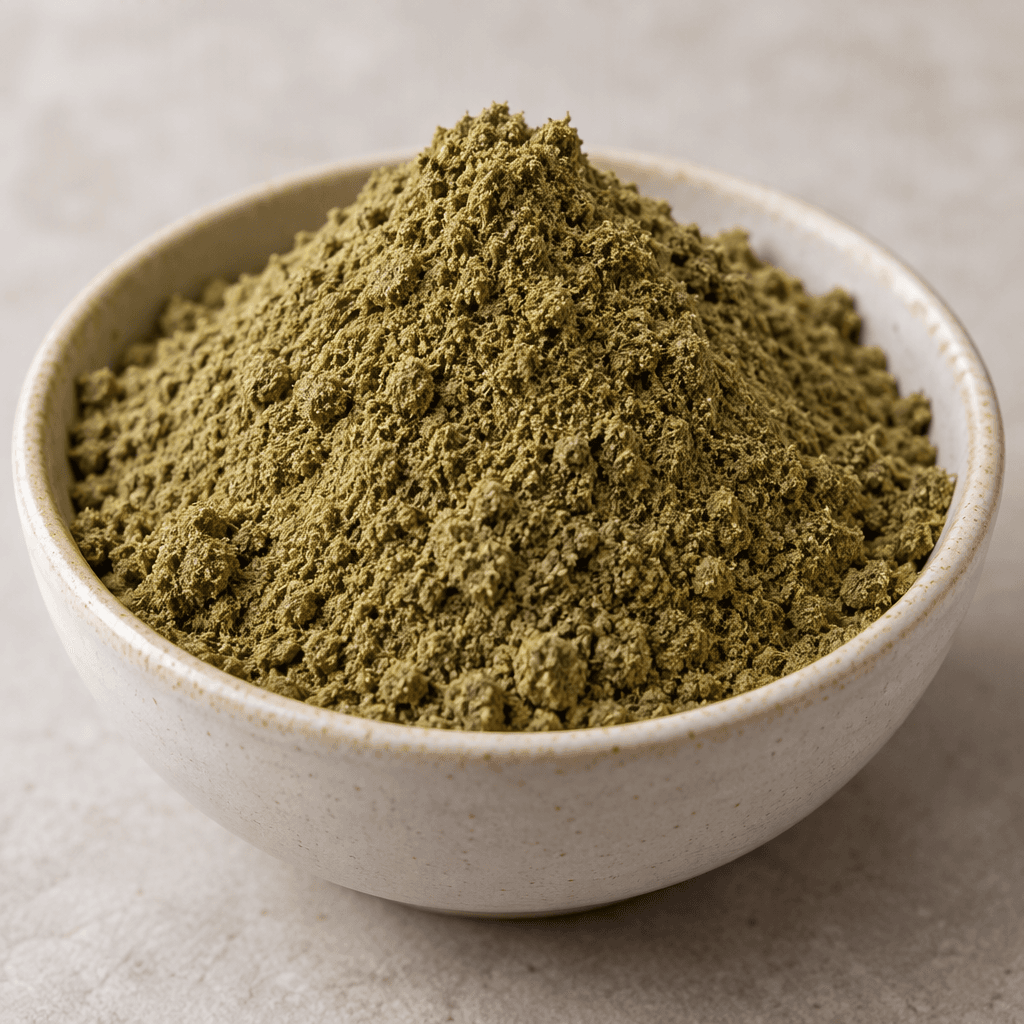
Herbal Supplement Powder Calories
Powdered supplement from various herbal extracts
CALORIES · 100 G
GI
POTASSIUM · 100 G
FIBER · 100 G
Quick answer
1 tablespoon (medium) of Herbal Supplement Powder (7 g) has 20 calories. That works out to 290 calories per 100 g. It contains 3.2 g of carbs, 0.8 g of protein, 0.2 g of fat and 1.5 g of fiber. Its glycemic index is 30 (low), so it raises blood sugar slowly.
Herbal Supplement Powder Nutrition Facts
Selected: 1 tablespoon (medium) · 7 g
20
KCAL / 7G
Carbs
3.2g
· 1% DV
Protein
0.8g
· 2% DV
Fat
0.2g
· 0% DV
Fiber
1.5g
· 5% DV
DV is the share of the daily value covered, on a 2,000 kcal reference diet.
Calories come from: Carbs 72% · Protein 18% · Fat 10%
Herbal Supplement Powder nutrition facts table · 1 tablespoon (medium) (7 g)
| Nutrient | Amount | % DV |
|---|---|---|
| Calories | 20 kcal | |
| Total fat | 0.2 g | 0% |
| Saturated fat | 0.04 g | 0% |
| Trans fat | 0 g | |
| Sodium | 2.45 mg | 0% |
| Total carbohydrate | 3.2 g | 1% |
| Fiber | 1.5 g | 5% |
| Protein | 0.8 g | 2% |
Calories: Calories measure energy. Average daily need is 2,000 kcal. Excess calories are stored as fat, too few cause weight loss.
Carbs: Your body's primary energy source. The brain runs exclusively on carbs. Daily need: 275g.
Protein: Essential for muscle repair and cell growth. Daily need: 50g. Keeps you full and boosts metabolism.
Fat: Needed for hormone production and vitamin absorption. Daily need: 78g. Limit saturated fats, choose unsaturated.
Fiber: Critical for digestive health and satiety. Daily need: 28g. Stabilizes blood sugar, lowers cholesterol.

Log this food in EatBetter
100,000+ people use it
- Get your daily calorie target
- Snap your meal, log it in seconds
- See every vitamin and mineral

📸 Scan the code to get the app free.

How Many Calories in 1 Tablespoon of Herbal Supplement Powder?
| Serving | Amount | Calories |
|---|---|---|
| 1 tablespoon (medium) | 7 g | 20 kcal |
| 1 teaspoon (small) | 2.5 g | 7 kcal |
| 1 serving (medium) | 10 g | 29 kcal |
| 2 tablespoon (large) | 14 g | 41 kcal |
| 1 pack (small) | 20 g | 58 kcal |
| 1 pack (large) | 40 g | 116 kcal |
| 1 cup (medium) | 60 g | 174 kcal |
| 100 g | 100 g | 290 kcal |
Calculated from 290 calories per 100 g.
Frequently Asked Questions About Herbal Supplement Powder
How do you take Herbal Supplement Powder?
Take Herbal Supplement Powder in the serving and manner specified on its package, usually mixed into a drink or food. Herbal blends differ in ingredients and concentration, so don’t estimate a larger serving or assume that instructions for another powder apply.
What is Herbal Supplement Powder made of?
Herbal Supplement Powder can contain one or several herbal extracts, and there is no standard formula for all products. The ingredient list identifies which herbs are included; check it rather than relying on the product’s general name.
Can you mix Herbal Supplement Powder into a smoothie?
Yes, Herbal Supplement Powder can usually be stirred or blended into a smoothie. Some extracts do not dissolve fully and may settle, so blend well and drink promptly. Follow the product directions if they specify a particular way to take it.
Does Herbal Supplement Powder dissolve in water?
Not always. Herbal Supplement Powder may disperse in water without dissolving completely, so sediment or a gritty texture can be normal. Stir or shake it immediately before drinking, and use the mixing directions provided for that specific product.
When is the best time to take Herbal Supplement Powder?
There is no single best time for every Herbal Supplement Powder; timing depends on its ingredients and directions. Some products are intended to be taken with food, while others may specify a different schedule. Follow the instructions rather than assuming morning or evening is better.
Can Herbal Supplement Powder interact with medications?
Yes, some herbs in Herbal Supplement Powder can affect how medicines work or increase side effects. Because formulas vary, ask a doctor or pharmacist to review the ingredient list before using it with prescription medicines, especially blood thinners or medicines for blood pressure.
Can Herbal Supplement Powder be added to hot tea or coffee?
Sometimes, but Herbal Supplement Powder is not automatically suitable for hot drinks. Heat may affect some ingredients, and some powders clump in hot liquid. Follow the package directions; if none are given, mix it into a warm rather than boiling drink.
How should Herbal Supplement Powder be stored after opening?
Keep Herbal Supplement Powder tightly sealed in a cool, dry place after opening. Moisture can make the powder clump or deteriorate, so use a dry spoon and keep the container away from steam, direct sunlight, and stove heat.
Can you take Herbal Supplement Powder every day?
You can take Herbal Supplement Powder daily only if its directions allow regular use. Daily use is not suitable for every blend, and herbs can matter for people with health conditions or medicines; check with a clinician or pharmacist if either applies to you.
Is Herbal Supplement Powder safe during pregnancy or breastfeeding?
Herbal Supplement Powder should not be used during pregnancy or breastfeeding without advice from a healthcare professional. Safety evidence differs by herb, and some extracts may be unsuitable even when they are sold as natural supplements.
Herbal Supplement Powder Vitamins & Minerals
Vitamins
Vitamin K
1.26µg · 1% DV
B6
0.02mg · 1% DV
B2
0.01mg · 1% DV
Biotin
0.28µg · 1% DV
Minerals
Manganese
0.08mg · 3% DV
Iron
0.53mg · 3% DV
Magnesium
5.95mg · 1% DV
Copper
0.01mg · 1% DV
Potassium ⭐
29mg · 1% DV
Sodium
2.45mg · 0% DV
Herbal Supplement Powder Glycemic Index
GLYCEMIC INDEX
GLYCEMIC LOAD
Accounts for portion size — a more realistic measure than GI alone.
How to Burn Off Herbal Supplement Powder
To burn the 20 calories in 1 tablespoon (medium) (7 g):
🚶
Walking (5 km/h)
🏃
Running (8 km/h)
🚴
Cycling
🏊
Swimming
Times are calculated with the MET equation for a 70 kg adult. Actual burn varies with your weight, age and pace.
What is Herbal Supplement Powder?
Herbal Supplement Powder is a powdered product made from extracts of various herbs, intended to be mixed into a drink or food. The exact blend and flavour can vary between products, so check the ingredient list and the serving guidance on the pack.
Depending on the herbs used, it may taste earthy, bitter or fragrant. People commonly stir it into water, smoothies, yoghurt or porridge; in places where herbal supplements are less familiar, a smoothie or breakfast bowl can be an easy way to use it. Its nutritional profile is notably high in fibre, with 22 g per 100 g. If the flavour is strong, mix a small portion into a larger serving of food or drink.
How Nutritious Is Herbal Supplement Powder?
Nutrient density
Medium
How many vitamins, minerals and how much fiber this food carries per calorie. A high score means a lot of nutrition for few calories.
Satiety score
Medium
An EatBetter score computed from fiber, protein and calorie density. A high score means staying full longer on the same calories.
Both scores are calculated per 100 g and do not change with the selected portion. The satiety score is EatBetter's own calculation, not a clinical measure.
Is Herbal Supplement Powder Processed?
NOVA 3
Processed
1. Unprocessed
2. Minimally Processed
3. Processed
4. Ultra-Processed
NOVA classifies foods into 4 groups by industrial processing. NOVA 1 (unprocessed) is the healthiest.
Does Herbal Supplement Powder Contain Allergens?
No known major allergens
Which Diets Is Herbal Supplement Powder Good For?
Vegan
✓ Suitable
Vegetarian
✓ Suitable
Gluten-Free
✓ Suitable
Dairy-Free
— Not suitable
Mediterranean
✓ Suitable
Paleo
✓ Suitable
Whole30
— Not suitable
DASH
— Not suitable
Keto
— Not suitable
Low FODMAP
— Not suitable
Herbal Supplement Powder Fat Profile
SATURATED
0.04g
MONOUNSATURATED
0.05g
POLYUNSATURATED
0.09g
Omega 6:3 ratio 2:1
Below the ideal 4:1 — a good omega balance.
Compare Herbal Supplement Powder
Foods Similar to Herbal Supplement Powder
Have another question about Herbal Supplement Powder?
Ask the AI nutrition coach — calories, portions, alternatives and more, answered in seconds in the app.

Scan calories with your camera
Instant AI nutrition analysis

Nutrition data compiled from USDA FoodData Central and scientific sources.