

Ready & Packaged Foods
All →Vegetables & Legumes
All →Desserts & Confectionery
All →Meat & Protein
All →Grains & Bakery
All →Beverages
All →Milk & Dairy
All →

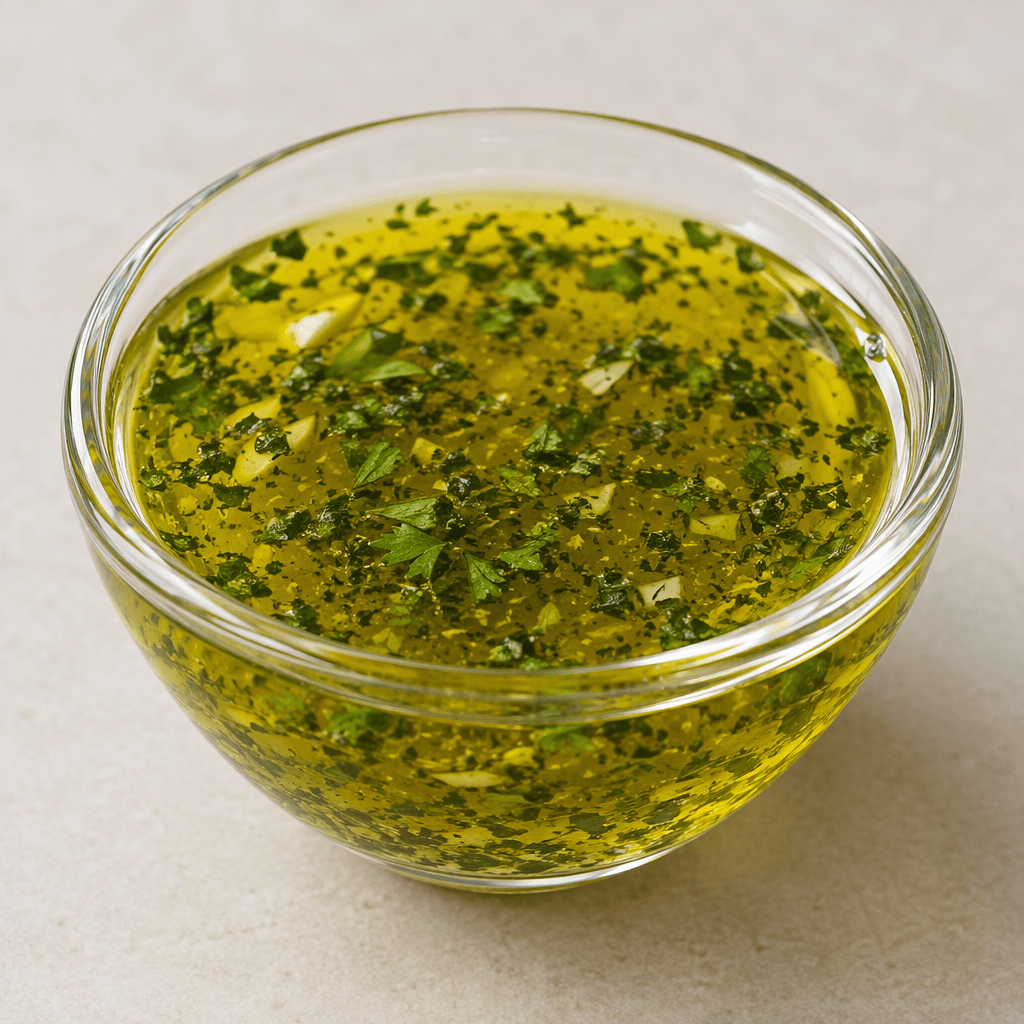
Herb oil Calories
Herb-infused culinary oil used as a condiment or flavoring
CALORIES
GI
POTASSIUM
FIBER
Quick answer
1 tablespoon (medium) of Herb oil (14 g) has 124 calories. That works out to 884 calories per 100 g. It contains 0 g of carbs, 0 g of protein, 14 g of fat and 0 g of fiber. Its 2 mg of Vitamin E covers 13% of the Daily Value. Its glycemic index is 0 (low), so it raises blood sugar slowly.
What is Herb oil?
Herb oil is cooking oil flavoured with fresh or dried herbs, used as a finishing touch or condiment. Olive oil is a common base, though the choice of oil and herbs varies; the herbs may be blended in or left to infuse. It is a familiar style of seasoning in Mediterranean cooking, rather than one fixed recipe.
Its smooth, pourable texture and savoury herbal aroma make it good for dipping bread, dressing salads, or drizzling over grilled vegetables, fish and meat. Nutritionally, it is almost entirely fat, with virtually no protein or fibre, so a little usually goes a long way. For a lighter meal, use a small drizzle and brighten it with lemon juice or vinegar.
Herb oil Nutrition Facts
Selected: 100 g
884
KCAL / 100G
Carbs
0.2g
· 0% DV
Protein
0g
· 0% DV
Fat
100g
· 128% DV
Fiber
0g
· 0% DV
DV is the share of the daily value covered, on a 2,000 kcal reference diet.
Calories come from: Carbs 0% · Protein 0% · Fat 100%
Herb oil Vitamins & Minerals
Vitamins
Vitamin E
14mg · 93% DV
Vitamin K
60µg · 50% DV
Vitamin A
0µg · 0% DV
B1
0mg · 0% DV
Minerals
Calcium
2mg · 0% DV
Iron
0mg · 0% DV
Magnesium
1mg · 0% DV
Zinc
0mg · 0% DV
How Nutritious Is Herb oil?
Nutrient density
Low
How many vitamins, minerals and how much fiber this food carries per calorie. A high score means a lot of nutrition for few calories.
Satiety score
Low
An EatBetter score computed from fiber, protein and calorie density. A high score means staying full longer on the same calories.
Both scores are calculated per 100 g and do not change with the selected portion. The satiety score is EatBetter's own calculation, not a clinical measure.
Herb oil Glycemic Index
GLYCEMIC INDEX
GLYCEMIC LOAD
Accounts for portion size — a more realistic measure than GI alone.
How to Burn Off Herb oil
To burn the 884 calories in 100 g:
🚶
Walking (5 km/h)
🏃
Running (8 km/h)
🚴
Cycling
🏊
Swimming
Times are calculated with the MET equation for a 70 kg adult. Actual burn varies with your weight, age and pace.
Is Herb oil Processed?
NOVA 2
Minimally Processed
1. Unprocessed
2. Minimally Processed
3. Processed
4. Ultra-Processed
NOVA classifies foods into 4 groups by industrial processing. NOVA 1 (unprocessed) is the healthiest.
Does Herb oil Contain Allergens?
No known major allergens
Which Diets Is Herb oil Good For?
Vegan
✓ Suitable
Vegetarian
✓ Suitable
Gluten-Free
✓ Suitable
Dairy-Free
— Not suitable
Mediterranean
✓ Suitable
Paleo
✓ Suitable
Whole30
— Not suitable
DASH
— Not suitable
Keto
✓ Suitable
Low FODMAP
— Not suitable
Herb oil Fat Profile
SATURATED
14g
MONOUNSATURATED
73g
POLYUNSATURATED
10.5g
Omega 6:3 ratio 11.9:1
Above the ideal 4:1 (11.9:1).
Compare Herb oil
Foods Similar to Herb oil
Frequently Asked Questions About Herb oil
What is herb oil used for?
Herb oil is used to add the flavor of fresh or dried herbs to food. Drizzle it over bread, vegetables, pasta, or grilled dishes, or use it as a finishing oil rather than exposing the herb pieces to prolonged high heat.
How do you make herb oil at home?
To make herb oil, finely chop washed herbs that have been dried thoroughly, then mix them with oil. Refrigerate a fresh-herb mixture promptly and use it within four days, or freeze it; fresh herbs in oil should not sit at room temperature.
Can herb oil cause botulism?
Yes, homemade herb oil made with fresh herbs can pose a botulism risk if stored at room temperature. Keep it refrigerated and use it within four days, or freeze it; commercial herb oils made and packaged under controlled conditions may have different storage directions.
Which herbs are best for herb oil?
Basil, rosemary, thyme, parsley, and chives all work well in herb oil. Choose herbs to suit the food: basil is good with tomatoes, while rosemary and thyme pair well with roasted vegetables or grilled meat.
Can you cook with herb oil, or should you use it only as a finishing oil?
Herb oil works best as a finishing oil because chopped herbs can burn and turn bitter over high heat. Stir it into warm food just before serving, or use a plain oil suited to the cooking temperature and add herb oil afterward.
Does herb oil need to be refrigerated?
Homemade herb oil containing fresh herbs needs refrigeration. Store it in a sealed container and use it within four days, or freeze it; oil made with dried herbs or a commercial product may have different storage requirements.
Can you freeze herb oil?
Yes, herb oil can be frozen in small portions for convenient use. The herbs may soften after thawing, but the oil still works well in cooked dishes; thaw only what you need and do not refreeze it.
Why does herb oil turn bitter?
Herb oil can taste bitter when herb pieces scorch during cooking or when the oil becomes stale from exposure to heat, light, or air. Add it after cooking and keep the container tightly closed in a cool, dark place.
Can herb oil be used as a salad dressing?
Yes, herb oil makes a simple salad dressing, especially when mixed with vinegar or lemon juice and a little mustard. Whisk or shake it just before serving because oil and acidic ingredients separate when left standing.
How do you keep homemade herb oil bright green?
To keep homemade herb oil greener, blend fresh herbs briefly with the oil and avoid heating the mixture. The color naturally fades with time, so make small batches, refrigerate them promptly, and use them while fresh.
Have another question about Herb oil?
Ask the AI nutrition coach — calories, portions, alternatives and more, answered in seconds in the app.

Scan calories with your camera
Instant AI nutrition analysis

Nutrition data compiled from USDA FoodData Central and scientific sources.