

Ready & Packaged Foods
All →Vegetables & Legumes
All →Desserts & Confectionery
All →Meat & Protein
All →Grains & Bakery
All →Beverages
All →Milk & Dairy
All →

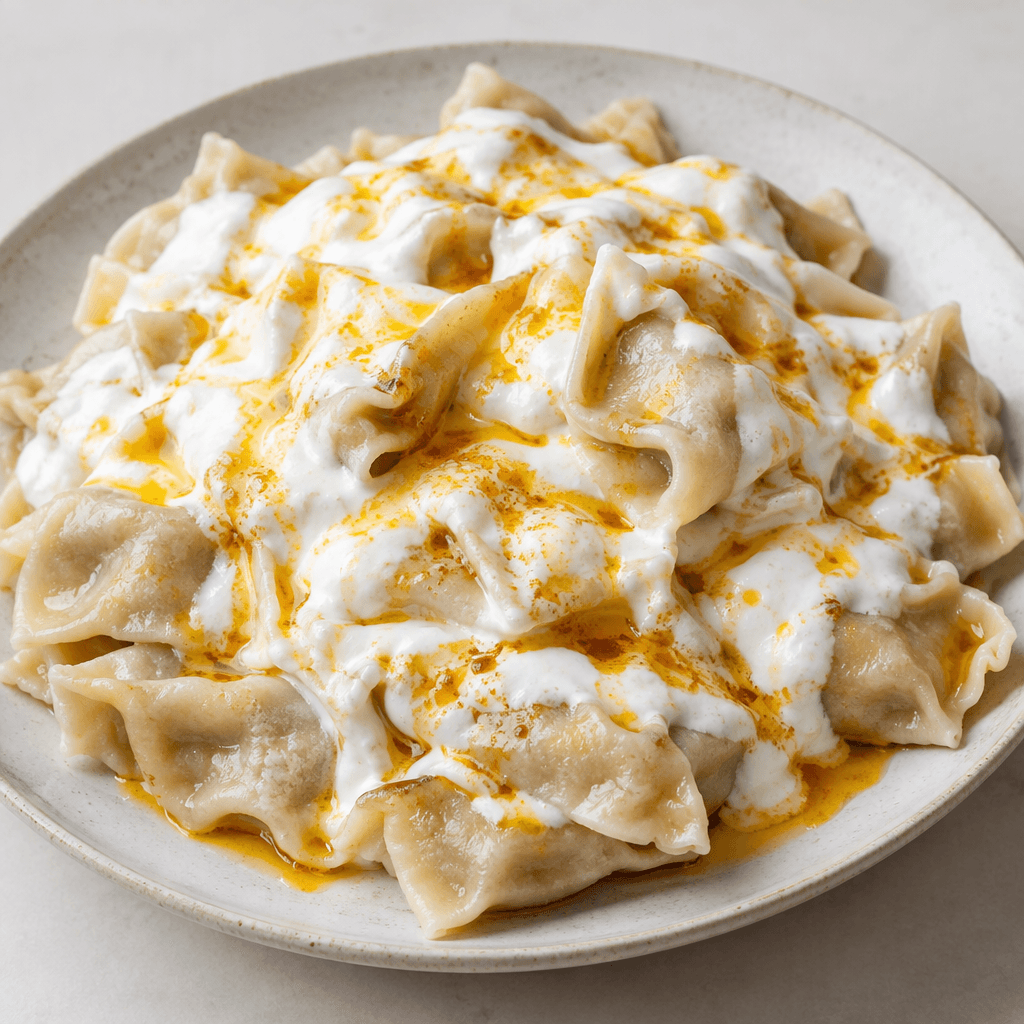
Hengel Calories
Traditional Kars-style dumpling dish
In season: Winter
CALORIES
GI
POTASSIUM
FIBER
Quick answer
1 serving (medium) of Hengel (200 g) has 370 calories. That works out to 185 calories per 100 g. It contains 62 g of carbs, 11 g of protein, 8.4 g of fat and 3.2 g of fiber. Its 520 mg of Sodium covers 23% of the Daily Value. Its glycemic index is 65 (medium), so it raises blood sugar at a moderate pace.
What is Hengel?
Hengel is a traditional dumpling dish associated with Kars in eastern Turkey. Thin wheat dough is cut into broad pieces, folded into parcels and boiled, then commonly served with yogurt and melted butter. Garlic may be added, and the exact shape and toppings vary between households.
The dumplings are soft with a little chew; cool, tangy yogurt balances the rich taste of butter. In Turkey, hengel is served as a filling main course, especially in colder weather. A salad or pickles make a fresh accompaniment wherever you prepare it. It is mainly a carbohydrate-based dish, with yogurt contributing some protein. For a lighter plate, use less butter and serve it with vegetables.
Hengel Nutrition Facts
Selected: 100 g
185
KCAL / 100G
Carbs
31g
· 11% DV
Protein
5.5g
· 11% DV
Fat
4.2g
· 5% DV
Fiber
1.6g
· 6% DV
DV is the share of the daily value covered, on a 2,000 kcal reference diet.
Calories come from: Carbs 67% · Protein 12% · Fat 21%
Hengel Vitamins & Minerals
Vitamins
B1
0.09mg · 8% DV
B3
1.1mg · 7% DV
Biotin
2µg · 7% DV
B2
0.07mg · 5% DV
Minerals
Sodium
260mg · 11% DV
Selenium
6µg · 11% DV
Zinc
1mg · 9% DV
Phosphorus
55mg · 8% DV
How Nutritious Is Hengel?
Nutrient density
Low
How many vitamins, minerals and how much fiber this food carries per calorie. A high score means a lot of nutrition for few calories.
Satiety score
Medium
An EatBetter score computed from fiber, protein and calorie density. A high score means staying full longer on the same calories.
Both scores are calculated per 100 g and do not change with the selected portion. The satiety score is EatBetter's own calculation, not a clinical measure.
Hengel Glycemic Index
GLYCEMIC INDEX
GLYCEMIC LOAD
Accounts for portion size — a more realistic measure than GI alone.
How to Burn Off Hengel
To burn the 185 calories in 100 g:
🚶
Walking (5 km/h)
🏃
Running (8 km/h)
🚴
Cycling
🏊
Swimming
Times are calculated with the MET equation for a 70 kg adult. Actual burn varies with your weight, age and pace.
Is Hengel Processed?
NOVA 3
Processed
1. Unprocessed
2. Minimally Processed
3. Processed
4. Ultra-Processed
NOVA classifies foods into 4 groups by industrial processing. NOVA 1 (unprocessed) is the healthiest.
Does Hengel Contain Allergens?
Contains these allergens:
Which Diets Is Hengel Good For?
Vegan
— Not suitable
Vegetarian
— Not suitable
Gluten-Free
— Not suitable
Dairy-Free
— Not suitable
Mediterranean
✓ Suitable
Paleo
— Not suitable
Whole30
— Not suitable
DASH
— Not suitable
Keto
— Not suitable
Low FODMAP
— Not suitable
Hengel Fat Profile
SATURATED
1.1g
MONOUNSATURATED
1.3g
POLYUNSATURATED
1g
Omega 6:3 ratio 16.7:1
Above the ideal 4:1 (16.7:1).
Compare Hengel
Foods Similar to Hengel
Frequently Asked Questions About Hengel
What is Hengel?
Hengel is a traditional dumpling-style dish associated especially with Kars, Turkey. Its broad pieces of wheat dough are boiled and commonly served with yogurt and melted butter, rather than being folded around a filling like many other dumplings.
Is Hengel the same as Turkish manti?
No. Kars-style Hengel is usually made from broad, unfilled pieces of dough, while manti is typically made from smaller parcels enclosing a filling, often seasoned meat. Both may be topped with yogurt and butter.
What does Hengel taste like?
Hengel has a mild, soft wheat-dough flavor, with tang and creaminess from the yogurt and richness from the butter. Garlic may be added to the yogurt, giving the dish a sharper savory taste.
Where does Hengel come from?
Hengel is particularly associated with Kars in northeastern Turkey. Related dough dishes appear in neighboring regions and communities, where the name, shape, filling, and toppings can differ.
Does traditional Hengel have a filling?
Traditional Kars-style Hengel is generally unfilled: the dough is cut into broad pieces, boiled, and served with yogurt and butter. Some regional or family versions of similar dishes do use fillings such as potato or minced meat.
How is Hengel dough made?
Hengel dough is typically kneaded from flour, water, egg, and salt, then rolled thin and cut into broad pieces. The pieces are boiled until tender; the exact proportions and shapes vary between household recipes.
Why does my Hengel dough turn mushy?
Hengel can turn mushy if it is overcooked or left sitting in hot water after it is tender. Boil the pieces just until cooked, drain them promptly, and serve them soon after adding the toppings.
What is Hengel served with?
Hengel is commonly served hot with yogurt and melted butter; the yogurt may be seasoned with garlic. These toppings are added to the boiled dough, making a simple dish with creamy, tangy, and rich flavors.
Can you make Hengel ahead of time?
Yes. You can roll and cut the Hengel dough in advance, then keep the pieces lightly floured and separated until cooking. Boil the dough and add the yogurt and butter close to serving time for the best texture.
Can Hengel be frozen?
Yes, uncooked Hengel dough pieces can be frozen. Freeze them separately on a tray first, then transfer them to a suitable container; cook them directly from frozen in boiling water rather than thawing them first.
Have another question about Hengel?
Ask the AI nutrition coach — calories, portions, alternatives and more, answered in seconds in the app.

Scan calories with your camera
Instant AI nutrition analysis

Nutrition data compiled from USDA FoodData Central and scientific sources.