

Ready & Packaged Foods
All →Vegetables & Legumes
All →Desserts & Confectionery
All →Meat & Protein
All →Grains & Bakery
All →Beverages
All →Milk & Dairy
All →

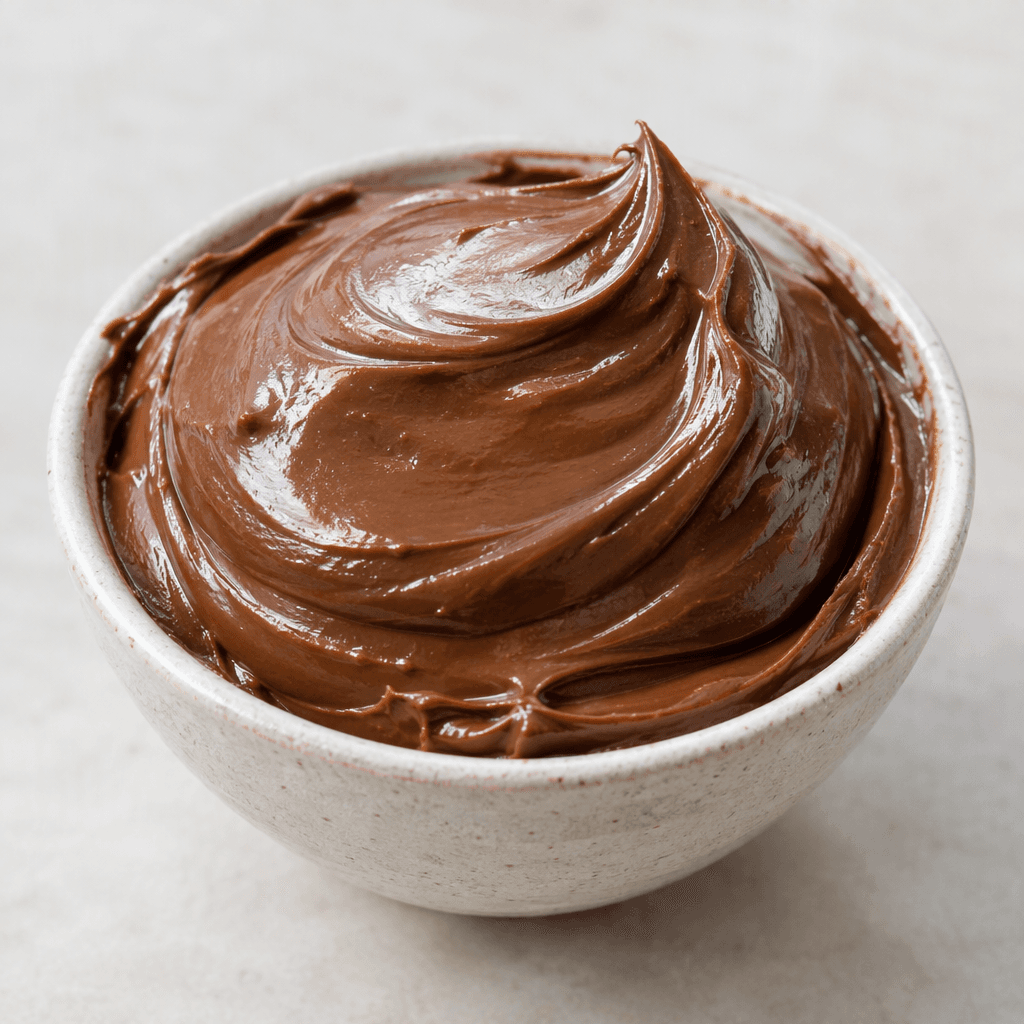
Hazelnut Chocolate Spread Calories
Hazelnut and chocolate blend, high energy, sweet spread
CALORIES
GI
POTASSIUM
FIBER
Quick answer
1 tablespoon (medium) of Hazelnut Chocolate Spread (20 g) has 108 calories. That works out to 540 calories per 100 g. It contains 11.3 g of carbs, 1.2 g of protein, 6.3 g of fat and 0.8 g of fiber. Its 0.1 mg of Copper covers 11% of the Daily Value. Its glycemic index is 35 (medium), so it raises blood sugar at a moderate pace.
What is Hazelnut Chocolate Spread?
Hazelnut Chocolate Spread is a sweet, spreadable blend of hazelnuts and cocoa or chocolate, commonly sweetened and made smooth enough to spread on bread. It has a rich, nutty-chocolate flavour and a thick, creamy texture. It is often served at breakfast on toast, pancakes or bread, and also used as a filling for pastries or paired with fruit. In Turkey, it may appear on a breakfast table alongside tea; elsewhere, it is a familiar pantry spread and baking ingredient.
It is energy-dense, with much of its energy coming from fat and carbohydrates, so a modest smear can go a long way. For a lighter snack, spread a thin layer on whole-grain toast or use a little as a dip for fresh fruit.
Hazelnut Chocolate Spread Nutrition Facts
Selected: 100 g
540
KCAL / 100G
Carbs
56.3g
· 20% DV
Protein
6.2g
· 12% DV
Fat
31.6g
· 41% DV
Fiber
4.2g
· 15% DV
DV is the share of the daily value covered, on a 2,000 kcal reference diet.
Calories come from: Carbs 42% · Protein 5% · Fat 53%
Hazelnut Chocolate Spread Vitamins & Minerals
Vitamins
Vitamin E
4.6mg · 31% DV
B2
0.18mg · 14% DV
B1
0.09mg · 8% DV
B5
0.4mg · 8% DV
Minerals
Copper
1mg · 111% DV
Manganese
1mg · 43% DV
Phosphorus
140mg · 20% DV
Magnesium
65mg · 15% DV
How Nutritious Is Hazelnut Chocolate Spread?
Nutrient density
Medium
How many vitamins, minerals and how much fiber this food carries per calorie. A high score means a lot of nutrition for few calories.
Satiety score
Low
An EatBetter score computed from fiber, protein and calorie density. A high score means staying full longer on the same calories.
Both scores are calculated per 100 g and do not change with the selected portion. The satiety score is EatBetter's own calculation, not a clinical measure.
Hazelnut Chocolate Spread Glycemic Index
GLYCEMIC INDEX
GLYCEMIC LOAD
Accounts for portion size — a more realistic measure than GI alone.
How to Burn Off Hazelnut Chocolate Spread
To burn the 540 calories in 100 g:
🚶
Walking (5 km/h)
🏃
Running (8 km/h)
🚴
Cycling
🏊
Swimming
Times are calculated with the MET equation for a 70 kg adult. Actual burn varies with your weight, age and pace.
Is Hazelnut Chocolate Spread Processed?
NOVA 3
Processed
1. Unprocessed
2. Minimally Processed
3. Processed
4. Ultra-Processed
NOVA classifies foods into 4 groups by industrial processing. NOVA 1 (unprocessed) is the healthiest.
Does Hazelnut Chocolate Spread Contain Allergens?
Contains these allergens:
Which Diets Is Hazelnut Chocolate Spread Good For?
Vegan
— Not suitable
Vegetarian
✓ Suitable
Gluten-Free
— Not suitable
Dairy-Free
— Not suitable
Mediterranean
— Not suitable
Paleo
— Not suitable
Whole30
— Not suitable
DASH
— Not suitable
Keto
— Not suitable
Low FODMAP
— Not suitable
Hazelnut Chocolate Spread Fat Profile
SATURATED
10.1g
MONOUNSATURATED
16.7g
POLYUNSATURATED
4.1g
Omega 6:3 ratio 40:1
Above the ideal 4:1 (40:1).
Compare Hazelnut Chocolate Spread
Foods Similar to Hazelnut Chocolate Spread
Frequently Asked Questions About Hazelnut Chocolate Spread
What is hazelnut chocolate spread made of?
Hazelnut chocolate spread is usually made with hazelnuts, cocoa or chocolate, sugar, and vegetable oil; some versions also contain milk powder. The proportions and specific ingredients vary between products.
How do you make hazelnut chocolate spread at home?
Blend roasted hazelnuts until they become a smooth paste, then mix in cocoa, melted chocolate, and a sweetener to taste. Add a little neutral oil if needed to loosen the texture, and keep the spread in a clean, sealed container.
Does hazelnut chocolate spread need to be refrigerated after opening?
Usually not. Keep hazelnut chocolate spread tightly closed in a cool, dry cupboard; refrigeration can make it firm and difficult to spread. Follow the storage directions on the jar if they specify otherwise.
Is hazelnut chocolate spread healthy?
Hazelnut chocolate spread is a sweet, energy-dense spread, not a substitute for a balanced meal. Although it contains hazelnuts, it is generally better treated as an occasional topping than as a daily source of nuts.
Can you use hazelnut chocolate spread in baking?
Yes, hazelnut chocolate spread works as a filling for cookies, pastries, and cake layers, or as a topping for brownies. Warm it briefly to make it easier to drizzle, and stir it before using if the texture looks uneven.
Can hazelnut chocolate spread make you gain weight?
Hazelnut chocolate spread does not cause weight gain by itself, but frequent large servings can add substantial energy to your diet. It is easy to use more than intended when spreading it thickly or adding it to several foods.
Can you freeze hazelnut chocolate spread?
Yes, you can freeze hazelnut chocolate spread, but its texture may become grainy or separate after thawing. Freeze it in a tightly sealed container, thaw it in the refrigerator, and stir thoroughly before using.
Can babies eat hazelnut chocolate spread?
Hazelnut chocolate spread is not a good choice for babies under 2 because it commonly contains added sugar. For older children, offer it only occasionally; if a child has not tried hazelnuts or dairy, introduce those allergens safely according to medical guidance.
How do you soften hazelnut chocolate spread that has gone hard?
Set the closed jar of hazelnut chocolate spread in warm water until it softens, then stir it well. Avoid getting water inside the jar, and do not overheat the spread, as hot spots can form when warming it in a microwave.
Can dogs eat hazelnut chocolate spread?
No, dogs should not eat hazelnut chocolate spread. Chocolate can be toxic to dogs, and the spread’s high sugar and fat content can also upset their stomach; contact a veterinarian promptly if your dog has eaten some.
Have another question about Hazelnut Chocolate Spread?
Ask the AI nutrition coach — calories, portions, alternatives and more, answered in seconds in the app.

Scan calories with your camera
Instant AI nutrition analysis

Nutrition data compiled from USDA FoodData Central and scientific sources.