

Ready & Packaged Foods
All →Vegetables & Legumes
All →Desserts & Confectionery
All →Meat & Protein
All →Grains & Bakery
All →Beverages
All →Milk & Dairy
All →

Hatay Salted Yogurt Calories
Thick, salty, fermented dairy product
In season: Spring · Summer · Autumn · Winter
CALORIES
GI
POTASSIUM
FIBER
Quick answer
1 cup (medium) of Hatay Salted Yogurt (200 g) has 140 calories. That works out to 70 calories per 100 g. It contains 8 g of carbs, 9 g of protein, 7 g of fat and 0 g of fiber. Its 1 µg of B12 covers 42% of the Daily Value. Its glycemic index is 15 (low), so it raises blood sugar slowly.
What is Hatay Salted Yogurt?
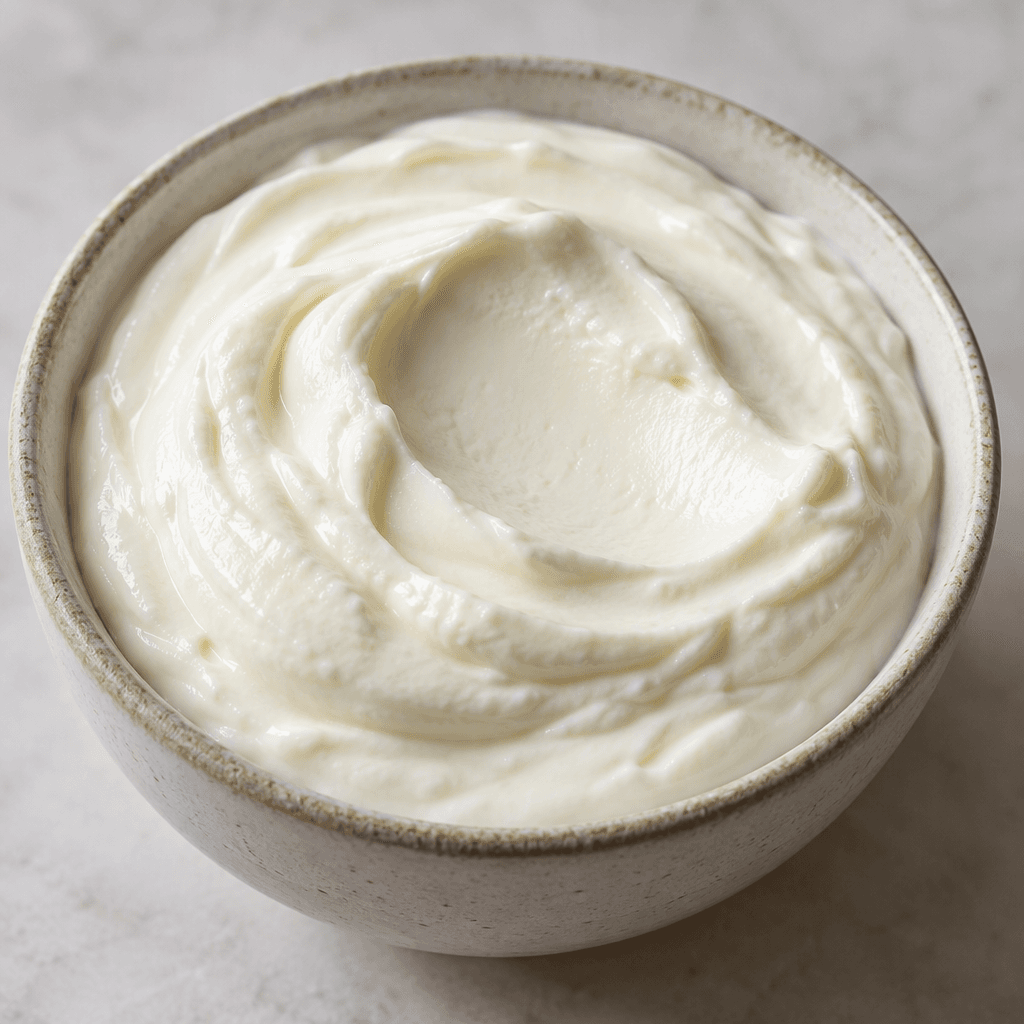
Hatay Salted Yogurt is a traditional specialty from Hatay in southern Turkey, made by cooking yogurt with salt until it becomes thick and concentrated. It has a dense, spoonable texture and a tangy, distinctly salty flavour, quite different from ordinary plain yogurt.
In Hatay it may be eaten with bread at breakfast or served alongside a meal, and it is also stirred into soups and cooked dishes for body and savoury depth. It provides 4.5 g of protein per 100 g. Since it is already salty, taste a dish before adding more salt; a drizzle of olive oil and some fresh herbs make a simple accompaniment.
Hatay Salted Yogurt Nutrition Facts
Selected: 100 g
70
KCAL / 100G
Carbs
4g
· 1% DV
Protein
4.5g
· 9% DV
Fat
3.5g
· 4% DV
Fiber
0g
· 0% DV
DV is the share of the daily value covered, on a 2,000 kcal reference diet.
Calories come from: Carbs 24% · Protein 27% · Fat 49%
Hatay Salted Yogurt Vitamins & Minerals
Vitamins
B12
0.5µg · 21% DV
B2
0.18mg · 14% DV
Biotin
3.5µg · 12% DV
B5
0.4mg · 8% DV
Minerals
Sodium
400mg · 17% DV
Phosphorus
110mg · 16% DV
Calcium
140mg · 14% DV
Iodine
16µg · 11% DV
How Nutritious Is Hatay Salted Yogurt?
Nutrient density
High
How many vitamins, minerals and how much fiber this food carries per calorie. A high score means a lot of nutrition for few calories.
Satiety score
Medium
An EatBetter score computed from fiber, protein and calorie density. A high score means staying full longer on the same calories.
Both scores are calculated per 100 g and do not change with the selected portion. The satiety score is EatBetter's own calculation, not a clinical measure.
Hatay Salted Yogurt Glycemic Index
GLYCEMIC INDEX
GLYCEMIC LOAD
Accounts for portion size — a more realistic measure than GI alone.
How to Burn Off Hatay Salted Yogurt
To burn the 70 calories in 100 g:
🚶
Walking (5 km/h)
🏃
Running (8 km/h)
🚴
Cycling
🏊
Swimming
Times are calculated with the MET equation for a 70 kg adult. Actual burn varies with your weight, age and pace.
Is Hatay Salted Yogurt Processed?
NOVA 2
Minimally Processed
1. Unprocessed
2. Minimally Processed
3. Processed
4. Ultra-Processed
NOVA classifies foods into 4 groups by industrial processing. NOVA 1 (unprocessed) is the healthiest.
Does Hatay Salted Yogurt Contain Allergens?
Contains these allergens:
Which Diets Is Hatay Salted Yogurt Good For?
Vegan
— Not suitable
Vegetarian
✓ Suitable
Gluten-Free
— Not suitable
Dairy-Free
— Not suitable
Mediterranean
✓ Suitable
Paleo
— Not suitable
Whole30
— Not suitable
DASH
— Not suitable
Keto
— Not suitable
Low FODMAP
— Not suitable
Hatay Salted Yogurt Fat Profile
SATURATED
2.2g
MONOUNSATURATED
0.9g
POLYUNSATURATED
0.13g
Omega 6:3 ratio 2.7:1
Below the ideal 4:1 — a good omega balance.
Compare Hatay Salted Yogurt
Foods Similar to Hatay Salted Yogurt
Frequently Asked Questions About Hatay Salted Yogurt
What is Hatay Salted Yogurt?
Hatay Salted Yogurt is a thick, salty yogurt from Hatay, Türkiye, traditionally made by cooking yogurt with salt until much of its moisture evaporates. It has a tangy taste and a dense texture that works both as a table food and in cooked dishes.
How is Hatay Salted Yogurt made?
Hatay Salted Yogurt is made by heating yogurt with salt over low heat and stirring until it thickens. The steady stirring helps prevent scorching as moisture cooks off; the finished yogurt is substantially denser and saltier than ordinary yogurt.
How do you eat Hatay Salted Yogurt?
Hatay Salted Yogurt can be eaten plain or served with olive oil and red pepper as part of a breakfast spread. Its strong saltiness pairs well with bread and vegetables, so taste it before adding salt to anything served alongside it.
What dishes use Hatay Salted Yogurt?
Hatay Salted Yogurt is used in regional soups and other cooked dishes to add body and a tangy, savory flavor. Stir it in gradually, and reduce any added salt in the recipe because the yogurt is already salty.
How is Hatay Salted Yogurt different from Greek yogurt?
Hatay Salted Yogurt is cooked with salt to become dense and savory, while Greek yogurt is generally strained for thickness and is not necessarily salted or cooked. The two may look similarly thick, but they differ in flavor and how they are traditionally prepared.
Does Hatay Salted Yogurt taste salty or sour?
Hatay Salted Yogurt tastes both salty and tangy, with the saltiness usually more pronounced than in plain yogurt. Its exact flavor varies with the yogurt used and how it is prepared, so a small taste is useful before seasoning a dish.
How should you store Hatay Salted Yogurt after opening?
Keep Hatay Salted Yogurt covered in the refrigerator after opening, and use a clean spoon each time. Follow the package’s storage and date instructions; discard it if its smell, color, or surface changes unusually.
Can you cook with Hatay Salted Yogurt without it splitting?
Yes, Hatay Salted Yogurt can be added to cooked dishes, but sudden high heat may make yogurt-based mixtures separate. Stir it in gradually over gentle heat, and avoid boiling the dish vigorously after adding it.
Can you freeze Hatay Salted Yogurt?
Yes, Hatay Salted Yogurt can be frozen, but thawing may make its texture grainy or separated. Stir it well after thawing and use it in soups or cooked dishes, where a perfectly smooth texture matters less.
Is Hatay Salted Yogurt suitable for people limiting salt?
Hatay Salted Yogurt may not fit easily into a salt-restricted diet because it is deliberately salted. If you need to limit sodium for a health condition or medication, ask your clinician or dietitian whether and how much to include.
Have another question about Hatay Salted Yogurt?
Ask the AI nutrition coach — calories, portions, alternatives and more, answered in seconds in the app.

Scan calories with your camera
Instant AI nutrition analysis

Nutrition data compiled from USDA FoodData Central and scientific sources.