

Ready & Packaged Foods
All →Vegetables & Legumes
All →Desserts & Confectionery
All →Meat & Protein
All →Grains & Bakery
All →Beverages
All →Milk & Dairy
All →

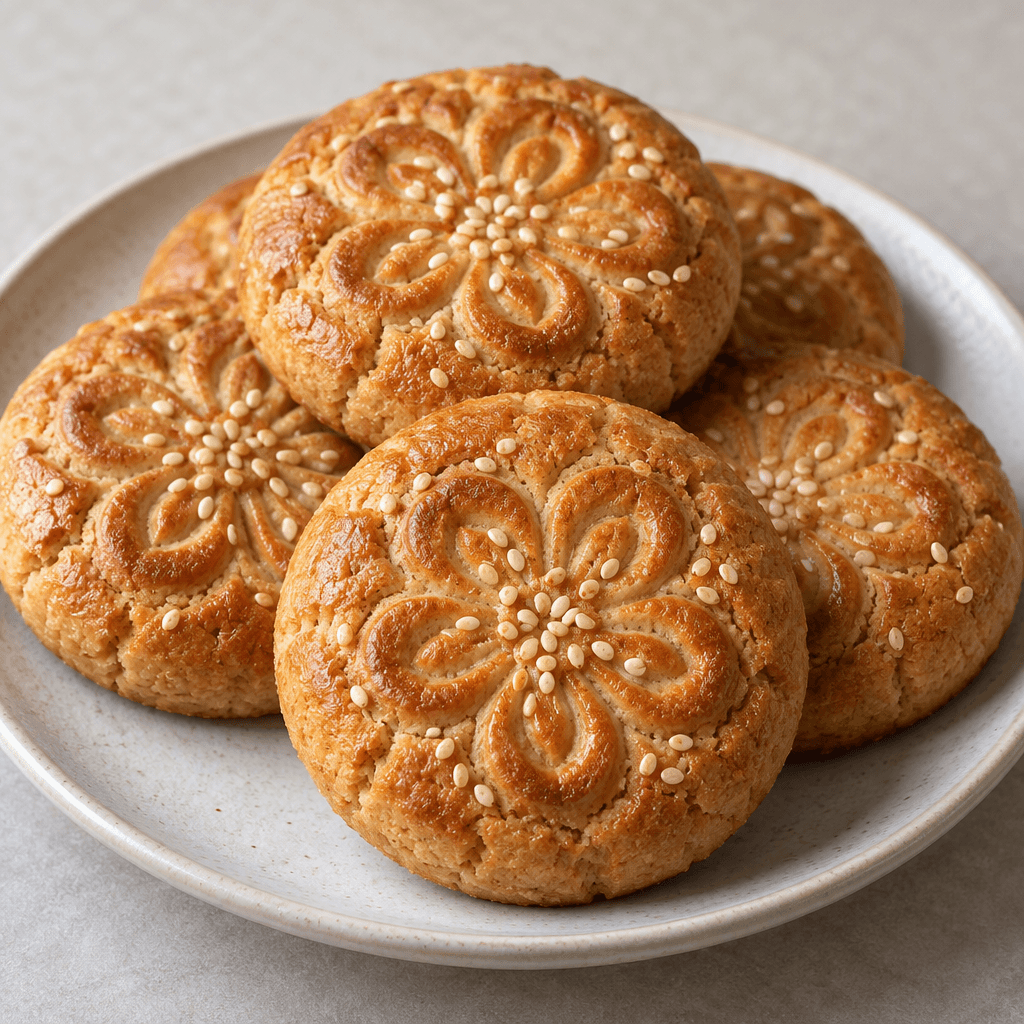
Hatay Kombe Dessert Calories
Traditional spiced cookie from Hatay, made with butter and flour, often filled with walnuts or dates.
In season: Autumn · Winter
CALORIES
GI
POTASSIUM
FIBER
Quick answer
1 piece (medium) of Hatay Kombe Dessert (40 g) has 168 calories. That works out to 420 calories per 100 g. It contains 24 g of carbs, 2.4 g of protein, 6.8 g of fat and 1.4 g of fiber. Its 0 mg of Copper covers 5% of the Daily Value. Its glycemic index is 65 (high), so it raises blood sugar quickly.
What is Hatay Kombe Dessert?
Hatay kombe dessert is a spiced, patterned cookie from Hatay in southern Turkey. Its dough is made with flour and butter, and some versions are filled with walnuts or dates. A traditional wooden mould gives the cookies their distinctive surface.
The outside is lightly crisp, while the centre is tender and fragrant with spice. In Hatay, they are commonly served with tea when guests visit and around festive occasions; they also pair well with coffee. Made mainly from flour and butter, they are an energy-dense treat, with about 420 calories per 100 g. For a lighter snack, have a smaller piece alongside fruit rather than adding another sweet.
Hatay Kombe Dessert Nutrition Facts
Selected: 100 g
420
KCAL / 100G
Carbs
60g
· 22% DV
Protein
6g
· 12% DV
Fat
17g
· 22% DV
Fiber
3.5g
· 13% DV
DV is the share of the daily value covered, on a 2,000 kcal reference diet.
Calories come from: Carbs 58% · Protein 6% · Fat 36%
Hatay Kombe Dessert Vitamins & Minerals
Vitamins
B1
0.09mg · 8% DV
Biotin
2µg · 7% DV
B5
0.3mg · 6% DV
Vitamin E
0.9mg · 6% DV
Minerals
Zinc
1mg · 9% DV
Selenium
5µg · 9% DV
Phosphorus
62mg · 9% DV
Sodium
180mg · 8% DV
How Nutritious Is Hatay Kombe Dessert?
Nutrient density
Low
How many vitamins, minerals and how much fiber this food carries per calorie. A high score means a lot of nutrition for few calories.
Satiety score
Low
An EatBetter score computed from fiber, protein and calorie density. A high score means staying full longer on the same calories.
Both scores are calculated per 100 g and do not change with the selected portion. The satiety score is EatBetter's own calculation, not a clinical measure.
Hatay Kombe Dessert Glycemic Index
GLYCEMIC INDEX
GLYCEMIC LOAD
Accounts for portion size — a more realistic measure than GI alone.
How to Burn Off Hatay Kombe Dessert
To burn the 420 calories in 100 g:
🚶
Walking (5 km/h)
🏃
Running (8 km/h)
🚴
Cycling
🏊
Swimming
Times are calculated with the MET equation for a 70 kg adult. Actual burn varies with your weight, age and pace.
Is Hatay Kombe Dessert Processed?
NOVA 3
Processed
1. Unprocessed
2. Minimally Processed
3. Processed
4. Ultra-Processed
NOVA classifies foods into 4 groups by industrial processing. NOVA 1 (unprocessed) is the healthiest.
Does Hatay Kombe Dessert Contain Allergens?
Contains these allergens:
Which Diets Is Hatay Kombe Dessert Good For?
Vegan
— Not suitable
Vegetarian
— Not suitable
Gluten-Free
— Not suitable
Dairy-Free
— Not suitable
Mediterranean
✓ Suitable
Paleo
— Not suitable
Whole30
— Not suitable
DASH
— Not suitable
Keto
— Not suitable
Low FODMAP
— Not suitable
Hatay Kombe Dessert Fat Profile
SATURATED
7.2g
MONOUNSATURATED
5.8g
POLYUNSATURATED
2.1g
Omega 6:3 ratio 17.1:1
Above the ideal 4:1 (17.1:1).
Compare Hatay Kombe Dessert
Foods Similar to Hatay Kombe Dessert
Frequently Asked Questions About Hatay Kombe Dessert
What is Hatay kombe dessert?
Hatay kombe dessert is a traditional spiced cookie from Hatay in southern Türkiye. It is made with butter and flour, often shaped in a decorative mold, and may have a walnut or date filling.
What spices are used in Hatay kombe dessert?
Hatay kombe dessert commonly gets its warm aroma from spices such as cinnamon, allspice, cloves, and mahleb. Recipes vary between households, so the exact blend is not fixed, but its fragrant seasoning is a defining feature.
How is Hatay kombe dessert traditionally made?
Hatay kombe dessert is made by mixing a butter-based dough with flour, sugar, and spices, then shaping and baking it. A carved wooden kombe mold gives the cookies their familiar patterned surface; some versions include walnut or date filling.
Can you make Hatay kombe dessert without a mold?
Yes, you can make Hatay kombe dessert without its traditional wooden mold. Shape the dough by hand or press it with an ordinary cookie cutter; the pattern will differ, but the spiced flavor remains.
Is Hatay kombe dessert filled with dates or walnuts?
Hatay kombe dessert can be filled with either dates or walnuts, and some recipes leave it unfilled. Dates make a soft, sweet center, while walnuts add a nuttier texture; the choice depends on the household recipe.
What does Hatay kombe dessert taste like?
Hatay kombe dessert tastes buttery and warmly spiced, with a crisp, cookie-like texture. Walnut or date filling changes the center, but the aromatic seasoning and distinctive molded shape set it apart from an ordinary butter cookie.
When do people traditionally serve Hatay kombe dessert?
Hatay kombe dessert is especially associated with holiday baking and hospitality in Hatay. Families prepare it to offer guests, often alongside Turkish tea or coffee, and its sturdy cookie texture makes it convenient to serve during visits.
How is Hatay kombe dessert different from ma'amoul?
Hatay kombe dessert and ma'amoul can both be molded and filled cookies, but kombe is distinguished by Hatay-style spicing. Ma'amoul is commonly filled with dates, nuts, or pistachios, while kombe recipes and fillings vary by household.
How should you store Hatay kombe dessert?
Store Hatay kombe dessert in an airtight container in a cool, dry place after it has cooled completely. Keeping it sealed helps prevent the cookies from absorbing moisture and losing their crisp texture.
Can you freeze Hatay kombe dessert?
Yes, Hatay kombe dessert can be frozen once completely cool. Place the cookies in a sealed freezer-safe container or bag, then thaw them at room temperature before serving to help preserve their texture.
Have another question about Hatay Kombe Dessert?
Ask the AI nutrition coach — calories, portions, alternatives and more, answered in seconds in the app.

Scan calories with your camera
Instant AI nutrition analysis

Nutrition data compiled from USDA FoodData Central and scientific sources.