

Ready & Packaged Foods
All →Vegetables & Legumes
All →Desserts & Confectionery
All →Meat & Protein
All →Grains & Bakery
All →Beverages
All →Milk & Dairy
All →

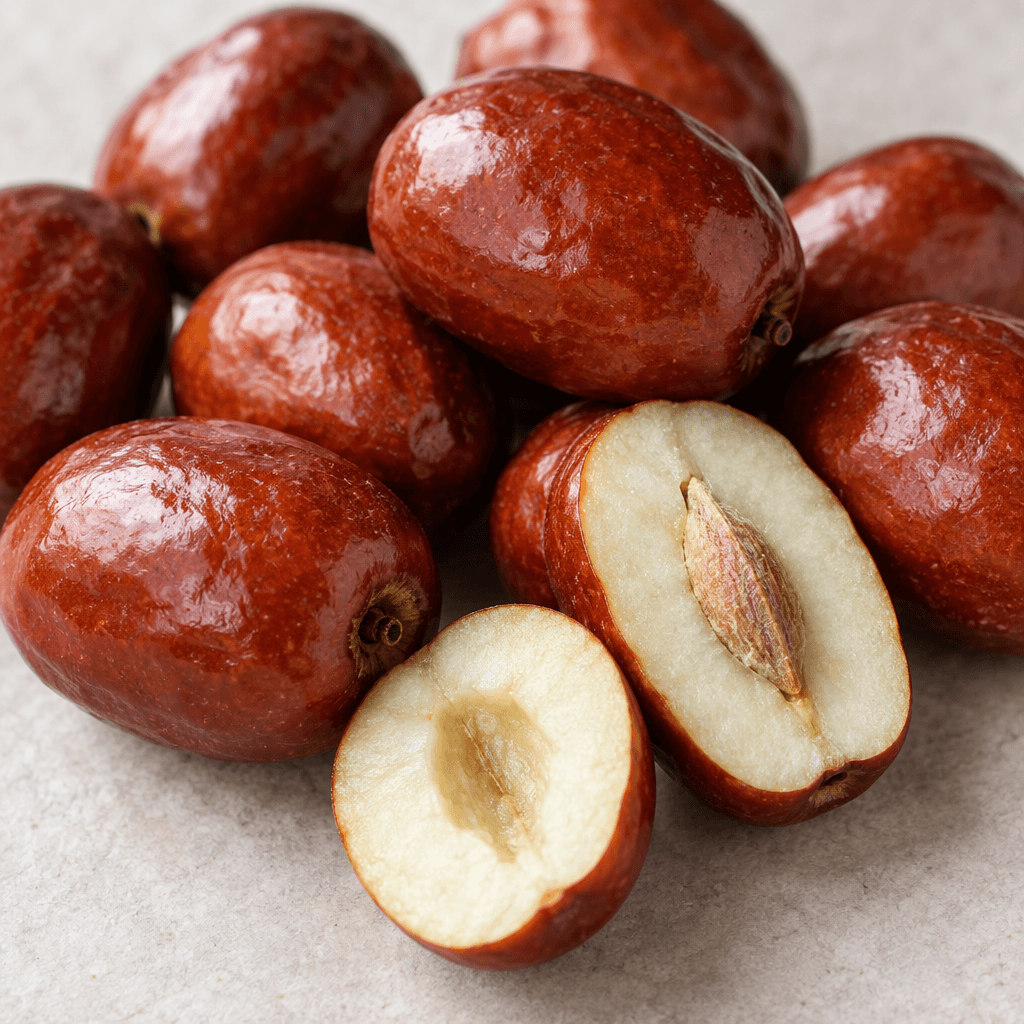
Harras Calories
High water content, low calorie, source of vitamin C and potassium
In season: Summer
CALORIES · 100 G
GI
POTASSIUM · 100 G
FIBER · 100 G
Quick answer
1 slice (medium) of Harras (150 g) has 51 calories. That works out to 34 calories per 100 g. It contains 12.3 g of carbs, 1.2 g of protein, 0.3 g of fat and 1.4 g of fiber. Its 27 mg of Vitamin C covers 30% of the Daily Value. Its glycemic index is 65 (medium), so it raises blood sugar at a moderate pace.
Harras Nutrition Facts
Selected: 1 slice (medium) · 150 g
51
KCAL / 150G
Carbs
12.3g
· 4% DV
Protein
1.2g
· 2% DV
Fat
0.3g
· 0% DV
Fiber
1.4g
· 5% DV
DV is the share of the daily value covered, on a 2,000 kcal reference diet.
Calories come from: Carbs 87% · Protein 8% · Fat 5%
Harras nutrition facts table · 1 slice (medium) (150 g)
| Nutrient | Amount | % DV |
|---|---|---|
| Calories | 51 kcal | |
| Total fat | 0.3 g | 0% |
| Saturated fat | 0.08 g | 0% |
| Trans fat | 0 g | |
| Sodium | 24 mg | 1% |
| Total carbohydrate | 12.3 g | 4% |
| Fiber | 1.4 g | 5% |
| Protein | 1.2 g | 2% |
Calories: Calories measure energy. Average daily need is 2,000 kcal. Excess calories are stored as fat, too few cause weight loss.
Carbs: Your body's primary energy source. The brain runs exclusively on carbs. Daily need: 275g.
Protein: Essential for muscle repair and cell growth. Daily need: 50g. Keeps you full and boosts metabolism.
Fat: Needed for hormone production and vitamin absorption. Daily need: 78g. Limit saturated fats, choose unsaturated.
Fiber: Critical for digestive health and satiety. Daily need: 28g. Stabilizes blood sugar, lowers cholesterol.

Log this food in EatBetter
100,000+ people use it
- Get your daily calorie target
- Snap your meal, log it in seconds
- See every vitamin and mineral

📸 Scan the code to get the app free.

How Many Calories in 1 Slice of Harras?
| Serving | Amount | Calories |
|---|---|---|
| 1 slice (medium) | 150 g | 51 kcal |
| 1 slice (thin) | 80 g | 27 kcal |
| 100 g | 100 g | 34 kcal |
| 1 cup (chopped) | 170 g | 58 kcal |
| 1 serving (medium) | 200 g | 68 kcal |
| 1 slice (thick) | 250 g | 85 kcal |
| 1 piece (small) | 300 g | 102 kcal |
| 1 piece (large) | 500 g | 170 kcal |
Calculated from 34 calories per 100 g.
Frequently Asked Questions About Harras
How can you tell when a Harras is ripe?
Choose a Harras with an even, variety-typical color and no bruised or soft, damaged patches. A lightly sweet aroma and a slightly yielding area near the stem can suggest ripeness; avoid fruit that smells sour.
How should you store a cut Harras?
Keep cut Harras in a covered container in the refrigerator. Covering it helps prevent the flesh from drying out and absorbing odors; discard it if it develops mold, a slimy surface, or an off smell.
Can you freeze Harras?
Yes. Remove the seeds, cut the Harras into pieces, and freeze them in a sealed container. Freezing can soften the texture after thawing, so the pieces work especially well in smoothies or chilled drinks.
Should you wash a Harras before cutting it?
Yes, rinse the whole Harras under running water and scrub the rind with a clean produce brush before cutting. A knife can carry dirt from the outside into the flesh, so washing the rind matters even if you do not eat it.
Do you eat the seeds of a Harras?
Harras seeds are generally edible, but the seeds and surrounding fibrous material may not have a pleasant texture for everyone. Scoop them out before serving if you prefer clean, easy-to-eat slices.
Can a Harras ripen after it has been cut?
No, a cut Harras will not meaningfully ripen or become sweeter; its exposed flesh is more likely to dry out or spoil. Check the whole fruit for aroma, color, and bruising before slicing it.
Is the rind of a Harras edible?
The rind of a Harras is generally not eaten because it is tough and less pleasant than the flesh. Wash it before cutting, then separate the flesh from the rind with a clean knife.
How do you cut a Harras into neat slices?
Wash and dry the Harras, cut it in half, and scoop out the seeds before slicing the flesh. Use a stable cutting board and a sharp knife, and trim the rind away if you want ready-to-eat pieces.
Is Harras a good fruit to use in smoothies?
Yes, Harras blends easily into smoothies with yogurt or other fruit. Use chilled or frozen pieces for a cold, thicker drink, and taste before adding sweetener because ripe fruit may already provide enough sweetness.
Can you eat Harras at night?
Yes, Harras can be eaten at night; there is no special need to avoid it before bed. Its high water content may make a large serving inconvenient if it leads you to wake for the bathroom.
Harras Vitamins & Minerals
Vitamins
Vitamin C
27mg · 30% DV
Vitamin A
250.5µg · 28% DV
B6
0.11mg · 6% DV
B5
0.3mg · 6% DV
Minerals
Potassium ⭐
342mg · 10% DV
Copper
0.05mg · 6% DV
Magnesium
15mg · 4% DV
Phosphorus
23mg · 3% DV
Sodium
24mg · 1% DV
Harras Glycemic Index
GLYCEMIC INDEX
GLYCEMIC LOAD
Accounts for portion size — a more realistic measure than GI alone.
How to Burn Off Harras
To burn the 51 calories in 1 slice (medium) (150 g):
🚶
Walking (5 km/h)
🏃
Running (8 km/h)
🚴
Cycling
🏊
Swimming
Times are calculated with the MET equation for a 70 kg adult. Actual burn varies with your weight, age and pace.
What is Harras?
Harras is a juicy, sweet fruit, usually eaten fresh in slices. Its tender flesh suits a fruit bowl or salad, and it can be served chilled as a refreshing snack. Where fresh fruit is commonly served at breakfast or after a meal, Harras fits easily alongside other seasonal produce; its mild sweetness also pairs well with plain yoghurt.
At 34 calories per 100 g, it is a light choice for a snack and provides vitamin C and potassium. Serve it on its own for a simple option, or combine it with yoghurt and other fruit for a more substantial bowl without adding sugar.
How Nutritious Is Harras?
Nutrient density
Medium
How many vitamins, minerals and how much fiber this food carries per calorie. A high score means a lot of nutrition for few calories.
Satiety score
Medium
An EatBetter score computed from fiber, protein and calorie density. A high score means staying full longer on the same calories.
Both scores are calculated per 100 g and do not change with the selected portion. The satiety score is EatBetter's own calculation, not a clinical measure.
Is Harras Processed?
NOVA 1
Unprocessed
1. Unprocessed
2. Minimally Processed
3. Processed
4. Ultra-Processed
NOVA classifies foods into 4 groups by industrial processing. NOVA 1 (unprocessed) is the healthiest.
Does Harras Contain Allergens?
No known major allergens
Which Diets Is Harras Good For?
Vegan
✓ Suitable
Vegetarian
✓ Suitable
Gluten-Free
✓ Suitable
Dairy-Free
— Not suitable
Mediterranean
✓ Suitable
Paleo
— Not suitable
Whole30
— Not suitable
DASH
— Not suitable
Keto
— Not suitable
Low FODMAP
— Not suitable
Harras Fat Profile
SATURATED
0.08g
MONOUNSATURATED
0.06g
POLYUNSATURATED
0.11g
Omega 6:3 ratio 1.5:1
Below the ideal 4:1 — a good omega balance.
Compare Harras
Foods Similar to Harras
Have another question about Harras?
Ask the AI nutrition coach — calories, portions, alternatives and more, answered in seconds in the app.

Scan calories with your camera
Instant AI nutrition analysis

Nutrition data compiled from USDA FoodData Central and scientific sources.