

Ready & Packaged Foods
All →Vegetables & Legumes
All →Desserts & Confectionery
All →Meat & Protein
All →Grains & Bakery
All →Beverages
All →Milk & Dairy
All →

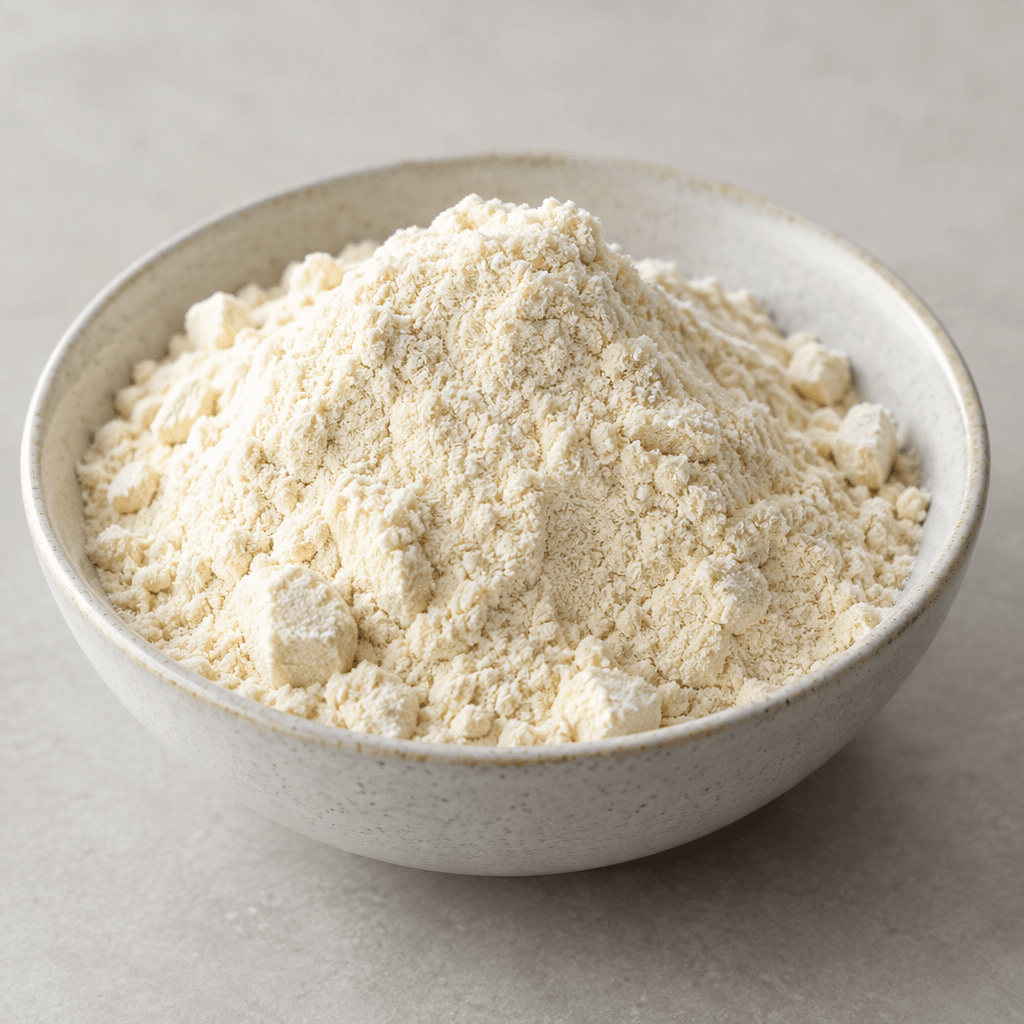
Hardline whey protein Calories
High protein, sports supplement, fast absorption
CALORIES · 100 G
GI
POTASSIUM · 100 G
FIBER · 100 G
Quick answer
1 serving (medium) of Hardline whey protein (30 g) has 114 calories. That works out to 380 calories per 100 g. It contains 2.1 g of carbs, 22.8 g of protein, 1.5 g of fat and 0.3 g of fiber. Its 0.4 mg of B2 covers 28% of the Daily Value. Its glycemic index is 35 (low), so it raises blood sugar slowly.
Hardline whey protein Nutrition Facts
Selected: 1 serving (medium) · 30 g
114
KCAL / 30G
Carbs
2.1g
· 1% DV
Protein
22.8g
· 46% DV
Fat
1.5g
· 2% DV
Fiber
0.3g
· 1% DV
DV is the share of the daily value covered, on a 2,000 kcal reference diet.
Calories come from: Carbs 7% · Protein 81% · Fat 12%
Hardline whey protein nutrition facts table · 1 serving (medium) (30 g)
| Nutrient | Amount | % DV |
|---|---|---|
| Calories | 114 kcal | |
| Total fat | 1.5 g | 2% |
| Saturated fat | 0.75 g | 4% |
| Trans fat | 0 g | |
| Sodium | 54 mg | 2% |
| Total carbohydrate | 2.1 g | 1% |
| Fiber | 0.3 g | 1% |
| Protein | 22.8 g | 46% |
Calories: Calories measure energy. Average daily need is 2,000 kcal. Excess calories are stored as fat, too few cause weight loss.
Carbs: Your body's primary energy source. The brain runs exclusively on carbs. Daily need: 275g.
Protein: Essential for muscle repair and cell growth. Daily need: 50g. Keeps you full and boosts metabolism.
Fat: Needed for hormone production and vitamin absorption. Daily need: 78g. Limit saturated fats, choose unsaturated.
Fiber: Critical for digestive health and satiety. Daily need: 28g. Stabilizes blood sugar, lowers cholesterol.

Log this food in EatBetter
100,000+ people use it
- Get your daily calorie target
- Snap your meal, log it in seconds
- See every vitamin and mineral

📸 Scan the code to get the app free.

How Many Calories in 1 Serving of Hardline whey protein?
| Serving | Amount | Calories |
|---|---|---|
| 1 serving (medium) | 30 g | 114 kcal |
| 1 tablespoon (medium) | 10 g | 38 kcal |
| 1 serving (small) | 20 g | 76 kcal |
| 2 tablespoon (double) | 20 g | 76 kcal |
| 1 serving (large) | 40 g | 152 kcal |
| 1 serving (extra large) | 50 g | 190 kcal |
| 1 serving (jumbo) | 60 g | 228 kcal |
| 100 g | 100 g | 380 kcal |
Calculated from 380 calories per 100 g.
Frequently Asked Questions About Hardline whey protein
What is Hardline whey protein used for?
Hardline whey protein is a convenient way to add protein to meals or snacks, especially when food alone does not fit your schedule. It can support muscle repair after exercise, but it is not a substitute for training or a balanced diet.
How do you mix Hardline whey protein without lumps?
Add the liquid to a shaker first, then add Hardline whey protein and shake until smooth. A blender also works; mixing the powder with a small amount of liquid into a paste before adding the rest can help prevent clumps.
Can you take Hardline whey protein on rest days?
Yes, Hardline whey protein can be used on rest days if you want a convenient way to meet your protein needs. Recovery continues between workouts, but you do not need to take it just because you trained the day before.
Does Hardline whey protein replace a meal?
No, Hardline whey protein is not a complete meal replacement. It can add protein to a snack or meal, but by itself it does not provide the variety of foods and nutrients found in a balanced meal.
Can Hardline whey protein be taken before bed?
Yes, Hardline whey protein can be taken before bed if it suits your routine and does not cause digestive discomfort. There is no special bedtime effect; your overall daily protein intake matters more than the exact time you drink it.
Can Hardline whey protein cause acne?
It may worsen acne in some people, though this does not happen to everyone and the evidence is not conclusive. If you notice a consistent flare after using Hardline whey protein, stop it for a while and see whether your skin improves.
Is Hardline whey protein suitable for people with lactose intolerance?
It may not suit everyone with lactose intolerance because some whey formulations contain lactose. The exact formula matters, so check the product’s ingredient information; if dairy reliably causes symptoms for you, choose a protein option you tolerate.
Can Hardline whey protein be used in baking?
Yes, you can add Hardline whey protein to pancakes, oats, or baked recipes. It can make mixtures thicker and baked goods drier, so adjust the liquid and avoid overcooking; adding it to an existing recipe may take a little experimentation.
Should you take Hardline whey protein before or after a workout?
Hardline whey protein is commonly taken after a workout because it is quick to prepare, but there is no need to drink it at a precise minute. You can take it whenever it conveniently complements your meals and training routine.
Can people with kidney disease use Hardline whey protein?
People with kidney disease should not add Hardline whey protein without guidance from their doctor or dietitian. Their appropriate protein intake can depend on the condition and treatment plan, so a general serving recommendation may not be suitable.
Hardline whey protein Vitamins & Minerals
Vitamins
B2
0.36mg · 28% DV
B12
0.36µg · 15% DV
B6
0.15mg · 9% DV
B1
0.06mg · 5% DV
Minerals
Phosphorus
90mg · 13% DV
Calcium
120mg · 12% DV
Magnesium
18mg · 4% DV
Potassium ⭐
120mg · 4% DV
Sodium
54mg · 2% DV
Hardline whey protein Glycemic Index
GLYCEMIC INDEX
GLYCEMIC LOAD
Accounts for portion size — a more realistic measure than GI alone.
How to Burn Off Hardline whey protein
To burn the 114 calories in 1 serving (medium) (30 g):
🚶
Walking (5 km/h)
🏃
Running (8 km/h)
🚴
Cycling
🏊
Swimming
Times are calculated with the MET equation for a 70 kg adult. Actual burn varies with your weight, age and pace.
What is Hardline whey protein?
Hardline whey protein is a packaged sports supplement made from whey, the liquid by-product of cheesemaking, processed into a powder that may also be flavoured. It offers a convenient way to add dairy protein to a snack or drink, especially for people who train or want a quick option between meals.
Mix it with water or milk, or stir it into a smoothie, porridge or yoghurt; the flavour and thickness depend on the product and what you mix it with. It is commonly used after exercise, though it can also fit into breakfast or a snack. With 76 g of protein per 100 g, it is protein-dense; a modest scoop blended with fruit makes an easy drink, while water keeps it lighter.
How Nutritious Is Hardline whey protein?
Nutrient density
High
How many vitamins, minerals and how much fiber this food carries per calorie. A high score means a lot of nutrition for few calories.
Satiety score
Medium
An EatBetter score computed from fiber, protein and calorie density. A high score means staying full longer on the same calories.
Both scores are calculated per 100 g and do not change with the selected portion. The satiety score is EatBetter's own calculation, not a clinical measure.
Is Hardline whey protein Processed?
NOVA 3
Processed
1. Unprocessed
2. Minimally Processed
3. Processed
4. Ultra-Processed
NOVA classifies foods into 4 groups by industrial processing. NOVA 1 (unprocessed) is the healthiest.
Does Hardline whey protein Contain Allergens?
Contains these allergens:
Which Diets Is Hardline whey protein Good For?
Vegan
— Not suitable
Vegetarian
✓ Suitable
Gluten-Free
— Not suitable
Dairy-Free
— Not suitable
Mediterranean
✓ Suitable
Paleo
✓ Suitable
Whole30
— Not suitable
DASH
— Not suitable
Keto
— Not suitable
Low FODMAP
— Not suitable
Hardline whey protein Fat Profile
SATURATED
0.75g
MONOUNSATURATED
0.36g
POLYUNSATURATED
0.09g
Omega 6:3 ratio 1.5:1
Below the ideal 4:1 — a good omega balance.
Compare Hardline whey protein
Foods Similar to Hardline whey protein
Have another question about Hardline whey protein?
Ask the AI nutrition coach — calories, portions, alternatives and more, answered in seconds in the app.

Scan calories with your camera
Instant AI nutrition analysis

Nutrition data compiled from USDA FoodData Central and scientific sources.