

Ready & Packaged Foods
All →Vegetables & Legumes
All →Desserts & Confectionery
All →Meat & Protein
All →Grains & Bakery
All →Beverages
All →Milk & Dairy
All →

Hamburger Calories
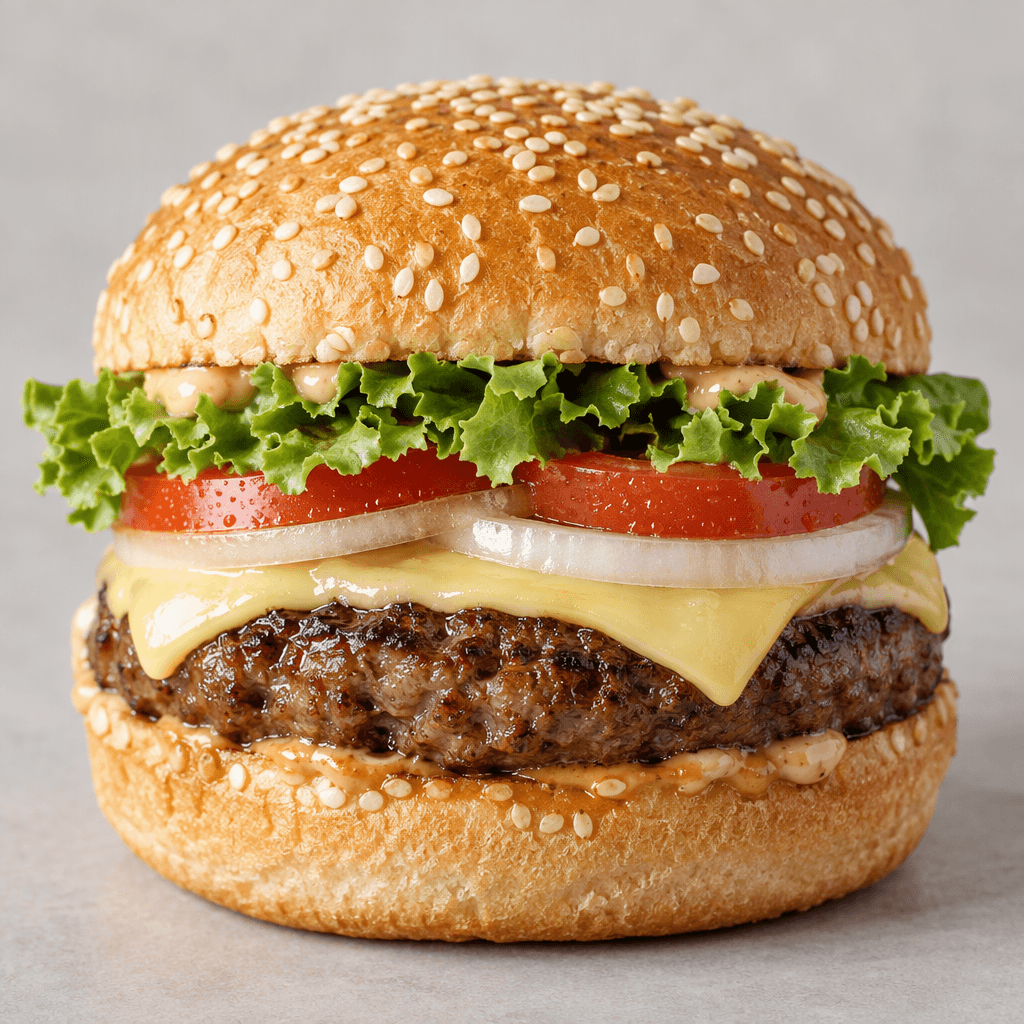
Classic hamburger with beef patty, bun, lettuce, tomato, onion, ketchup, and mayonnaise.
In season: Spring · Summer · Autumn · Winter
CALORIES
GI
POTASSIUM
FIBER
Quick answer
1 piece (medium) of Hamburger (180 g) has 450 calories. That works out to 250 calories per 100 g. It contains 41.4 g of carbs, 23.4 g of protein, 21.6 g of fat and 2.9 g of fiber. Its 2.2 µg of B12 covers 90% of the Daily Value. Its glycemic index is 65 (medium), so it raises blood sugar at a moderate pace.
What is Hamburger?
A hamburger is a sandwich built around a cooked minced-meat patty in a split bun, a style that became closely associated with the United States. A classic version pairs a beef patty with lettuce, tomato, onion and condiments such as ketchup and mayonnaise; cheese is a popular addition.
It is commonly served with fries or pickles, though homemade versions can be simpler and dressed to taste. The soft bun contrasts with the browned, juicy patty and crisp vegetables. The patty contributes protein, while the bun and sauces make the meal more filling and energy-dense; a 100 g portion has 13 g of protein. For a lighter plate, go easy on mayonnaise and add extra salad or vegetables.
Hamburger Nutrition Facts
Selected: 100 g
250
KCAL / 100G
Carbs
23g
· 8% DV
Protein
13g
· 26% DV
Fat
12g
· 15% DV
Fiber
1.6g
· 6% DV
DV is the share of the daily value covered, on a 2,000 kcal reference diet.
Calories come from: Carbs 37% · Protein 21% · Fat 42%
Hamburger Vitamins & Minerals
Vitamins
B12
1.2µg · 50% DV
B3
3.1mg · 19% DV
B2
0.18mg · 14% DV
B1
0.13mg · 11% DV
Minerals
Selenium
11µg · 20% DV
Zinc
2mg · 18% DV
Sodium
420mg · 18% DV
Phosphorus
110mg · 16% DV
How Nutritious Is Hamburger?
Nutrient density
Medium
How many vitamins, minerals and how much fiber this food carries per calorie. A high score means a lot of nutrition for few calories.
Satiety score
Medium
An EatBetter score computed from fiber, protein and calorie density. A high score means staying full longer on the same calories.
Both scores are calculated per 100 g and do not change with the selected portion. The satiety score is EatBetter's own calculation, not a clinical measure.
Hamburger Glycemic Index
GLYCEMIC INDEX
GLYCEMIC LOAD
Accounts for portion size — a more realistic measure than GI alone.
How to Burn Off Hamburger
To burn the 250 calories in 100 g:
🚶
Walking (5 km/h)
🏃
Running (8 km/h)
🚴
Cycling
🏊
Swimming
Times are calculated with the MET equation for a 70 kg adult. Actual burn varies with your weight, age and pace.
Is Hamburger Processed?
NOVA 3
Processed
1. Unprocessed
2. Minimally Processed
3. Processed
4. Ultra-Processed
NOVA classifies foods into 4 groups by industrial processing. NOVA 1 (unprocessed) is the healthiest.
Does Hamburger Contain Allergens?
Contains these allergens:
Which Diets Is Hamburger Good For?
Vegan
— Not suitable
Vegetarian
— Not suitable
Gluten-Free
— Not suitable
Dairy-Free
— Not suitable
Mediterranean
— Not suitable
Paleo
— Not suitable
Whole30
— Not suitable
DASH
— Not suitable
Keto
— Not suitable
Low FODMAP
— Not suitable
Hamburger Fat Profile
SATURATED
4.2g
MONOUNSATURATED
4.7g
POLYUNSATURATED
1.1g
Omega 6:3 ratio 2.6:1
Below the ideal 4:1 — a good omega balance.
Compare Hamburger
Foods Similar to Hamburger
Frequently Asked Questions About Hamburger
What is in a hamburger?
A classic hamburger has a ground-beef patty in a bun, often with lettuce, tomato, onion, ketchup, and mayonnaise. Pickles, mustard, or cheese are common additions, but recipes and toppings vary.
Why is it called a hamburger if it contains no ham?
The word hamburger is linked to Hamburg, Germany, not to ham. The name refers to the Hamburg-style minced-beef dish associated with the sandwich; a standard hamburger patty is made from beef, not ham.
How do you keep a hamburger patty from falling apart?
Handle the ground beef gently and avoid overworking it, which can make the patty tough and uneven. Shape it firmly, keep it cold until cooking, and wait until the first side has browned before turning it.
How do you cook a hamburger patty on the stove?
Cook a hamburger patty in a hot skillet until browned on the outside and fully cooked through. The time varies with its thickness, so use a food thermometer if available and avoid serving ground beef raw or undercooked.
What is the difference between a hamburger and a cheeseburger?
A cheeseburger is a hamburger with cheese added, usually on top of the patty. A hamburger does not have to include cheese, though both can have the same bun, vegetables, and sauces.
Why does a hamburger patty shrink when it cooks?
A hamburger patty shrinks as heat melts fat and drives moisture out of the meat. Shaping a shallow indentation in the center before cooking can help the patty stay flatter, though it will still contract somewhat.
What are the best toppings for a hamburger?
Lettuce, tomato, onion, pickles, cheese, ketchup, and mustard are popular hamburger toppings. For a balanced bite, combine crisp or juicy vegetables with a sauce rather than piling on so many toppings that the burger becomes difficult to hold.
Can you eat a hamburger medium rare?
A hamburger made from ground beef is safest when cooked through, because bacteria from the meat’s surface can be mixed throughout during grinding. A pink center can carry a food-safety risk, especially for people more vulnerable to foodborne illness.
How long can you keep a cooked hamburger in the fridge?
Refrigerate a cooked hamburger promptly in a covered container and eat it soon; keeping the patty separate from the bun helps prevent sogginess. Discard it if it has been left out for a prolonged time, and reheat the meat thoroughly.
Is a hamburger a healthy meal?
A hamburger can be part of a balanced meal, particularly when it includes vegetables, but heavy sauces and fried sides can make the meal less balanced. Choose a reasonable portion and add a side salad or vegetables if you want a lighter meal.
Have another question about Hamburger?
Ask the AI nutrition coach — calories, portions, alternatives and more, answered in seconds in the app.

Scan calories with your camera
Instant AI nutrition analysis

Nutrition data compiled from USDA FoodData Central and scientific sources.