

Ready & Packaged Foods
All →Vegetables & Legumes
All →Desserts & Confectionery
All →Meat & Protein
All →Grains & Bakery
All →Beverages
All →Milk & Dairy
All →

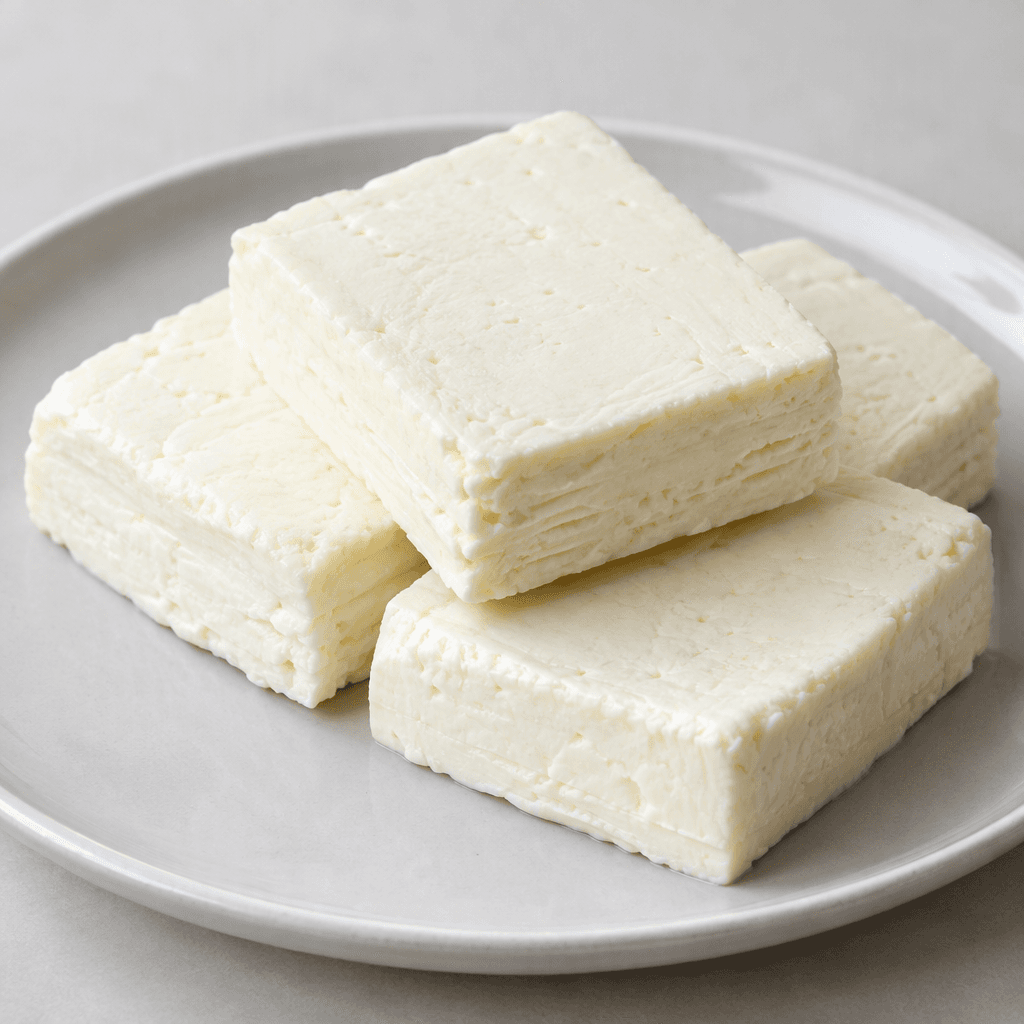
Halloumi Calories
High-protein, salty cheese, can be grilled or fried
In season: Spring · Summer · Autumn · Winter
CALORIES
GI
POTASSIUM
FIBER
Quick answer
1 slice (medium) of Halloumi (40 g) has 128 calories. That works out to 320 calories per 100 g. It contains 0.8 g of carbs, 8.8 g of protein, 10 g of fat and 0 g of fiber. Its 200 mg of Phosphorus covers 29% of the Daily Value. Its glycemic index is 0 (low), so it raises blood sugar slowly.
What is Halloumi?
Halloumi is a firm cheese traditionally associated with Cyprus, commonly made from sheep’s and goat’s milk, though versions may include cow’s milk. Its dense texture means it holds its shape when heated rather than melting away, making it especially suited to grilling or pan-frying.
It tastes pleasantly salty, with a mild tang, and turns golden outside while staying springy within. In Cyprus it is served at breakfast, in salads and alongside grilled foods; elsewhere, it also works well in sandwiches or as a meat-free centrepiece. Halloumi is protein-rich—about 22 g per 100 g—but also salty, so pair it with fresh vegetables and avoid adding extra salt to the meal.
Halloumi Nutrition Facts
Selected: 100 g
320
KCAL / 100G
Carbs
2g
· 1% DV
Protein
22g
· 44% DV
Fat
25g
· 32% DV
Fiber
0g
· 0% DV
DV is the share of the daily value covered, on a 2,000 kcal reference diet.
Calories come from: Carbs 2% · Protein 27% · Fat 71%
Halloumi Vitamins & Minerals
Vitamins
B12
1.5µg · 63% DV
Vitamin A
270µg · 30% DV
B2
0.35mg · 27% DV
B5
0.5mg · 10% DV
Minerals
Phosphorus
500mg · 71% DV
Calcium
700mg · 70% DV
Sodium
1200mg · 52% DV
Zinc
3mg · 27% DV
How Nutritious Is Halloumi?
Nutrient density
Medium
How many vitamins, minerals and how much fiber this food carries per calorie. A high score means a lot of nutrition for few calories.
Satiety score
Medium
An EatBetter score computed from fiber, protein and calorie density. A high score means staying full longer on the same calories.
Both scores are calculated per 100 g and do not change with the selected portion. The satiety score is EatBetter's own calculation, not a clinical measure.
Halloumi Glycemic Index
GLYCEMIC INDEX
GLYCEMIC LOAD
Accounts for portion size — a more realistic measure than GI alone.
How to Burn Off Halloumi
To burn the 320 calories in 100 g:
🚶
Walking (5 km/h)
🏃
Running (8 km/h)
🚴
Cycling
🏊
Swimming
Times are calculated with the MET equation for a 70 kg adult. Actual burn varies with your weight, age and pace.
Is Halloumi Processed?
NOVA 3
Processed
1. Unprocessed
2. Minimally Processed
3. Processed
4. Ultra-Processed
NOVA classifies foods into 4 groups by industrial processing. NOVA 1 (unprocessed) is the healthiest.
Does Halloumi Contain Allergens?
Contains these allergens:
Which Diets Is Halloumi Good For?
Vegan
— Not suitable
Vegetarian
✓ Suitable
Gluten-Free
— Not suitable
Dairy-Free
— Not suitable
Mediterranean
✓ Suitable
Paleo
— Not suitable
Whole30
— Not suitable
DASH
— Not suitable
Keto
— Not suitable
Low FODMAP
— Not suitable
Halloumi Fat Profile
SATURATED
16g
MONOUNSATURATED
6g
POLYUNSATURATED
0.3g
Omega 6:3 ratio 4:1
Below the ideal 4:1 — a good omega balance.
Compare Halloumi
Foods Similar to Halloumi
Frequently Asked Questions About Halloumi
What is Halloumi cheese made from?
Halloumi is a firm cheese traditionally associated with Cyprus. It is commonly made with sheep’s and goat’s milk, sometimes with cow’s milk added; the exact blend varies by producer and affects its flavour.
How do you cook Halloumi?
Slice Halloumi and cook it in a hot, lightly oiled or dry pan until browned on both sides. You can also grill or bake it. Serve it soon after cooking, when the outside is crisp and the centre is warm.
Why doesn’t Halloumi melt when you cook it?
Halloumi’s curds are heated and pressed during production, giving the cheese a firm structure that holds up under high heat. It softens and browns when cooked, but usually keeps its shape instead of melting into a puddle.
Can you eat Halloumi raw?
Yes, Halloumi can be eaten without cooking. Slice it into a salad or sandwich if you like; cooking is popular because it browns the outside and softens the centre, bringing out a savoury, chewy texture.
How do you make Halloumi less salty?
Soak Halloumi slices briefly in cold water, then pat them dry before cooking. A longer soak removes more salt but can also dull the cheese’s flavour, so taste a small piece before soaking the rest.
How long does Halloumi last after opening?
Keep opened Halloumi refrigerated in a sealed container, ideally covered with its brine if the package includes it. Follow the package’s storage instructions and use it within the stated period; discard it if its smell or appearance changes noticeably.
Can you freeze Halloumi?
Yes, Halloumi can be frozen, though its texture may become a little drier or more crumbly after thawing. Freeze it in portions in an airtight package, thaw it in the refrigerator, and cook it for the best texture.
What should you serve with Halloumi?
Halloumi pairs well with tomatoes, cucumber, lemon, herbs, grilled vegetables and watermelon. Its salty, savoury flavour also works in salads, wraps and grain bowls; add a bright or fresh ingredient to balance the richness.
Why does Halloumi squeak when you eat it?
Halloumi squeaks because its dense protein structure rubs against your teeth as you chew. The texture is especially noticeable when the cheese is fresh or just cooked, and the squeak by itself is not a sign that it has gone bad.
Is Halloumi suitable for grilling on a barbecue?
Yes, Halloumi is well suited to a barbecue because it browns without readily falling apart or melting. Cut it into thick slices, place them on a clean hot grill, and turn them once they have developed grill marks.
Have another question about Halloumi?
Ask the AI nutrition coach — calories, portions, alternatives and more, answered in seconds in the app.

Scan calories with your camera
Instant AI nutrition analysis

Nutrition data compiled from USDA FoodData Central and scientific sources.