

Ready & Packaged Foods
All →Vegetables & Legumes
All →Desserts & Confectionery
All →Meat & Protein
All →Grains & Bakery
All →Beverages
All →Milk & Dairy
All →

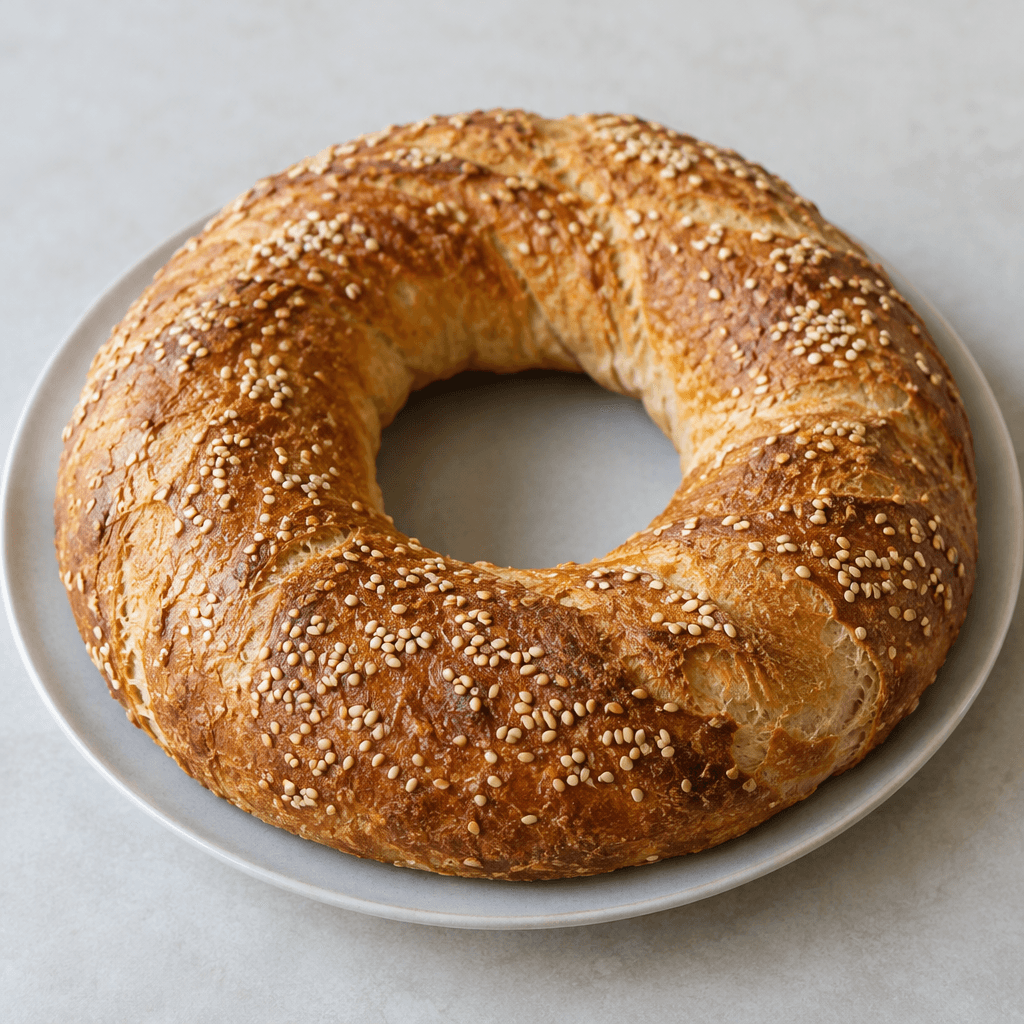
Halka Bread Calories
Basic wheat bread, affordable, source of fiber and carbohydrates
In season: Spring · Summer · Autumn · Winter
CALORIES
GI
POTASSIUM
FIBER
Quick answer
1 slice (medium) of Halka Bread (40 g) has 100 calories. That works out to 250 calories per 100 g. It contains 20 g of carbs, 3.4 g of protein, 0.6 g of fat and 1.3 g of fiber. Its 0.1 mg of B1 covers 8% of the Daily Value. Its glycemic index is 70 (high), so it raises blood sugar quickly.
What is Halka Bread?
Halk ekmeği is basic wheat bread sold at affordable prices through municipal bakeries and outlets in Turkey. It is intended as an everyday loaf rather than a specialty bread, and is commonly bought for the household’s regular meals.
Its flavour is mild and familiar, with a soft crumb when fresh that firms as it sits. In Turkey it may accompany breakfast, soup, or a home-cooked meal; elsewhere, serve it as you would an everyday table bread, with cheese, vegetables, or a hearty stew. It is mainly a source of carbohydrates, with some fibre and protein. Pair it with eggs, beans, or yogurt for a more sustaining meal.
Halka Bread Nutrition Facts
Selected: 100 g
250
KCAL / 100G
Carbs
50g
· 18% DV
Protein
8.5g
· 17% DV
Fat
1.5g
· 2% DV
Fiber
3.2g
· 11% DV
DV is the share of the daily value covered, on a 2,000 kcal reference diet.
Calories come from: Carbs 81% · Protein 14% · Fat 5%
Halka Bread Vitamins & Minerals
Vitamins
B1
0.25mg · 21% DV
B3
2.5mg · 16% DV
B2
0.12mg · 9% DV
Folate
35µg · 9% DV
Minerals
Selenium
10µg · 18% DV
Iron
3mg · 17% DV
Sodium
400mg · 17% DV
Phosphorus
90mg · 13% DV
How Nutritious Is Halka Bread?
Nutrient density
Medium
How many vitamins, minerals and how much fiber this food carries per calorie. A high score means a lot of nutrition for few calories.
Satiety score
Medium
An EatBetter score computed from fiber, protein and calorie density. A high score means staying full longer on the same calories.
Both scores are calculated per 100 g and do not change with the selected portion. The satiety score is EatBetter's own calculation, not a clinical measure.
Halka Bread Glycemic Index
GLYCEMIC INDEX
GLYCEMIC LOAD
Accounts for portion size — a more realistic measure than GI alone.
How to Burn Off Halka Bread
To burn the 250 calories in 100 g:
🚶
Walking (5 km/h)
🏃
Running (8 km/h)
🚴
Cycling
🏊
Swimming
Times are calculated with the MET equation for a 70 kg adult. Actual burn varies with your weight, age and pace.
Is Halka Bread Processed?
NOVA 3
Processed
1. Unprocessed
2. Minimally Processed
3. Processed
4. Ultra-Processed
NOVA classifies foods into 4 groups by industrial processing. NOVA 1 (unprocessed) is the healthiest.
Does Halka Bread Contain Allergens?
Contains these allergens:
Which Diets Is Halka Bread Good For?
Vegan
✓ Suitable
Vegetarian
✓ Suitable
Gluten-Free
— Not suitable
Dairy-Free
— Not suitable
Mediterranean
✓ Suitable
Paleo
— Not suitable
Whole30
— Not suitable
DASH
— Not suitable
Keto
— Not suitable
Low FODMAP
— Not suitable
Halka Bread Fat Profile
SATURATED
0.3g
MONOUNSATURATED
0.2g
POLYUNSATURATED
0.3g
Omega 6:3 ratio 8.3:1
Above the ideal 4:1 (8.3:1).
Compare Halka Bread
Foods Similar to Halka Bread
Frequently Asked Questions About Halka Bread
What is Halka Bread?
Halka Bread here refers to Turkish halk ekmeği, a basic wheat bread commonly produced or sold through municipal public-bread services. Recipes and shapes vary by city and bakery, so the name does not guarantee one fixed style.
Why is Halka Bread cheaper than bakery bread?
Halka Bread is often sold through municipal production and distribution programs designed to make a staple loaf affordable. Its lower price does not by itself mean inferior ingredients; the recipe and production arrangements differ between local services.
Is Halka Bread the same as Turkish municipal bread?
Yes, in this context Halka Bread is the English page name for Turkish halk ekmeği, commonly understood as public or municipality bread. It is not one nationally standardized recipe, and local versions can differ in ingredients and shape.
What is Halka Bread made from?
Halka Bread is generally made from wheat flour, water, yeast, and salt, though the exact recipe varies. Some versions use whole-wheat flour, bran, or sesame, so check the specific loaf if you need to avoid an ingredient.
Where can you buy Halka Bread?
You can commonly find Halka Bread at municipal bread kiosks and other sales points designated by the local authority. Availability varies by city, and some areas also sell it through selected grocery stores.
How should you store Halka Bread to keep it fresh?
Store Halka Bread at room temperature in a clean bread box or closed bag, away from moisture and direct heat. Avoid sealing it while warm, since trapped steam softens the crust and can encourage mold.
Can you freeze Halka Bread?
Yes, Halka Bread freezes well. Slice it first, seal the portions in a freezer-safe bag, and remove only what you need; slices can be toasted straight from frozen or thawed at room temperature.
Why does some Halka Bread have a hole in the middle?
Some bakeries make Halka Bread as a ring, but the hole is a shape choice rather than a feature of every Turkish halk ekmeği. Municipal loaves may instead be sold as ordinary round or oblong loaves.
Is Halka Bread always topped with sesame?
No, Halka Bread is not always topped with sesame. Plain wheat loaves are common, while certain ring-shaped or bakery versions may have sesame on the crust; the recipe depends on the local producer.
How do you serve Halka Bread?
Halka Bread works well with Turkish breakfasts, soups, and everyday meals. Serve it fresh with cheese, olives, or eggs, or toast older slices; its mild wheat flavor also makes it useful for sandwiches.
Have another question about Halka Bread?
Ask the AI nutrition coach — calories, portions, alternatives and more, answered in seconds in the app.

Scan calories with your camera
Instant AI nutrition analysis

Nutrition data compiled from USDA FoodData Central and scientific sources.