

Ready & Packaged Foods
All →Vegetables & Legumes
All →Desserts & Confectionery
All →Meat & Protein
All →Grains & Bakery
All →Beverages
All →Milk & Dairy
All →

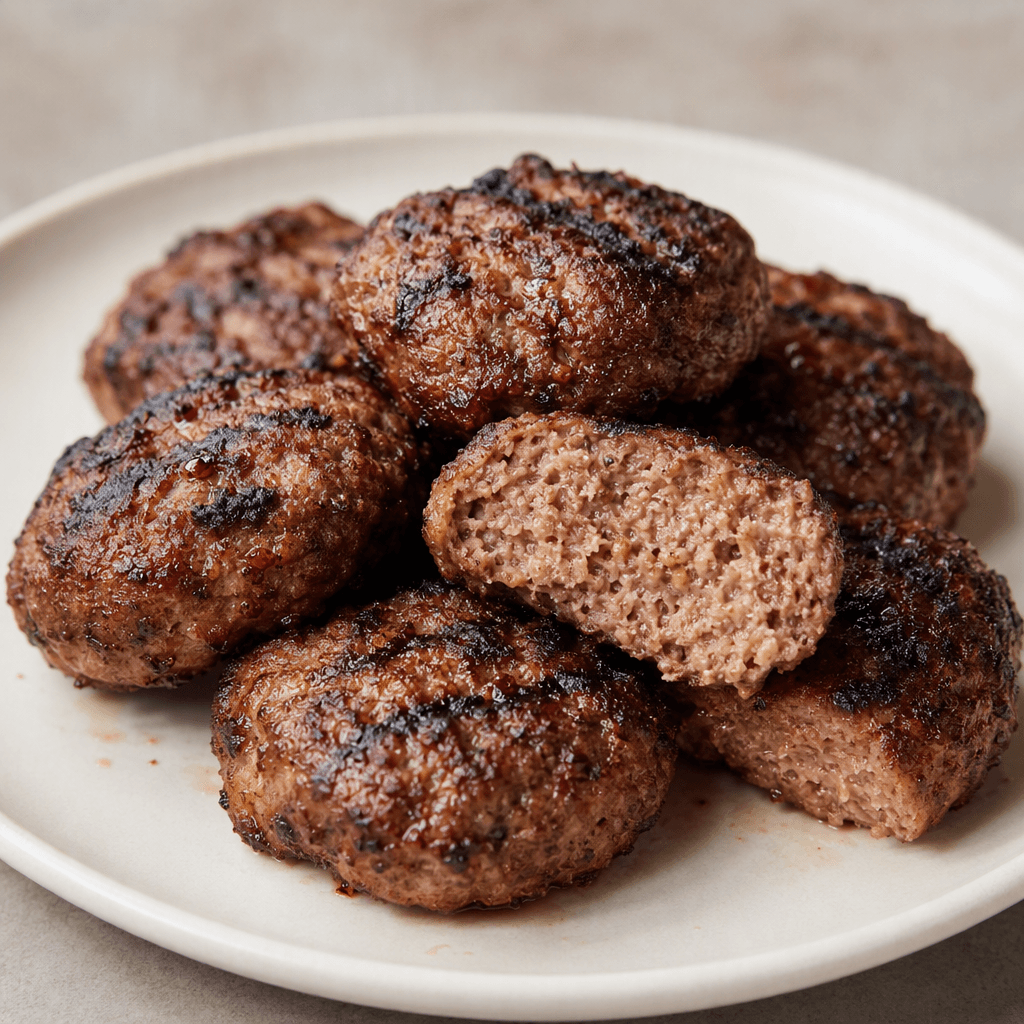
Grilled Meatballs Calories
High protein, rich in iron and zinc, classic Mediterranean/Turkish dish
In season: Spring · Summer · Autumn · Winter
CALORIES
GI
POTASSIUM
FIBER
Quick answer
3 piece (medium) of Grilled Meatballs (120 g) has 252 calories. That works out to 210 calories per 100 g. It contains 4.8 g of carbs, 21.6 g of protein, 15.6 g of fat and 0.7 g of fiber. Its 2.5 µg of B12 covers 105% of the Daily Value. Its glycemic index is 0 (low), so it raises blood sugar slowly.
What is Grilled Meatballs?
Grilled Meatballs are the Turkish-style köfte cooked over a grill: seasoned ground meat, often shaped into small, slightly flattened patties. Recipes vary by region and household, but may include onion, herbs and spices, with beef or lamb commonly used. Grilling gives them a browned, sometimes lightly charred outside while the centre stays moist and pleasantly coarse.
In Turkey, they are often served hot with grilled tomatoes and peppers, salad or piyaz, a bean salad; bread or rice may round out the meal. They also suit a simple barbecue plate with fresh vegetables. Grilled Meatballs provide plenty of protein, with relatively little carbohydrate. For a lighter meal, pair them with salad and grilled vegetables rather than a large portion of rice or bread.
Grilled Meatballs Nutrition Facts
Selected: 100 g
210
KCAL / 100G
Carbs
4g
· 1% DV
Protein
18g
· 36% DV
Fat
13g
· 17% DV
Fiber
0.6g
· 2% DV
DV is the share of the daily value covered, on a 2,000 kcal reference diet.
Calories come from: Carbs 8% · Protein 35% · Fat 57%
Grilled Meatballs Vitamins & Minerals
Vitamins
B12
2.1µg · 88% DV
B3
4.1mg · 26% DV
B6
0.32mg · 19% DV
B2
0.22mg · 17% DV
Minerals
Zinc
4mg · 36% DV
Phosphorus
180mg · 26% DV
Selenium
13µg · 24% DV
Sodium
370mg · 16% DV
How Nutritious Is Grilled Meatballs?
Nutrient density
High
How many vitamins, minerals and how much fiber this food carries per calorie. A high score means a lot of nutrition for few calories.
Satiety score
Medium
An EatBetter score computed from fiber, protein and calorie density. A high score means staying full longer on the same calories.
Both scores are calculated per 100 g and do not change with the selected portion. The satiety score is EatBetter's own calculation, not a clinical measure.
Grilled Meatballs Glycemic Index
GLYCEMIC INDEX
GLYCEMIC LOAD
Accounts for portion size — a more realistic measure than GI alone.
How to Burn Off Grilled Meatballs
To burn the 210 calories in 100 g:
🚶
Walking (5 km/h)
🏃
Running (8 km/h)
🚴
Cycling
🏊
Swimming
Times are calculated with the MET equation for a 70 kg adult. Actual burn varies with your weight, age and pace.
Is Grilled Meatballs Processed?
NOVA 2
Minimally Processed
1. Unprocessed
2. Minimally Processed
3. Processed
4. Ultra-Processed
NOVA classifies foods into 4 groups by industrial processing. NOVA 1 (unprocessed) is the healthiest.
Does Grilled Meatballs Contain Allergens?
No known major allergens
Which Diets Is Grilled Meatballs Good For?
Vegan
— Not suitable
Vegetarian
— Not suitable
Gluten-Free
✓ Suitable
Dairy-Free
— Not suitable
Mediterranean
✓ Suitable
Paleo
✓ Suitable
Whole30
— Not suitable
DASH
— Not suitable
Keto
✓ Suitable
Low FODMAP
— Not suitable
Grilled Meatballs Fat Profile
SATURATED
5.2g
MONOUNSATURATED
5.9g
POLYUNSATURATED
0.4g
Omega 6:3 ratio 3.1:1
Below the ideal 4:1 — a good omega balance.
Compare Grilled Meatballs
Foods Similar to Grilled Meatballs
Frequently Asked Questions About Grilled Meatballs
What ingredients are used in Grilled Meatballs?
Grilled Meatballs are usually made with ground meat, onion, salt, and spices such as black pepper or cumin. Turkish-style versions may include parsley or breadcrumbs, but recipes vary; mixing the ingredients evenly helps the meatballs hold their shape on the grill.
How do you keep Grilled Meatballs from falling apart on the grill?
Grilled Meatballs hold together better when the mixture is thoroughly mixed, not too wet, and chilled before cooking. Shape them evenly, oil the clean grill lightly, and wait until one side has browned and released before turning them.
What meat is best for Grilled Meatballs?
Ground beef with some fat is a reliable choice for juicy Grilled Meatballs. Turkish recipes also use lamb or a beef-and-lamb mixture. Very lean meat can turn dry, while excess fat may drip onto the fire and cause flare-ups.
How long should you grill Grilled Meatballs?
Grilled Meatballs usually take only a few minutes per side, but their thickness and the heat of the grill determine the timing. Cook them until browned outside and no longer raw in the center; avoid pressing them down, which releases their juices.
What temperature should Grilled Meatballs reach?
Grilled Meatballs made with ground beef should reach 160°F (71°C) at the center for food safety. Check the thickest meatball with a food thermometer rather than judging doneness by the browned surface, which can cook faster than the middle.
What should you serve with Grilled Meatballs?
Grilled Meatballs pair well with grilled vegetables, salad, rice, flatbread, or a yogurt-based sauce. For a Turkish-inspired meal, serve them with charred tomatoes and peppers; adding a fresh salad balances the rich, savory meat.
Can you make Grilled Meatballs without breadcrumbs?
Yes, Grilled Meatballs can be made without breadcrumbs. Mix the ground meat thoroughly and chill the shaped meatballs so they stay firm on the grill; if the mixture feels loose, use finely grated onion with its excess liquid squeezed out.
Can you prepare Grilled Meatballs ahead of time?
Yes, you can mix and shape Grilled Meatballs in advance and keep them covered in the refrigerator until cooking. Keep raw meat separate from ready-to-eat foods, and do not leave the meatballs sitting at room temperature for an extended period.
How long do leftover Grilled Meatballs keep?
Cooked Grilled Meatballs keep for about three to four days in the refrigerator when stored promptly in a covered container. Reheat them until hot throughout, and discard leftovers that have been left at room temperature for too long.
Can you freeze Grilled Meatballs?
Yes, Grilled Meatballs freeze well either raw or cooked. Freeze them in a sealed container with space between pieces, then thaw them in the refrigerator before cooking or reheating; avoid refreezing raw meatballs after they have thawed.
Have another question about Grilled Meatballs?
Ask the AI nutrition coach — calories, portions, alternatives and more, answered in seconds in the app.

Scan calories with your camera
Instant AI nutrition analysis

Nutrition data compiled from USDA FoodData Central and scientific sources.