

Ready & Packaged Foods
All →Vegetables & Legumes
All →Desserts & Confectionery
All →Meat & Protein
All →Grains & Bakery
All →Beverages
All →Milk & Dairy
All →

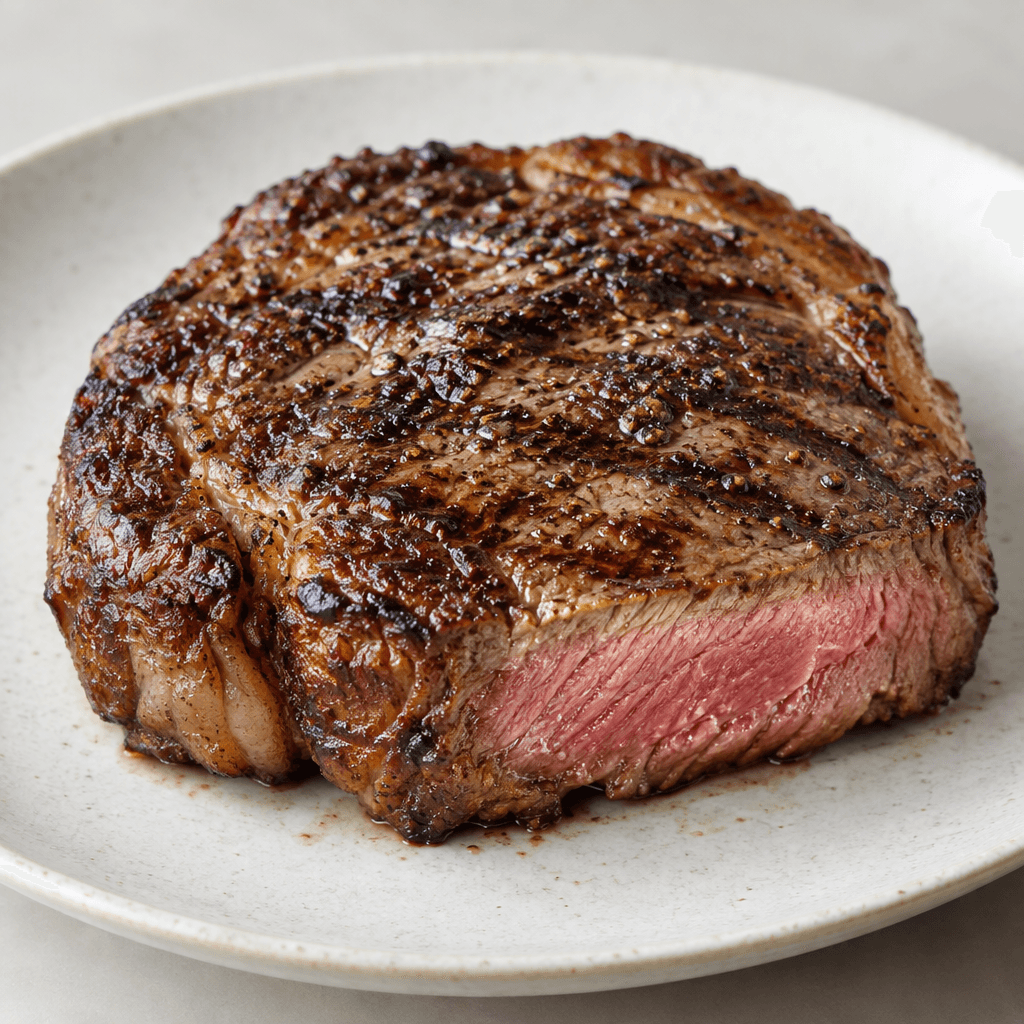
Grilled Beef Steak Calories
High in protein, iron, and B vitamins
In season: Spring · Summer · Autumn · Winter
CALORIES
GI
POTASSIUM
FIBER
Quick answer
1 piece (medium) of Grilled Beef Steak (150 g) has 375 calories. That works out to 250 calories per 100 g. It contains 0 g of carbs, 40.5 g of protein, 24 g of fat and 0 g of fiber. Its 3.2 µg of B12 covers 131% of the Daily Value. Its glycemic index is 0 (low), so it raises blood sugar slowly.
What is Grilled Beef Steak?
Grilled Beef Steak is a thick cut of beef cooked over high heat, developing a browned, smoky crust while the centre can remain pink if cooked to preference. Despite the Turkish name, it is grilled meat, not raw meat.
It is commonly served as a main course with potatoes, vegetables or a simple salad; in many places, sauces or pan juices are offered alongside. The seared exterior contrasts with a tender, juicy centre. Naturally rich in protein and iron, steak contains no carbohydrate, so it can suit a lower-carbohydrate meal. Pair it with vegetables and go easy on butter-heavy sauces for a lighter plate.
Grilled Beef Steak Nutrition Facts
Selected: 100 g
250
KCAL / 100G
Carbs
0g
· 0% DV
Protein
27g
· 54% DV
Fat
16g
· 21% DV
Fiber
0g
· 0% DV
DV is the share of the daily value covered, on a 2,000 kcal reference diet.
Calories come from: Carbs 0% · Protein 43% · Fat 57%
Grilled Beef Steak Vitamins & Minerals
Vitamins
B12
2.1µg · 88% DV
B6
0.5mg · 29% DV
B3
4.5mg · 28% DV
B2
0.21mg · 16% DV
Minerals
Zinc
5mg · 45% DV
Selenium
18µg · 33% DV
Phosphorus
210mg · 30% DV
Iron
3mg · 17% DV
How Nutritious Is Grilled Beef Steak?
Nutrient density
High
How many vitamins, minerals and how much fiber this food carries per calorie. A high score means a lot of nutrition for few calories.
Satiety score
Medium
An EatBetter score computed from fiber, protein and calorie density. A high score means staying full longer on the same calories.
Both scores are calculated per 100 g and do not change with the selected portion. The satiety score is EatBetter's own calculation, not a clinical measure.
Grilled Beef Steak Glycemic Index
GLYCEMIC INDEX
GLYCEMIC LOAD
Accounts for portion size — a more realistic measure than GI alone.
How to Burn Off Grilled Beef Steak
To burn the 250 calories in 100 g:
🚶
Walking (5 km/h)
🏃
Running (8 km/h)
🚴
Cycling
🏊
Swimming
Times are calculated with the MET equation for a 70 kg adult. Actual burn varies with your weight, age and pace.
Is Grilled Beef Steak Processed?
NOVA 2
Minimally Processed
1. Unprocessed
2. Minimally Processed
3. Processed
4. Ultra-Processed
NOVA classifies foods into 4 groups by industrial processing. NOVA 1 (unprocessed) is the healthiest.
Does Grilled Beef Steak Contain Allergens?
No known major allergens
Which Diets Is Grilled Beef Steak Good For?
Vegan
— Not suitable
Vegetarian
— Not suitable
Gluten-Free
✓ Suitable
Dairy-Free
— Not suitable
Mediterranean
✓ Suitable
Paleo
✓ Suitable
Whole30
— Not suitable
DASH
— Not suitable
Keto
✓ Suitable
Low FODMAP
— Not suitable
Grilled Beef Steak Fat Profile
SATURATED
6.5g
MONOUNSATURATED
7.2g
POLYUNSATURATED
0.5g
Omega 6:3 ratio 1.5:1
Below the ideal 4:1 — a good omega balance.
Compare Grilled Beef Steak
Foods Similar to Grilled Beef Steak
Frequently Asked Questions About Grilled Beef Steak
How do you grill a grilled beef steak?
Grill a grilled beef steak over a thoroughly preheated grill. Pat the surface dry, sear both sides over high heat, then finish over gentler heat if the steak is thick. This creates browning without overcooking the center.
Why is grilled beef steak tough, and how can you keep it tender?
Grilled beef steak can turn tough when it is overcooked or sliced with the grain. Let it rest after cooking, then cut across the muscle fibers. Choosing a well-marbled cut, such as ribeye, also helps keep each bite juicy.
How long should you grill a beef steak?
Grilling time for beef steak depends on its thickness, grill heat, and preferred doneness. Thin steaks cook quickly, while thick ones need more time; use an instant-read thermometer to check the center rather than relying on time alone.
What is the best cut for grilled beef steak?
Ribeye, strip steak, and tenderloin are popular cuts for grilled beef steak. Ribeye has more marbling and a rich flavor, while tenderloin is leaner and notably tender. Choose a cut that suits the texture and flavor you want.
Is pink grilled beef steak safe to eat?
Pink grilled beef steak can be safe when it reaches a safe internal temperature. For whole cuts of beef, standard food-safety guidance is 63°C (145°F), followed by a three-minute rest; color alone cannot confirm doneness.
Should you marinate grilled beef steak?
You can marinate grilled beef steak to add flavor, using ingredients such as oil, garlic, and herbs. Marinade mainly seasons the surface rather than reliably tenderizing the whole steak. Wipe off excess marinade before grilling to reduce flare-ups.
Should you salt beef steak before grilling?
Yes, salting beef steak before grilling seasons it and helps build a flavorful crust. Salt it just before cooking, or well in advance; avoid leaving it salted for only a short while unless you can pat away moisture before it hits the grill.
Why should grilled beef steak rest before slicing?
Grilled beef steak should rest for a few minutes before slicing. Resting gives the juices time to redistribute, so less liquid runs onto the plate when you cut it and the steak is less likely to seem dry.
How long does leftover grilled beef steak last in the fridge?
Leftover grilled beef steak keeps for 3–4 days in the refrigerator when stored in a covered container. Refrigerate it promptly rather than leaving it out, and reheat the portion until it is hot throughout.
Can you freeze grilled beef steak after cooking?
Yes, cooked grilled beef steak can be frozen in an airtight, freezer-safe package. Thaw it in the refrigerator before reheating; freezing and thawing can soften the texture, so wrapping it well helps preserve its quality.
Have another question about Grilled Beef Steak?
Ask the AI nutrition coach — calories, portions, alternatives and more, answered in seconds in the app.

Scan calories with your camera
Instant AI nutrition analysis

Nutrition data compiled from USDA FoodData Central and scientific sources.