

Ready & Packaged Foods
All →Vegetables & Legumes
All →Desserts & Confectionery
All →Meat & Protein
All →Grains & Bakery
All →Beverages
All →Milk & Dairy
All →

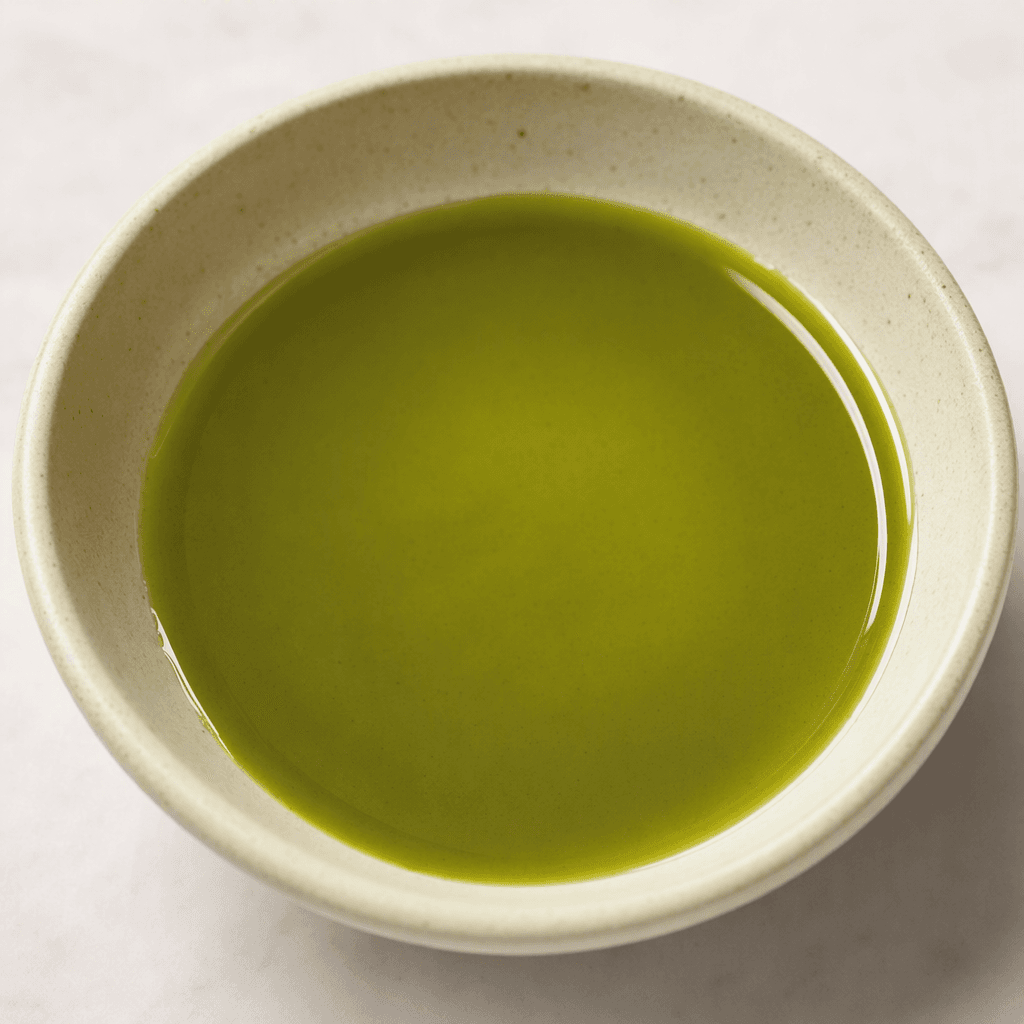
Green oil Calories
Aromatic oil made with olive oil, herbs, and green vegetables
In season: Spring · Summer · Autumn · Winter
CALORIES
GI
POTASSIUM
FIBER
Quick answer
1 tablespoon (medium) of Green oil (14 g) has 123 calories. That works out to 880 calories per 100 g. It contains 0.2 g of carbs, 0 g of protein, 13.7 g of fat and 0.1 g of fiber. Its 1 mg of Vitamin E covers 7% of the Daily Value. Its glycemic index is 0 (low), so it raises blood sugar slowly.
What is Green oil?
Green oil is an aromatic finishing oil made by blending or infusing olive oil with herbs and green vegetables. Recipes vary in which greens they use, and the mixture may be strained for a smooth, vividly coloured oil. It is best treated as a condiment rather than a cooking oil with a single fixed recipe.
Its fresh, savoury, herbal flavour works well drizzled over salads, soups, roasted vegetables, grilled fish or bread. In places where herb oils are served at the table, it can add a bright finish to simple dishes; at home, a little also livens up dips and grain bowls. It is mostly fat and energy-dense, so use a small drizzle, or pair it with plenty of vegetables for a lighter plate.
Green oil Nutrition Facts
Selected: 100 g
880
KCAL / 100G
Carbs
1.2g
· 0% DV
Protein
0.3g
· 1% DV
Fat
97.5g
· 125% DV
Fiber
0.5g
· 2% DV
DV is the share of the daily value covered, on a 2,000 kcal reference diet.
Calories come from: Carbs 1% · Protein 0% · Fat 99%
Green oil Vitamins & Minerals
Vitamins
Vitamin E
7mg · 47% DV
Vitamin K
30µg · 25% DV
Vitamin A
15µg · 2% DV
B1
0.02mg · 2% DV
Minerals
Calcium
10mg · 1% DV
Iron
0mg · 0% DV
Magnesium
2mg · 0% DV
Zinc
0mg · 0% DV
How Nutritious Is Green oil?
Nutrient density
Medium
How many vitamins, minerals and how much fiber this food carries per calorie. A high score means a lot of nutrition for few calories.
Satiety score
Low
An EatBetter score computed from fiber, protein and calorie density. A high score means staying full longer on the same calories.
Both scores are calculated per 100 g and do not change with the selected portion. The satiety score is EatBetter's own calculation, not a clinical measure.
Green oil Glycemic Index
GLYCEMIC INDEX
GLYCEMIC LOAD
Accounts for portion size — a more realistic measure than GI alone.
How to Burn Off Green oil
To burn the 880 calories in 100 g:
🚶
Walking (5 km/h)
🏃
Running (8 km/h)
🚴
Cycling
🏊
Swimming
Times are calculated with the MET equation for a 70 kg adult. Actual burn varies with your weight, age and pace.
Is Green oil Processed?
NOVA 2
Minimally Processed
1. Unprocessed
2. Minimally Processed
3. Processed
4. Ultra-Processed
NOVA classifies foods into 4 groups by industrial processing. NOVA 1 (unprocessed) is the healthiest.
Does Green oil Contain Allergens?
No known major allergens
Which Diets Is Green oil Good For?
Vegan
✓ Suitable
Vegetarian
✓ Suitable
Gluten-Free
✓ Suitable
Dairy-Free
— Not suitable
Mediterranean
✓ Suitable
Paleo
— Not suitable
Whole30
— Not suitable
DASH
— Not suitable
Keto
✓ Suitable
Low FODMAP
— Not suitable
Green oil Fat Profile
SATURATED
14g
MONOUNSATURATED
70g
POLYUNSATURATED
13g
Omega 6:3 ratio 10.7:1
Above the ideal 4:1 (10.7:1).
Compare Green oil
Foods Similar to Green oil
Frequently Asked Questions About Green oil
What is green oil?
Green oil is an herb-forward oil, usually made by blending olive oil with fresh herbs and green vegetables. It is commonly strained into a smooth, vividly colored drizzle for finishing dishes rather than used as a thick dip.
How do you make green oil?
Blend fresh herbs, such as parsley or basil, with olive oil, then strain through a fine sieve if you want a smooth finish. For a brighter color, briefly blanch the herbs, chill them in cold water, and dry them thoroughly before blending.
What is green oil used for?
Green oil is used to finish soups, salads, pasta, grilled vegetables, fish, and meat. Add it just before serving so its fresh herbal aroma and color stand out instead of fading during cooking.
How do you keep green oil bright green?
To help green oil stay bright, briefly blanch the herbs and plunge them into cold water before blending. Dry them well, keep the oil covered in the refrigerator, and avoid prolonged heating or exposure to light.
Is green oil the same as pesto?
No, green oil is not the same as pesto. Green oil is usually a smooth blend of oil and herbs, often strained; pesto typically includes ingredients such as cheese, nuts, and garlic, giving it a thicker, more substantial texture.
How long does homemade green oil last?
Homemade green oil with fresh herbs should be refrigerated promptly in a clean, sealed container and used soon. Do not leave it at room temperature; freeze small portions if you want to keep it longer.
Can you cook with green oil?
You can cook with green oil, but prolonged high heat dulls its fresh flavor and green color. It works best stirred into a dish after cooking or drizzled over food at the table.
Which herbs work best in green oil?
Parsley, basil, cilantro, dill, and mint can all work in green oil, while spinach can deepen its green color without dominating the flavor. Choose one herb for a clear taste or combine herbs that pair well.
Why does green oil taste bitter?
Green oil can taste bitter if you use strongly bitter greens or blend the herbs for too long, which can release harsh flavors. Start with mild herbs, blend briefly, and adjust the proportions after tasting.
Can green oil be frozen?
Yes, green oil can be frozen in small portions, such as in an ice-cube tray, then transferred to a covered container. Thaw only what you need; its color and fresh-herb aroma may be less vivid after thawing.
Have another question about Green oil?
Ask the AI nutrition coach — calories, portions, alternatives and more, answered in seconds in the app.

Scan calories with your camera
Instant AI nutrition analysis

Nutrition data compiled from USDA FoodData Central and scientific sources.