

Ready & Packaged Foods
All →Vegetables & Legumes
All →Desserts & Confectionery
All →Meat & Protein
All →Grains & Bakery
All →Beverages
All →Milk & Dairy
All →

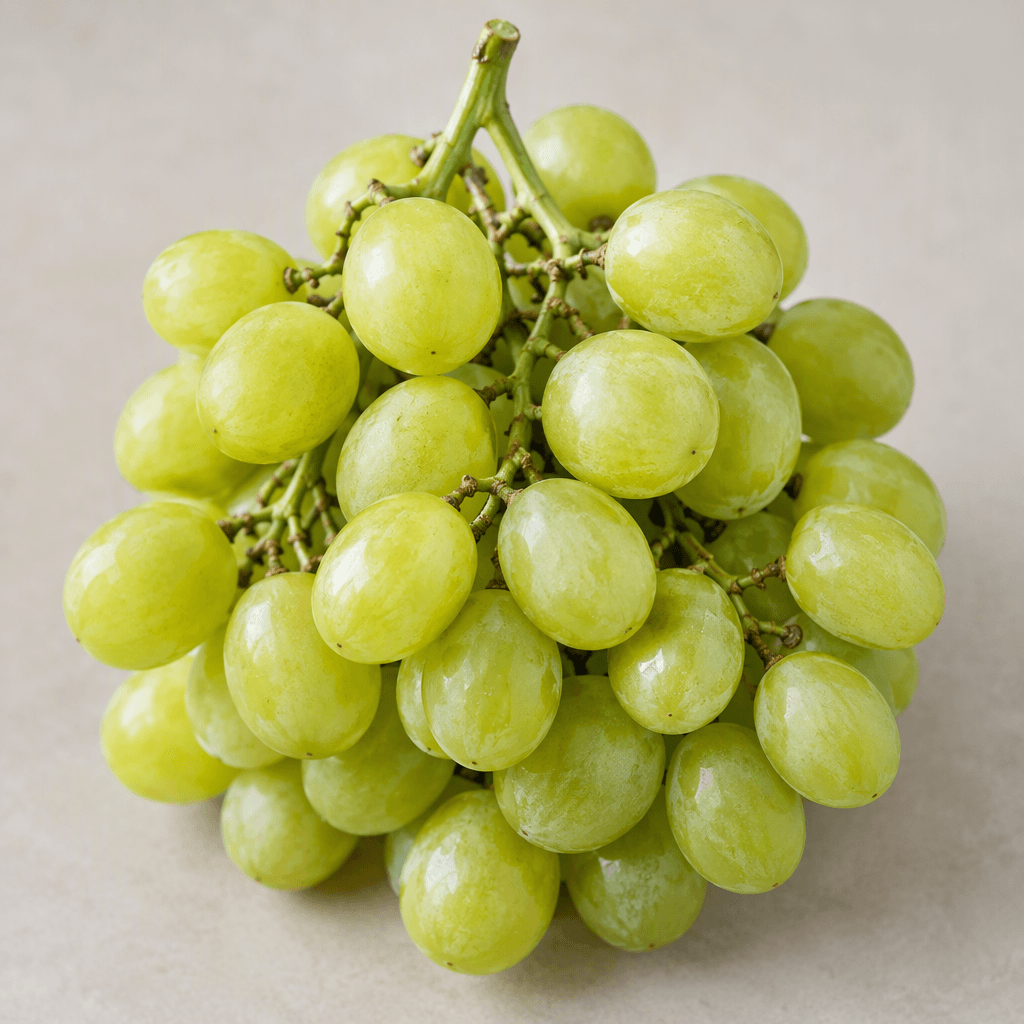
Green Grapes Calories
Vitamin C, antioxidant, low calorie, source of fiber
In season: Summer · Autumn
CALORIES
GI
POTASSIUM
FIBER
Quick answer
1 cup (medium) of Green Grapes (150 g) has 104 calories. That works out to 69 calories per 100 g. It contains 27.2 g of carbs, 1 g of protein, 0.3 g of fat and 1.4 g of fiber. Its 0.2 mg of Copper covers 22% of the Daily Value. Its glycemic index is 46 (medium), so it raises blood sugar at a moderate pace.
What is Green Grapes?
Green Grapes are small, juicy fruits that grow in clusters on vines. They may be seeded or seedless, and are eaten fresh around the world; they are also dried or pressed for juice and wine.
Their taut skins give a pleasant little snap, while the flesh is sweet and refreshing. Enjoy them by the handful as a snack, add them to fruit salads, or serve them with cheese on a grazing board. They provide mostly carbohydrate, along with a little fibre and vitamin C; a 100 g portion has 69 calories. Pair them with yoghurt or nuts for a more substantial snack, and rinse just before serving.
Green Grapes Nutrition Facts
Selected: 100 g
69
KCAL / 100G
Carbs
18.1g
· 7% DV
Protein
0.7g
· 1% DV
Fat
0.2g
· 0% DV
Fiber
0.9g
· 3% DV
DV is the share of the daily value covered, on a 2,000 kcal reference diet.
Calories come from: Carbs 94% · Protein 4% · Fat 2%
Green Grapes Vitamins & Minerals
Vitamins
Vitamin C
10.8mg · 12% DV
Vitamin K
14.6µg · 12% DV
B1
0.07mg · 6% DV
B2
0.07mg · 5% DV
Minerals
Potassium ⭐
191mg · 6% DV
Phosphorus
20mg · 3% DV
Magnesium
7mg · 2% DV
Calcium
10mg · 1% DV
How Nutritious Is Green Grapes?
Nutrient density
Medium
How many vitamins, minerals and how much fiber this food carries per calorie. A high score means a lot of nutrition for few calories.
Satiety score
Medium
An EatBetter score computed from fiber, protein and calorie density. A high score means staying full longer on the same calories.
Both scores are calculated per 100 g and do not change with the selected portion. The satiety score is EatBetter's own calculation, not a clinical measure.
Green Grapes Glycemic Index
GLYCEMIC INDEX
GLYCEMIC LOAD
Accounts for portion size — a more realistic measure than GI alone.
How to Burn Off Green Grapes
To burn the 69 calories in 100 g:
🚶
Walking (5 km/h)
🏃
Running (8 km/h)
🚴
Cycling
🏊
Swimming
Times are calculated with the MET equation for a 70 kg adult. Actual burn varies with your weight, age and pace.
Is Green Grapes Processed?
NOVA 1
Unprocessed
1. Unprocessed
2. Minimally Processed
3. Processed
4. Ultra-Processed
NOVA classifies foods into 4 groups by industrial processing. NOVA 1 (unprocessed) is the healthiest.
Does Green Grapes Contain Allergens?
No known major allergens
Which Diets Is Green Grapes Good For?
Vegan
✓ Suitable
Vegetarian
✓ Suitable
Gluten-Free
✓ Suitable
Dairy-Free
— Not suitable
Mediterranean
✓ Suitable
Paleo
— Not suitable
Whole30
— Not suitable
DASH
— Not suitable
Keto
— Not suitable
Low FODMAP
— Not suitable
Green Grapes Fat Profile
SATURATED
0.03g
MONOUNSATURATED
0.01g
POLYUNSATURATED
0.04g
Omega 6:3 ratio 2:1
Below the ideal 4:1 — a good omega balance.
Compare Green Grapes
Foods Similar to Green Grapes
Frequently Asked Questions About Green Grapes
Are green grapes good for you?
Yes, green grapes provide vitamin C and plant antioxidants, and their skins and flesh contain fiber. Eat them whole after washing to keep the skin and its fiber, rather than peeling the grapes or turning them into juice.
Are green grapes good for weight loss?
Green grapes can fit into a weight-loss eating pattern, and their water and fiber make them more filling than juice. Eat a measured handful or pair them with a source of protein, rather than grazing from a large bowl.
Can dogs eat green grapes?
No, dogs should never be given green grapes. Grapes can cause severe poisoning and kidney injury in dogs, and seedless grapes are not safer. If your dog has eaten any, contact a veterinarian or animal poison service immediately.
How do you choose ripe green grapes?
Choose green grapes that feel firm and plump, with fresh-looking stems and no leaking or shriveled berries. A slight variation in color is normal. Avoid bunches with many loose berries or signs of mold, bruising, or dampness.
Should you wash green grapes before eating them?
Yes, rinse green grapes under cool running water just before eating, gently turning the bunch so all the berries are washed. Don’t use soap or detergent. Washing them before storage leaves extra moisture that can make them spoil sooner.
How should you store green grapes?
Keep green grapes unwashed in the refrigerator, removing any crushed or moldy berries first. Store them in a breathable container or a perforated bag so moisture does not collect. Rinse the grapes only when you are ready to eat them.
Can you freeze green grapes?
Yes, green grapes freeze well as individual berries. Remove them from the stems, rinse and dry them thoroughly, then freeze them in a single layer before transferring them to a sealed container. They’re convenient to eat straight from the freezer.
Can you eat the skin of green grapes?
Yes, green grape skins are edible, and the grapes are usually eaten whole without peeling. Rinse the fruit under running water first. Peeling is possible, but it is fiddly and removes some of the skin’s fiber.
What is the white coating on green grapes?
The pale, powdery-looking coating on green grapes is usually their natural waxy bloom, not a sign of spoilage. Rinse it off before eating if you prefer. Discard grapes that have fuzzy mold, a bad smell, or soft, leaking spots.
Can people with diabetes eat green grapes?
Yes, people with diabetes can include green grapes, but the carbohydrate in grapes can raise blood glucose. Portion size matters, and grapes may affect people differently. Anyone using insulin or glucose-lowering medication should ask their clinician or dietitian about a suitable portion.
Have another question about Green Grapes?
Ask the AI nutrition coach — calories, portions, alternatives and more, answered in seconds in the app.

Scan calories with your camera
Instant AI nutrition analysis

Nutrition data compiled from USDA FoodData Central and scientific sources.