

Ready & Packaged Foods
All →Vegetables & Legumes
All →Desserts & Confectionery
All →Meat & Protein
All →Grains & Bakery
All →Beverages
All →Milk & Dairy
All →

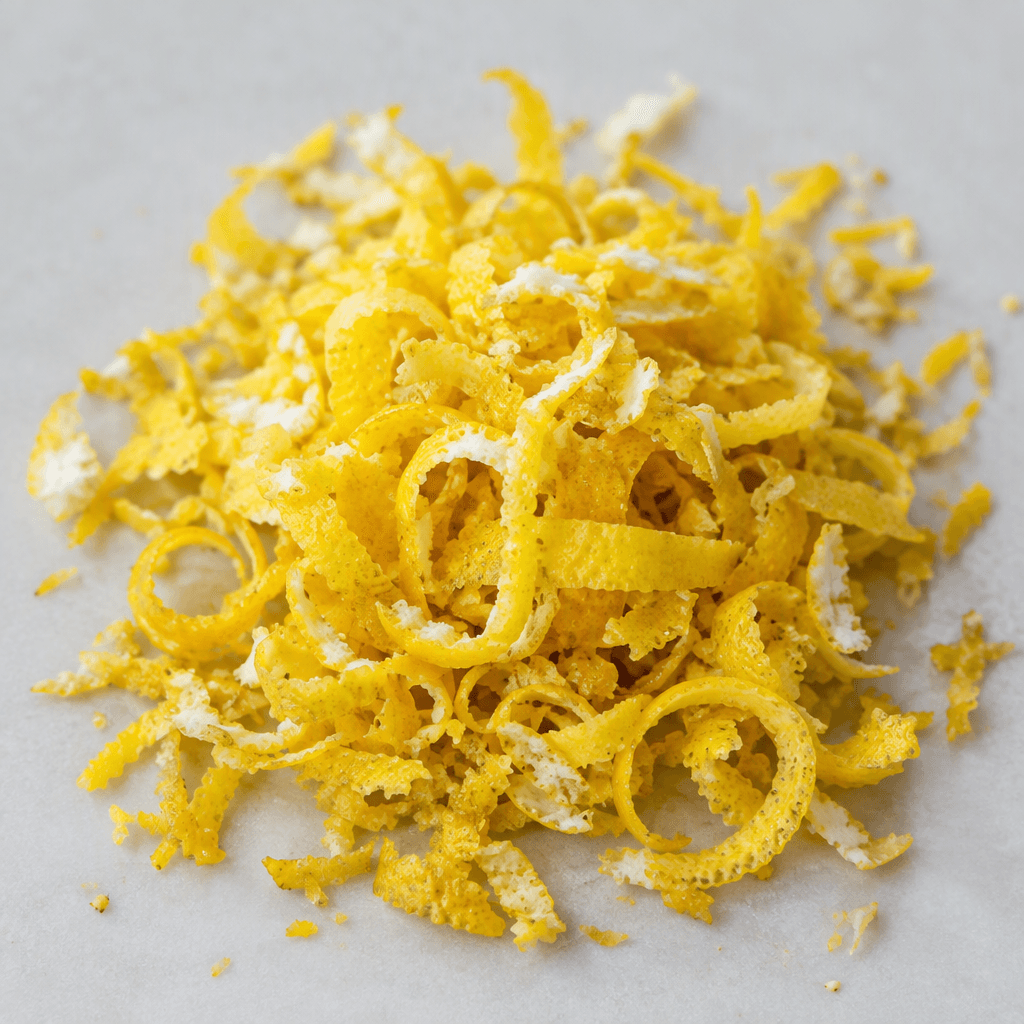
Grated lemon zest Calories
Source of vitamin C and aroma, used in desserts and dishes
In season: Winter · Spring · Summer · Autumn
CALORIES
GI
POTASSIUM
FIBER
Quick answer
1 tablespoon (medium) of Grated lemon zest (6 g) has 3 calories. That works out to 47 calories per 100 g. It contains 1 g of carbs, 0.1 g of protein, 0 g of fat and 0.6 g of fiber. Its 7.7 mg of Vitamin C covers 9% of the Daily Value. Its glycemic index is 25 (low), so it raises blood sugar slowly.
What is Grated lemon zest?
Grated lemon zest is the finely grated yellow outer peel of a lemon. It brings fragrant citrus oils and a bright, slightly bitter edge to food, without the juice’s acidity. It is used in cakes, biscuits and puddings, as well as in dressings, pasta, fish dishes and marinades. In many kitchens, it is stirred into a dish near the end of cooking or grated over just before serving so its aroma stays lively.
Zest is low in fat and provides fibre and vitamin C, though it is usually added for flavour rather than as a substantial part of a meal. Pair it with yoghurt, olive oil or fresh herbs, and grate only the yellow surface: the white pith underneath can taste bitter.
Grated lemon zest Nutrition Facts
Selected: 100 g
47
KCAL / 100G
Carbs
16g
· 6% DV
Protein
1.5g
· 3% DV
Fat
0.3g
· 0% DV
Fiber
10.6g
· 38% DV
DV is the share of the daily value covered, on a 2,000 kcal reference diet.
Calories come from: Carbs 88% · Protein 8% · Fat 4%
Grated lemon zest Vitamins & Minerals
Vitamins
Vitamin C
129mg · 143% DV
Vitamin E
0.9mg · 6% DV
B6
0.08mg · 5% DV
B5
0.19mg · 4% DV
Minerals
Calcium
134mg · 13% DV
Iron
1mg · 6% DV
Potassium ⭐
160mg · 5% DV
Magnesium
13mg · 3% DV
How Nutritious Is Grated lemon zest?
Nutrient density
Very high
How many vitamins, minerals and how much fiber this food carries per calorie. A high score means a lot of nutrition for few calories.
Satiety score
High
An EatBetter score computed from fiber, protein and calorie density. A high score means staying full longer on the same calories.
Both scores are calculated per 100 g and do not change with the selected portion. The satiety score is EatBetter's own calculation, not a clinical measure.
Grated lemon zest Glycemic Index
GLYCEMIC INDEX
GLYCEMIC LOAD
Accounts for portion size — a more realistic measure than GI alone.
How to Burn Off Grated lemon zest
To burn the 47 calories in 100 g:
🚶
Walking (5 km/h)
🏃
Running (8 km/h)
🚴
Cycling
🏊
Swimming
Times are calculated with the MET equation for a 70 kg adult. Actual burn varies with your weight, age and pace.
Is Grated lemon zest Processed?
NOVA 2
Minimally Processed
1. Unprocessed
2. Minimally Processed
3. Processed
4. Ultra-Processed
NOVA classifies foods into 4 groups by industrial processing. NOVA 1 (unprocessed) is the healthiest.
Does Grated lemon zest Contain Allergens?
No known major allergens
Which Diets Is Grated lemon zest Good For?
Vegan
✓ Suitable
Vegetarian
✓ Suitable
Gluten-Free
✓ Suitable
Dairy-Free
— Not suitable
Mediterranean
✓ Suitable
Paleo
✓ Suitable
Whole30
— Not suitable
DASH
— Not suitable
Keto
— Not suitable
Low FODMAP
— Not suitable
Grated lemon zest Fat Profile
SATURATED
0.04g
MONOUNSATURATED
0.02g
POLYUNSATURATED
0.04g
Omega 6:3 ratio 0.5:1
Below the ideal 4:1 — a good omega balance.
Compare Grated lemon zest
Foods Similar to Grated lemon zest
Frequently Asked Questions About Grated lemon zest
How do you make grated lemon zest?
Wash and dry the lemon, then grate only the yellow outer layer with a fine grater or microplane. Turn the fruit as you work and stop before reaching the white pith, which can taste bitter.
Can you eat grated lemon zest?
Yes, grated lemon zest is edible and commonly used in cooking and baking. Wash and rub the lemon under running water before zesting, then use the zest fresh for its brightest aroma.
Why does grated lemon zest taste bitter?
Grated lemon zest can taste bitter when the grater catches the white pith beneath the yellow skin. Use light strokes and rotate the lemon so you remove just the thin, colored outer layer.
Should you wash a lemon before making grated lemon zest?
Yes, wash the lemon before zesting it. Rub the skin under running water and dry it thoroughly; this removes surface dirt and also makes the lemon easier to hold and grate.
How should you store grated lemon zest?
Keep grated lemon zest in a small airtight container in the refrigerator and use it soon, while its fragrance is strong. For the freshest flavor, grate only what you need just before cooking.
Can grated lemon zest be frozen?
Yes, grated lemon zest freezes well. Freeze it in small portions in a sealed, freezer-safe container or bag, then add it straight to a recipe without thawing.
What can you use instead of grated lemon zest?
Dried lemon zest is the closest substitute, though its flavor may be more concentrated, so add it gradually. Lemon juice provides acidity but does not replace the fragrant oils or texture of grated lemon zest.
How do you dry grated lemon zest at home?
Spread grated lemon zest in a thin layer on a clean tray and let it dry in a warm, airy place until crisp, or use very low oven heat. Store it airtight once fully dry to limit moisture and aroma loss.
Is grated lemon zest the same as lemon peel?
No. Grated lemon zest usually means the finely grated yellow outer skin, while lemon peel can refer to larger strips and may include the bitter white pith. For recipes calling for zest, avoid grating the white layer.
Can grated lemon zest be used in savory dishes?
Yes, grated lemon zest works well in savory food as well as desserts. Stir a little into salad dressings, marinades, pasta, or fish dishes near the end of cooking to keep its fresh citrus aroma noticeable.
Have another question about Grated lemon zest?
Ask the AI nutrition coach — calories, portions, alternatives and more, answered in seconds in the app.

Scan calories with your camera
Instant AI nutrition analysis

Nutrition data compiled from USDA FoodData Central and scientific sources.