

Ready & Packaged Foods
All →Vegetables & Legumes
All →Desserts & Confectionery
All →Meat & Protein
All →Grains & Bakery
All →Beverages
All →Milk & Dairy
All →

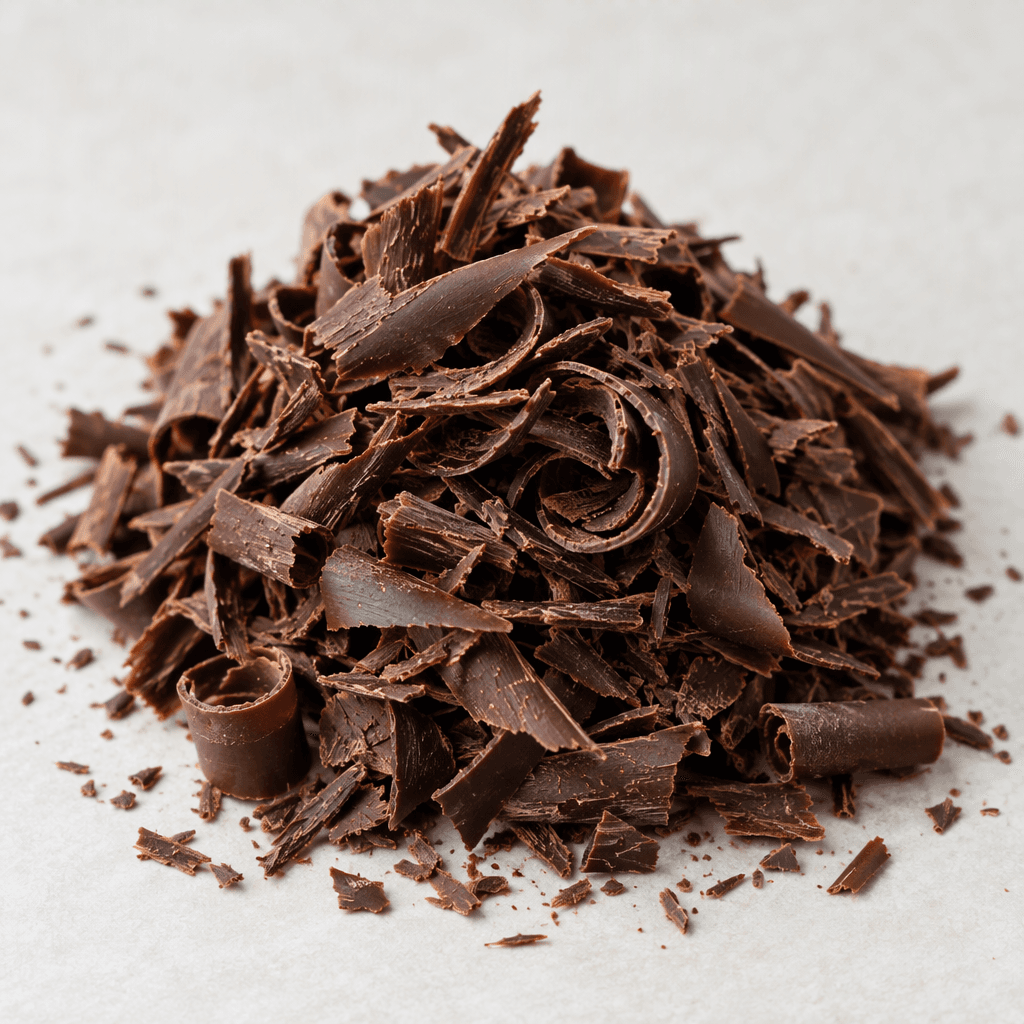
Grated Chocolate Calories
Finely grated chocolate for desserts and drinks
CALORIES
GI
POTASSIUM
FIBER
Quick answer
1 tablespoon (medium) of Grated Chocolate (7 g) has 37 calories. That works out to 535 calories per 100 g. It contains 4.1 g of carbs, 0.5 g of protein, 2.2 g of fat and 0.5 g of fiber. Its 0.1 mg of Copper covers 13% of the Daily Value. Its glycemic index is 40 (medium), so it raises blood sugar at a moderate pace.
What is Grated Chocolate?
Grated chocolate is chocolate shaved into fine flakes or curls, either at home from a bar or sold ready to use. The shavings vary with the chocolate and the grater, from delicate curls to small, fine pieces.
It is commonly scattered over cakes, puddings, ice cream and drinks such as cappuccino or hot chocolate, adding a rich cocoa flavour and a little texture. Add it just before serving if you want the flakes to keep their shape; over a warm dessert, they soften and melt. Grated chocolate is energy-dense, with much of its energy coming from fat and carbohydrates, so a small sprinkle can go a long way. Try it with fresh fruit or plain yoghurt for a simple dessert.
Grated Chocolate Nutrition Facts
Selected: 100 g
535
KCAL / 100G
Carbs
59g
· 21% DV
Protein
7.5g
· 15% DV
Fat
31g
· 40% DV
Fiber
7g
· 25% DV
DV is the share of the daily value covered, on a 2,000 kcal reference diet.
Calories come from: Carbs 43% · Protein 6% · Fat 51%
Grated Chocolate Vitamins & Minerals
Vitamins
B2
0.25mg · 19% DV
B5
0.5mg · 10% DV
B1
0.08mg · 7% DV
Biotin
2µg · 7% DV
Minerals
Copper
2mg · 222% DV
Manganese
1mg · 43% DV
Phosphorus
180mg · 26% DV
Magnesium
80mg · 19% DV
How Nutritious Is Grated Chocolate?
Nutrient density
Low
How many vitamins, minerals and how much fiber this food carries per calorie. A high score means a lot of nutrition for few calories.
Satiety score
Medium
An EatBetter score computed from fiber, protein and calorie density. A high score means staying full longer on the same calories.
Both scores are calculated per 100 g and do not change with the selected portion. The satiety score is EatBetter's own calculation, not a clinical measure.
Grated Chocolate Glycemic Index
GLYCEMIC INDEX
GLYCEMIC LOAD
Accounts for portion size — a more realistic measure than GI alone.
How to Burn Off Grated Chocolate
To burn the 535 calories in 100 g:
🚶
Walking (5 km/h)
🏃
Running (8 km/h)
🚴
Cycling
🏊
Swimming
Times are calculated with the MET equation for a 70 kg adult. Actual burn varies with your weight, age and pace.
Is Grated Chocolate Processed?
NOVA 3
Processed
1. Unprocessed
2. Minimally Processed
3. Processed
4. Ultra-Processed
NOVA classifies foods into 4 groups by industrial processing. NOVA 1 (unprocessed) is the healthiest.
Does Grated Chocolate Contain Allergens?
No known major allergens
Which Diets Is Grated Chocolate Good For?
Vegan
— Not suitable
Vegetarian
✓ Suitable
Gluten-Free
— Not suitable
Dairy-Free
— Not suitable
Mediterranean
— Not suitable
Paleo
— Not suitable
Whole30
— Not suitable
DASH
— Not suitable
Keto
— Not suitable
Low FODMAP
— Not suitable
Grated Chocolate Fat Profile
SATURATED
19g
MONOUNSATURATED
9g
POLYUNSATURATED
1g
Omega 6:3 ratio 10:1
Above the ideal 4:1 (10:1).
Compare Grated Chocolate
Foods Similar to Grated Chocolate
Frequently Asked Questions About Grated Chocolate
What is grated chocolate used for?
Grated chocolate is mainly used to finish cakes, desserts, and drinks with chocolate flavour and a light, decorative topping. Sprinkle it over whipped cream, pudding, or ice cream just before serving so the fine shavings stay distinct.
How do you grate chocolate without it melting?
Chill the chocolate bar and use a clean, dry grater to keep grated chocolate from softening in your hands. Work in short bursts, holding the bar with its wrapper or a piece of parchment, and return it to the fridge if it starts to warm.
Can you use grated chocolate in baking?
Yes, grated chocolate can be mixed into cake, muffin, or cookie batter. Fine shreds distribute more evenly than large chunks, while coarser grating can leave melted chocolate pockets. Add it near the end of mixing to avoid warming it with your hands.
Can grated chocolate be melted?
Yes, grated chocolate melts, often faster than a solid bar because the pieces are small. Use gentle heat and stir frequently; overheating can make chocolate grainy or scorched. For a smooth sauce, melt it with a suitable liquid or fat rather than applying high heat.
What kind of chocolate is best for grated chocolate?
A firm chocolate bar is easiest to grate, and chilling it first helps produce clean shavings. Dark chocolate gives a more intense, less sweet finish, while milk or white chocolate adds a sweeter flavour. Choose a type that complements the dessert or drink.
How should grated chocolate be stored?
Keep grated chocolate in a tightly sealed, dry container in a cool place away from sunlight and strong odours. Its small pieces can absorb moisture and smells quickly. If your kitchen is warm, refrigerate the sealed container and let it come to room temperature before opening.
Can you put grated chocolate in hot chocolate?
Yes, grated chocolate works well in hot chocolate because it melts quickly and blends into the drink. Stir it into warm milk gradually for an even result, or sprinkle a little on top as a garnish if you want visible shavings.
Can a food processor make grated chocolate?
Yes, a food processor can break a chilled chocolate bar into small pieces, but it may produce uneven crumbs rather than neat shavings. Use short pulses and stop as soon as the texture is right; prolonged processing can warm the chocolate and make it clump.
What is the difference between grated chocolate and chocolate shavings?
Grated chocolate is usually made of small, fine pieces, while chocolate shavings are broader curls cut from a bar with a peeler or knife. Grated chocolate spreads easily over a dessert; larger shavings create a more noticeable garnish.
Can grated chocolate be used to decorate a cake?
Yes, grated chocolate makes a simple cake topping. Add it to frosting or cream shortly before serving so it adheres without getting damp. For a tidy finish, scatter it over the centre or press it gently onto the sides of a frosted cake.
Have another question about Grated Chocolate?
Ask the AI nutrition coach — calories, portions, alternatives and more, answered in seconds in the app.

Scan calories with your camera
Instant AI nutrition analysis

Nutrition data compiled from USDA FoodData Central and scientific sources.