

Ready & Packaged Foods
All →Vegetables & Legumes
All →Desserts & Confectionery
All →Meat & Protein
All →Grains & Bakery
All →Beverages
All →Milk & Dairy
All →

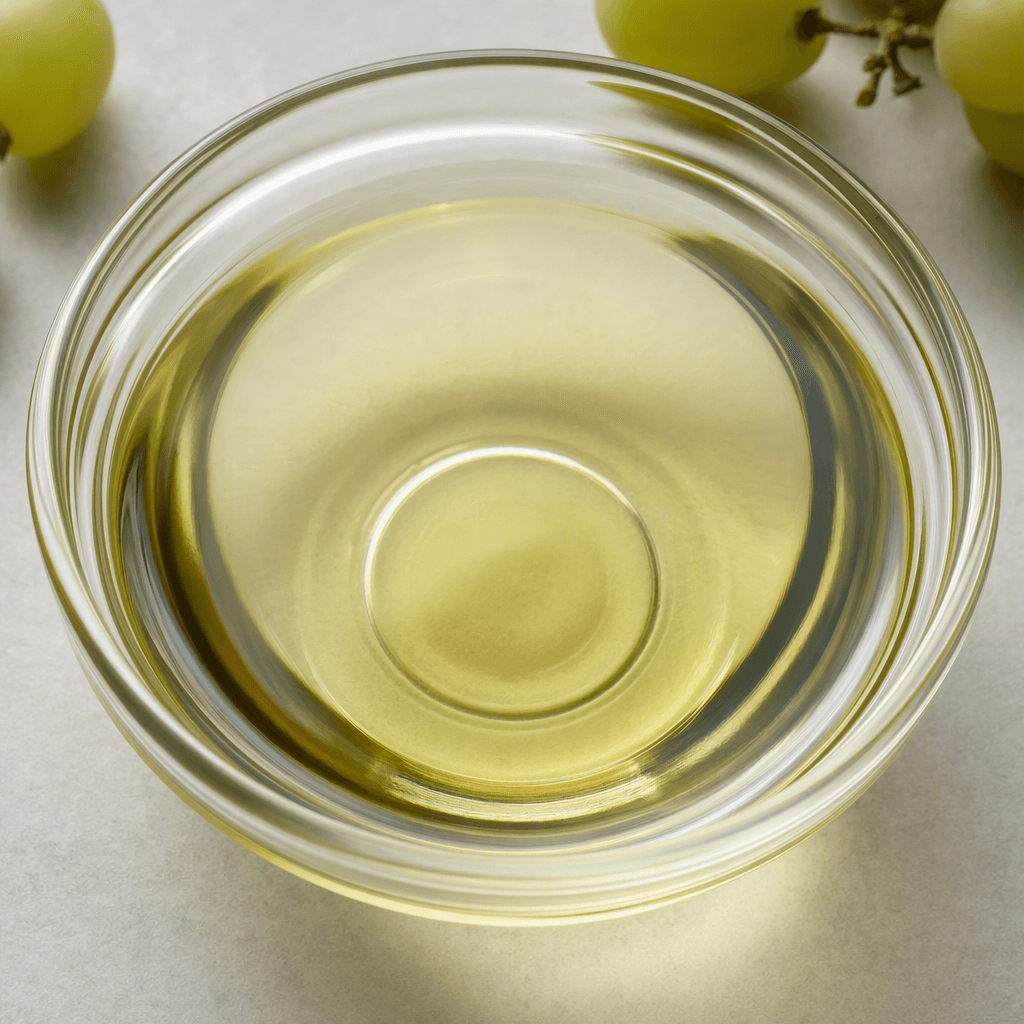
Grape seed oil Calories
Rich in polyunsaturated fats, light flavor, high smoke point
In season: Spring · Summer · Autumn · Winter
CALORIES
GI
POTASSIUM
FIBER
Quick answer
1 tablespoon (medium) of Grape seed oil (14 g) has 119 calories. That works out to 884 calories per 100 g. It contains 0 g of carbs, 0 g of protein, 13.5 g of fat and 0 g of fiber. Its 3.8 mg of Vitamin E covers 25% of the Daily Value. Its glycemic index is 0 (low), so it raises blood sugar slowly.
What is Grape seed oil?
Grape seed oil is pressed from the small seeds left after grapes are used for wine or juice. It is a clear, pale oil with a mild flavour, so it adds little of its own taste to food. In kitchens around the world, it works well in salad dressings, marinades and everyday cooking.
Its high smoke point makes it useful for sautéing and frying, while its light taste suits delicate ingredients as well as more boldly seasoned dishes. The oil is almost entirely fat and is rich in polyunsaturated fats, so a modest pour is usually enough. Try it in a vinaigrette or use it when you want a neutral-tasting oil for cooking.
Grape seed oil Nutrition Facts
Selected: 100 g
884
KCAL / 100G
Carbs
0g
· 0% DV
Protein
0g
· 0% DV
Fat
100g
· 128% DV
Fiber
0g
· 0% DV
DV is the share of the daily value covered, on a 2,000 kcal reference diet.
Calories come from: Carbs 0% · Protein 0% · Fat 100%
Grape seed oil Vitamins & Minerals
Vitamins
Vitamin E
28mg · 187% DV
Vitamin A
0µg · 0% DV
B1
0mg · 0% DV
B2
0mg · 0% DV
Minerals
Calcium
1mg · 0% DV
Iron
0mg · 0% DV
Magnesium
1mg · 0% DV
Zinc
0mg · 0% DV
How Nutritious Is Grape seed oil?
Nutrient density
Low
How many vitamins, minerals and how much fiber this food carries per calorie. A high score means a lot of nutrition for few calories.
Satiety score
Low
An EatBetter score computed from fiber, protein and calorie density. A high score means staying full longer on the same calories.
Both scores are calculated per 100 g and do not change with the selected portion. The satiety score is EatBetter's own calculation, not a clinical measure.
Grape seed oil Glycemic Index
GLYCEMIC INDEX
GLYCEMIC LOAD
Accounts for portion size — a more realistic measure than GI alone.
How to Burn Off Grape seed oil
To burn the 884 calories in 100 g:
🚶
Walking (5 km/h)
🏃
Running (8 km/h)
🚴
Cycling
🏊
Swimming
Times are calculated with the MET equation for a 70 kg adult. Actual burn varies with your weight, age and pace.
Is Grape seed oil Processed?
NOVA 3
Processed
1. Unprocessed
2. Minimally Processed
3. Processed
4. Ultra-Processed
NOVA classifies foods into 4 groups by industrial processing. NOVA 1 (unprocessed) is the healthiest.
Does Grape seed oil Contain Allergens?
No known major allergens
Which Diets Is Grape seed oil Good For?
Vegan
✓ Suitable
Vegetarian
✓ Suitable
Gluten-Free
✓ Suitable
Dairy-Free
— Not suitable
Mediterranean
✓ Suitable
Paleo
✓ Suitable
Whole30
— Not suitable
DASH
— Not suitable
Keto
✓ Suitable
Low FODMAP
— Not suitable
Grape seed oil Fat Profile
SATURATED
9.6g
MONOUNSATURATED
16.1g
POLYUNSATURATED
73.3g
Omega 6:3 ratio 699:1
Above the ideal 4:1 (699:1).
Compare Grape seed oil
Foods Similar to Grape seed oil
Frequently Asked Questions About Grape seed oil
Is grape seed oil good for you?
It can be a useful cooking oil because it is rich in polyunsaturated fats, but it is still a concentrated source of energy. It is not automatically healthier than olive oil; the best choice depends partly on how you use it.
Can you cook with grape seed oil?
Yes. Its light flavor suits sautéing and other everyday cooking, and its high smoke point makes it useful when cooking at higher heat. Avoid heating it until it smokes.
Can grape seed oil be used for deep frying?
Yes, grape seed oil’s high smoke point makes it suitable for deep frying. Keep the temperature controlled and discard the oil if it becomes dark, smells unpleasant, or starts smoking readily.
What does grape seed oil taste like?
Grape seed oil has a mild, fairly neutral flavor; it does not taste like grape juice or wine. That makes it handy when you want an oil that will not overpower the other ingredients.
Can you use grape seed oil in salad dressing?
Yes, its mild flavor works well in vinaigrettes and other salad dressings. Combine it with vinegar or citrus juice, then add herbs or mustard for a dressing that lets those flavors come through.
Is grape seed oil made from wine grapes?
Often, yes: the oil is extracted from grape seeds left over after making wine or grape juice. It is made from the seeds, not the fruit’s juice, so it does not have a sweet grape flavor.
Is cold-pressed grape seed oil different from refined grape seed oil?
Yes. Cold-pressed oil is extracted with little or no added heat, while refined oil undergoes further processing. Refined grape seed oil tends to have a more neutral flavor; the exact characteristics vary by product.
Does grape seed oil need to be refrigerated?
No, refrigeration is not necessary for most grape seed oil. Store it tightly closed in a cool, dark cupboard, away from the stove and sunlight; discard it if it develops a stale or rancid smell.
Can grape seed oil replace vegetable oil in baking?
Yes, grape seed oil can usually replace neutral vegetable oil in cakes, muffins, and similar recipes. Its mild taste works well, but it is not a direct substitute for solid butter when a recipe relies on butter’s texture.
Is grape seed oil high in omega-6?
Yes, grape seed oil is rich in polyunsaturated fats, including omega-6 fatty acids. Use it as one of several cooking oils rather than relying on it as your only source of added fat.
Have another question about Grape seed oil?
Ask the AI nutrition coach — calories, portions, alternatives and more, answered in seconds in the app.

Scan calories with your camera
Instant AI nutrition analysis

Nutrition data compiled from USDA FoodData Central and scientific sources.