

Ready & Packaged Foods
All →Vegetables & Legumes
All →Desserts & Confectionery
All →Meat & Protein
All →Grains & Bakery
All →Beverages
All →Milk & Dairy
All →

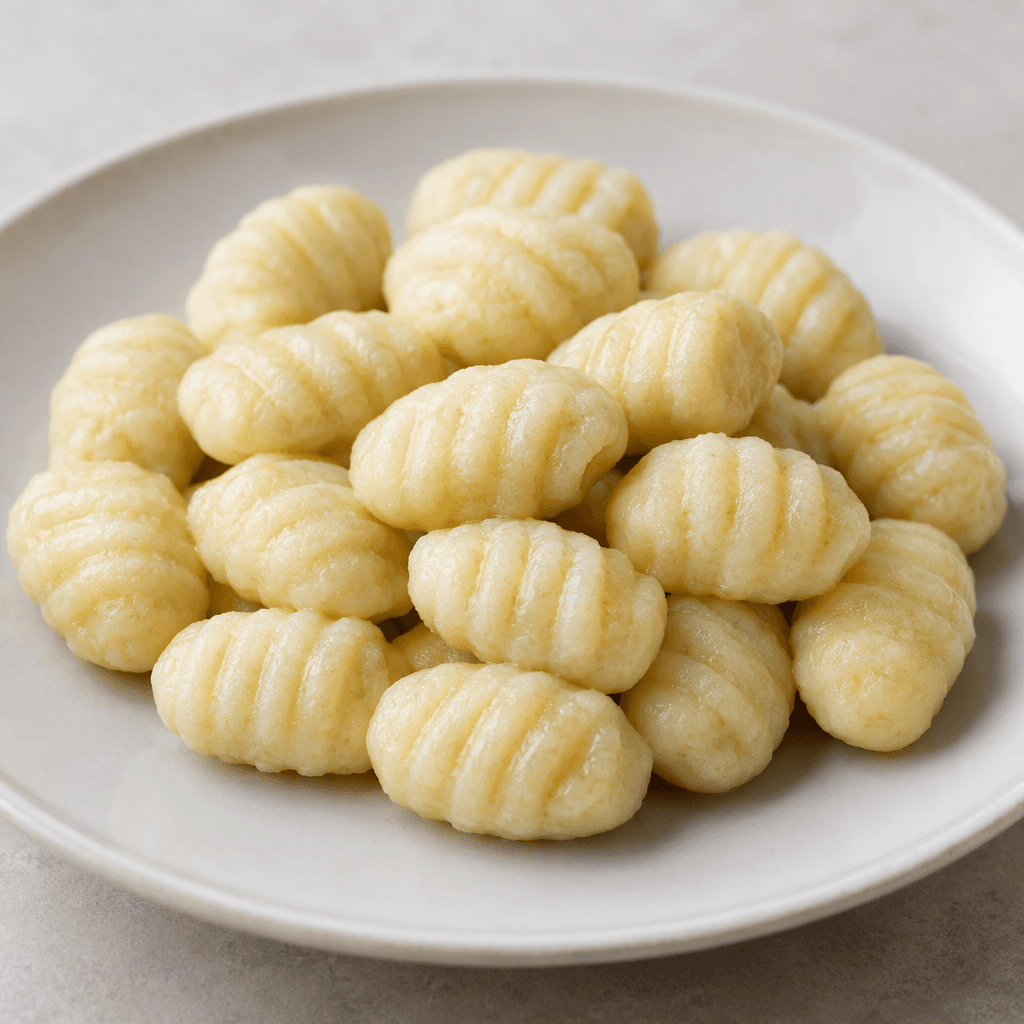
Gnocchi Calories
Italian potato dumpling, source of carbs
In season: Spring · Summer · Autumn · Winter
CALORIES
GI
POTASSIUM
FIBER
Quick answer
1 serving (medium) of Gnocchi (120 g) has 156 calories. That works out to 130 calories per 100 g. It contains 33.6 g of carbs, 3.2 g of protein, 0.4 g of fat and 1.4 g of fiber. Its 360 mg of Sodium covers 16% of the Daily Value. Its glycemic index is 65 (medium), so it raises blood sugar at a moderate pace.
What is Gnocchi?
Gnocchi are small Italian dumplings, most often made with potato and flour, though recipes may also include egg. Their familiar oval shape and shallow ridges help them hold onto sauce.
Boiled until tender, they have a soft, slightly chewy texture. In Italy they’re served with everything from tomato or pesto sauce to butter and herbs; elsewhere, they make an easy alternative to pasta for a weeknight meal. They’re mainly a source of carbohydrates, with 28 g per 100 g. Pair them with vegetables and a tomato-based sauce for a lighter plate, or add a little cheese for a richer finish.
Gnocchi Nutrition Facts
Selected: 100 g
130
KCAL / 100G
Carbs
28g
· 10% DV
Protein
2.7g
· 5% DV
Fat
0.3g
· 0% DV
Fiber
1.2g
· 4% DV
DV is the share of the daily value covered, on a 2,000 kcal reference diet.
Calories come from: Carbs 89% · Protein 9% · Fat 2%
Gnocchi Vitamins & Minerals
Vitamins
B6
0.09mg · 5% DV
B5
0.2mg · 4% DV
B1
0.03mg · 3% DV
B2
0.02mg · 2% DV
Minerals
Sodium
300mg · 13% DV
Phosphorus
35mg · 5% DV
Potassium ⭐
170mg · 5% DV
Magnesium
13mg · 3% DV
How Nutritious Is Gnocchi?
Nutrient density
Low
How many vitamins, minerals and how much fiber this food carries per calorie. A high score means a lot of nutrition for few calories.
Satiety score
Medium
An EatBetter score computed from fiber, protein and calorie density. A high score means staying full longer on the same calories.
Both scores are calculated per 100 g and do not change with the selected portion. The satiety score is EatBetter's own calculation, not a clinical measure.
Gnocchi Glycemic Index
GLYCEMIC INDEX
GLYCEMIC LOAD
Accounts for portion size — a more realistic measure than GI alone.
How to Burn Off Gnocchi
To burn the 130 calories in 100 g:
🚶
Walking (5 km/h)
🏃
Running (8 km/h)
🚴
Cycling
🏊
Swimming
Times are calculated with the MET equation for a 70 kg adult. Actual burn varies with your weight, age and pace.
Is Gnocchi Processed?
NOVA 3
Processed
1. Unprocessed
2. Minimally Processed
3. Processed
4. Ultra-Processed
NOVA classifies foods into 4 groups by industrial processing. NOVA 1 (unprocessed) is the healthiest.
Does Gnocchi Contain Allergens?
Contains these allergens:
Which Diets Is Gnocchi Good For?
Vegan
— Not suitable
Vegetarian
✓ Suitable
Gluten-Free
— Not suitable
Dairy-Free
— Not suitable
Mediterranean
✓ Suitable
Paleo
— Not suitable
Whole30
— Not suitable
DASH
— Not suitable
Keto
— Not suitable
Low FODMAP
— Not suitable
Gnocchi Fat Profile
SATURATED
0.07g
MONOUNSATURATED
0.02g
POLYUNSATURATED
0.04g
Omega 6:3 ratio 3:1
Below the ideal 4:1 — a good omega balance.
Compare Gnocchi
Foods Similar to Gnocchi
Frequently Asked Questions About Gnocchi
What is gnocchi made of?
Traditional potato gnocchi is made from cooked potatoes and flour, often with egg added to bind the dough. Other versions use ingredients such as ricotta or semolina, so the texture and recipe can vary by region and style.
Is gnocchi pasta?
Gnocchi is usually served like pasta, but it is technically a type of dumpling rather than conventional pasta. Potato gnocchi gets much of its distinctive soft, tender texture from mashed potato, unlike pasta made primarily from flour and water or egg.
How do you cook gnocchi?
For the usual boiling method, drop gnocchi into a pot of gently boiling salted water and stir carefully so the pieces do not stick. Remove them with a slotted spoon when they rise to the surface, then toss with sauce.
Why does gnocchi float when it is cooked?
Gnocchi generally floats because heating changes the dough’s structure and trapped air helps the pieces rise. Floating is a useful sign that it is cooked, but take a piece out promptly; leaving it in boiling water can make it too soft.
What sauce goes best with gnocchi?
Tomato sauce, pesto, brown butter with sage, and cream-based sauces all pair well with gnocchi. Its ridged surface helps hold sauce, while a lighter coating lets the dumplings’ soft texture remain noticeable.
What is the difference between potato gnocchi and ricotta gnocchi?
Potato gnocchi uses mashed potato in the dough and is typically soft and pillowy. Ricotta gnocchi uses cheese instead, often giving it a lighter, more delicate texture; both are shaped into small dumplings and served with sauce.
Why is homemade gnocchi chewy or gummy?
Homemade gnocchi can turn chewy when the dough is overworked or the potatoes contain too much moisture, leading you to add extra flour. Use well-drained potatoes and mix in only enough flour to bring the dough together.
Can you fry gnocchi without boiling it first?
Some packaged gnocchi can be cooked straight in a pan, but fresh homemade gnocchi is usually boiled first, then briefly fried for a browned exterior. Check the package directions for store-bought varieties, since their cooking methods differ.
Can you freeze gnocchi?
Yes, uncooked gnocchi freezes well. Arrange the pieces separately on a tray until firm, then transfer them to a sealed freezer bag; cook them straight from frozen in boiling water rather than thawing them first.
How should you store leftover cooked gnocchi?
Refrigerate leftover cooked gnocchi in a covered container once it has cooled. A little sauce can help keep the pieces from sticking together; reheat them in a pan or microwave until hot throughout.
Have another question about Gnocchi?
Ask the AI nutrition coach — calories, portions, alternatives and more, answered in seconds in the app.

Scan calories with your camera
Instant AI nutrition analysis

Nutrition data compiled from USDA FoodData Central and scientific sources.