

Ready & Packaged Foods
All →Vegetables & Legumes
All →Desserts & Confectionery
All →Meat & Protein
All →Grains & Bakery
All →Beverages
All →Milk & Dairy
All →

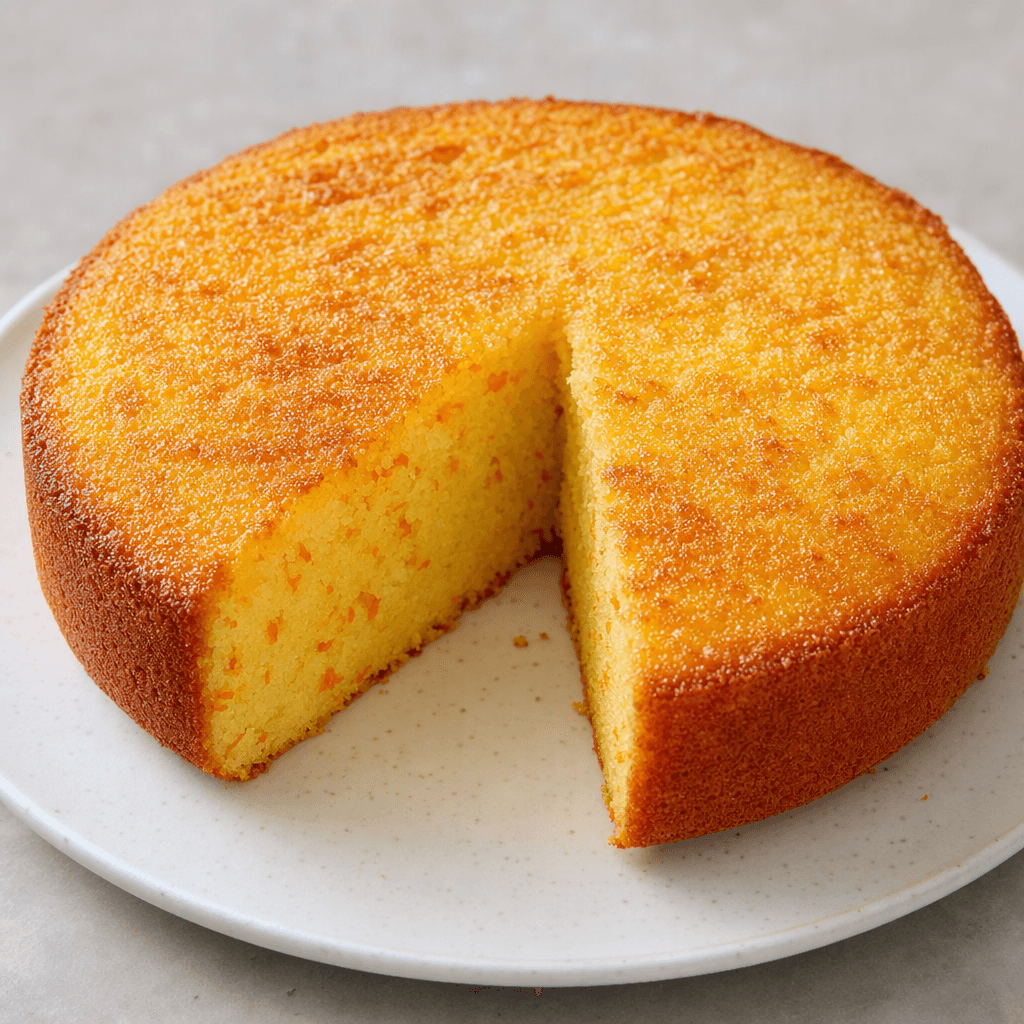
Gluten-free orange cake Calories
Gluten-free orange cake with a moist texture and citrus flavor. Popular as a dessert for gluten-sensitive individuals.
In season: Winter · Spring
CALORIES
GI
POTASSIUM
FIBER
Quick answer
1 slice (medium) of Gluten-free orange cake (60 g) has 192 calories. That works out to 320 calories per 100 g. It contains 33 g of carbs, 2.5 g of protein, 5.7 g of fat and 1.3 g of fiber. Its 9.6 mg of Vitamin C covers 11% of the Daily Value. Its glycemic index is 65 (high), so it raises blood sugar quickly.
What is Gluten-free orange cake?
Gluten-free orange cake is a tender, often moist cake made with a gluten-free flour blend and flavoured with orange juice or zest. Recipes vary, but eggs, sugar and some form of fat help give it structure and a soft crumb. The orange gives the cake a fresh citrus aroma without making it a fruit-filled dessert.
It is commonly served as a simple dessert or afternoon treat, often alongside tea or coffee. Its nutritional profile is mainly carbohydrate-based, with 55 g of carbohydrates per 100 g. A modest slice with fresh fruit makes an easy lighter serving; if you need to avoid gluten, check the flour and prevent cross-contact during preparation.
Gluten-free orange cake Nutrition Facts
Selected: 100 g
320
KCAL / 100G
Carbs
55g
· 20% DV
Protein
4.2g
· 8% DV
Fat
9.5g
· 12% DV
Fiber
2.1g
· 8% DV
DV is the share of the daily value covered, on a 2,000 kcal reference diet.
Calories come from: Carbs 68% · Protein 5% · Fat 27%
Gluten-free orange cake Vitamins & Minerals
Vitamins
Vitamin C
16mg · 18% DV
B2
0.12mg · 9% DV
B1
0.09mg · 8% DV
Biotin
2.5µg · 8% DV
Minerals
Sodium
220mg · 10% DV
Phosphorus
60mg · 9% DV
Iron
1mg · 6% DV
Selenium
3.5µg · 6% DV
How Nutritious Is Gluten-free orange cake?
Nutrient density
Low
How many vitamins, minerals and how much fiber this food carries per calorie. A high score means a lot of nutrition for few calories.
Satiety score
Low
An EatBetter score computed from fiber, protein and calorie density. A high score means staying full longer on the same calories.
Both scores are calculated per 100 g and do not change with the selected portion. The satiety score is EatBetter's own calculation, not a clinical measure.
Gluten-free orange cake Glycemic Index
GLYCEMIC INDEX
GLYCEMIC LOAD
Accounts for portion size — a more realistic measure than GI alone.
How to Burn Off Gluten-free orange cake
To burn the 320 calories in 100 g:
🚶
Walking (5 km/h)
🏃
Running (8 km/h)
🚴
Cycling
🏊
Swimming
Times are calculated with the MET equation for a 70 kg adult. Actual burn varies with your weight, age and pace.
Is Gluten-free orange cake Processed?
NOVA 3
Processed
1. Unprocessed
2. Minimally Processed
3. Processed
4. Ultra-Processed
NOVA classifies foods into 4 groups by industrial processing. NOVA 1 (unprocessed) is the healthiest.
Does Gluten-free orange cake Contain Allergens?
Contains these allergens:
Which Diets Is Gluten-free orange cake Good For?
Vegan
— Not suitable
Vegetarian
✓ Suitable
Gluten-Free
✓ Suitable
Dairy-Free
— Not suitable
Mediterranean
✓ Suitable
Paleo
— Not suitable
Whole30
— Not suitable
DASH
— Not suitable
Keto
— Not suitable
Low FODMAP
— Not suitable
Gluten-free orange cake Fat Profile
SATURATED
2.7g
MONOUNSATURATED
3.2g
POLYUNSATURATED
2.1g
Omega 6:3 ratio 36.7:1
Above the ideal 4:1 (36.7:1).
Compare Gluten-free orange cake
Foods Similar to Gluten-free orange cake
Frequently Asked Questions About Gluten-free orange cake
How do you make gluten-free orange cake?
Gluten-free orange cake is made by mixing eggs, sugar, orange juice and zest with a gluten-free flour blend, then baking until set. Fold in the flour just until combined; overmixing can make the crumb dense rather than tender.
Can you make gluten-free orange cake with a whole orange?
Yes, some gluten-free orange cake recipes use a boiled, puréed whole orange for a stronger citrus flavor and moist crumb. Remove the seeds first, wash the fruit well, and follow a recipe designed for whole oranges because their moisture affects the batter.
Which flour works best in gluten-free orange cake?
A gluten-free all-purpose flour blend is the simplest choice for gluten-free orange cake. Almond flour or rice flour can also work, but they absorb moisture and provide structure differently, so swapping them into a recipe without adjustments may change the texture.
Why did my gluten-free orange cake sink in the middle?
Gluten-free orange cake often sinks when it is underbaked, the raising agent is old, or the oven door is opened before the center has set. Test the middle with a skewer and let the cake cool gradually instead of removing it abruptly from the oven.
Why is my gluten-free orange cake bitter?
Gluten-free orange cake can taste bitter when the grated zest includes the white pith or when orange seeds are blended into the batter. Grate only the bright outer peel, and remove seeds if your recipe uses a whole orange.
How do you keep gluten-free orange cake moist?
To keep gluten-free orange cake moist, avoid baking it longer than needed and keep the recipe’s measured orange juice and other wet ingredients in balance. Once cool, store it in an airtight container so the crumb does not dry out quickly.
How long does gluten-free orange cake last?
Gluten-free orange cake keeps for about 3–4 days in an airtight container in the refrigerator. Let a slice come closer to room temperature before serving for a softer texture; cakes topped with fresh fruit or cream should be eaten sooner.
Can gluten-free orange cake be frozen?
Yes, gluten-free orange cake freezes well when fully cooled and wrapped airtight. Freeze it whole or in slices, then thaw only what you need at room temperature. Freezing individual slices makes it easier to serve without thawing the entire cake.
What can you serve with gluten-free orange cake?
Gluten-free orange cake pairs well with tea or coffee, and a spoonful of plain yogurt can balance its sweetness. For a simple dessert plate, add fresh berries or orange segments rather than a heavy, sugary topping.
Can you make gluten-free orange cake without dairy?
Yes, gluten-free orange cake can be made without dairy by replacing butter with a neutral oil and using a dairy-free alternative where the recipe calls for milk or yogurt. Choose a recipe with suitable substitutions, since changing the fat can affect the crumb.
Have another question about Gluten-free orange cake?
Ask the AI nutrition coach — calories, portions, alternatives and more, answered in seconds in the app.

Scan calories with your camera
Instant AI nutrition analysis

Nutrition data compiled from USDA FoodData Central and scientific sources.