

Ready & Packaged Foods
All →Vegetables & Legumes
All →Desserts & Confectionery
All →Meat & Protein
All →Grains & Bakery
All →Beverages
All →Milk & Dairy
All →

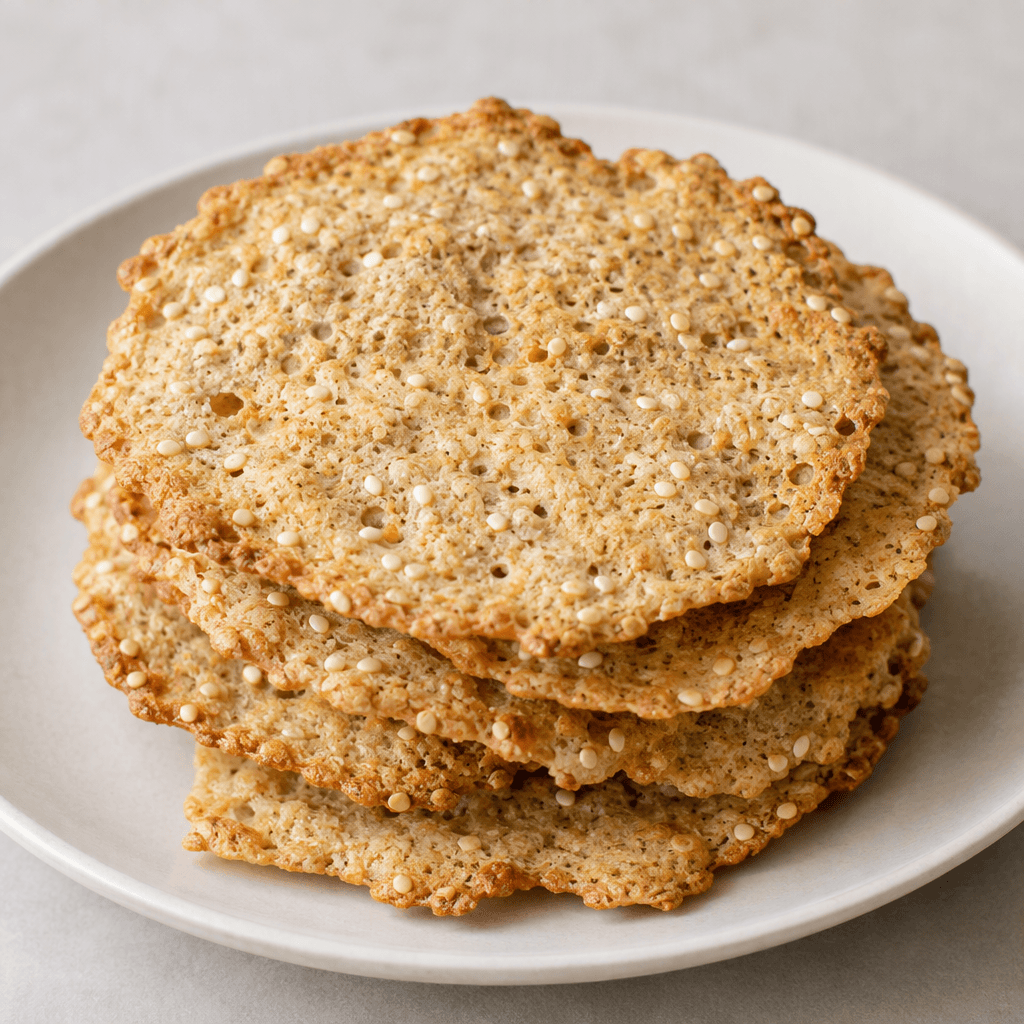
Gluten-Free Tahini Cracker Calories
Gluten-free, tahini, fiber-rich, protein source
In season: Spring · Summer · Autumn · Winter
CALORIES
GI
POTASSIUM
FIBER
Quick answer
4 piece (medium) of Gluten-Free Tahini Cracker (32 g) has 154 calories. That works out to 480 calories per 100 g. It contains 12.2 g of carbs, 4.2 g of protein, 9.6 g of fat and 2.2 g of fiber. Its 0.2 mg of Copper covers 25% of the Daily Value. Its glycemic index is 45 (medium), so it raises blood sugar at a moderate pace.
What is Gluten-Free Tahini Cracker?
A gluten-free tahini cracker is a thin, crisp savoury snack made with tahini and gluten-free ingredients. Its sesame-rich flavour, uneven golden surface and lightly browned edges make it an easy alternative to standard wheat crackers; recipes and exact ingredients can vary.
Serve it with cheese, olives or sliced vegetables, or break it into pieces alongside hummus and other dips. Tahini gives these crackers a rich, nutty taste and contributes fat and protein, while they also provide fibre. Their flavour is satisfying on its own, but fresh vegetables or a lighter dip make a good pairing when you want a less rich snack.
Gluten-Free Tahini Cracker Nutrition Facts
Selected: 100 g
480
KCAL / 100G
Carbs
38g
· 14% DV
Protein
13g
· 26% DV
Fat
30g
· 38% DV
Fiber
7g
· 25% DV
DV is the share of the daily value covered, on a 2,000 kcal reference diet.
Calories come from: Carbs 32% · Protein 11% · Fat 57%
Gluten-Free Tahini Cracker Vitamins & Minerals
Vitamins
Vitamin K
38µg · 32% DV
B1
0.35mg · 29% DV
Biotin
7µg · 23% DV
Vitamin E
2.7mg · 18% DV
Minerals
Copper
1mg · 111% DV
Manganese
1mg · 43% DV
Phosphorus
210mg · 30% DV
Iron
5mg · 28% DV
How Nutritious Is Gluten-Free Tahini Cracker?
Nutrient density
Medium
How many vitamins, minerals and how much fiber this food carries per calorie. A high score means a lot of nutrition for few calories.
Satiety score
Medium
An EatBetter score computed from fiber, protein and calorie density. A high score means staying full longer on the same calories.
Both scores are calculated per 100 g and do not change with the selected portion. The satiety score is EatBetter's own calculation, not a clinical measure.
Gluten-Free Tahini Cracker Glycemic Index
GLYCEMIC INDEX
GLYCEMIC LOAD
Accounts for portion size — a more realistic measure than GI alone.
How to Burn Off Gluten-Free Tahini Cracker
To burn the 480 calories in 100 g:
🚶
Walking (5 km/h)
🏃
Running (8 km/h)
🚴
Cycling
🏊
Swimming
Times are calculated with the MET equation for a 70 kg adult. Actual burn varies with your weight, age and pace.
Is Gluten-Free Tahini Cracker Processed?
NOVA 3
Processed
1. Unprocessed
2. Minimally Processed
3. Processed
4. Ultra-Processed
NOVA classifies foods into 4 groups by industrial processing. NOVA 1 (unprocessed) is the healthiest.
Does Gluten-Free Tahini Cracker Contain Allergens?
Contains these allergens:
Which Diets Is Gluten-Free Tahini Cracker Good For?
Vegan
✓ Suitable
Vegetarian
✓ Suitable
Gluten-Free
✓ Suitable
Dairy-Free
— Not suitable
Mediterranean
✓ Suitable
Paleo
— Not suitable
Whole30
— Not suitable
DASH
— Not suitable
Keto
— Not suitable
Low FODMAP
— Not suitable
Gluten-Free Tahini Cracker Fat Profile
SATURATED
4.2g
MONOUNSATURATED
12.5g
POLYUNSATURATED
10.1g
Omega 6:3 ratio 70.8:1
Above the ideal 4:1 (70.8:1).
Compare Gluten-Free Tahini Cracker
Foods Similar to Gluten-Free Tahini Cracker
Frequently Asked Questions About Gluten-Free Tahini Cracker
What can you dip a gluten-free tahini cracker in?
A gluten-free tahini cracker works well with hummus, baba ganoush, labneh, or a thick bean dip. Its crisp texture and sesame flavor suit savory toppings; serve dips on the side so the crackers do not soften before eating.
How do you make gluten-free tahini crackers crispy?
For crisp gluten-free tahini crackers, roll the dough evenly and thinly, then bake until the edges are lightly browned. Let them cool completely before storing, since they continue to firm up as they cool and trapped steam can make them soft.
Can you make gluten-free tahini crackers without eggs?
Yes, gluten-free tahini crackers can be made without eggs. Tahini helps bind the dough, and some recipes use water or a small amount of another binder; adjust the liquid gradually because gluten-free flour blends absorb moisture differently.
Are gluten-free tahini crackers safe for people with celiac disease?
Only when the product is verified gluten-free and protected from cross-contact during production and handling. People with celiac disease should choose a clearly labeled product from a reliable source and avoid crackers handled on surfaces shared with wheat-containing foods.
How do gluten-free tahini crackers differ from ordinary crackers?
Gluten-free tahini crackers are made without gluten-containing grains and get their sesame flavor from tahini. Their texture is often more fragile than wheat crackers, so they may break more easily and can be better suited to dipping than to carrying heavy toppings.
Can you freeze gluten-free tahini crackers?
Yes, you can freeze gluten-free tahini crackers in an airtight container, with parchment between layers to reduce breakage. Thaw them while still covered to limit condensation, then warm briefly in the oven if they have lost some crispness.
Why do gluten-free tahini crackers taste bitter?
A slightly bitter taste in gluten-free tahini crackers can come from tahini made with darker or more strongly toasted sesame seeds. If the bitterness is new or accompanied by a stale, rancid smell, discard the crackers rather than trying to mask the flavor.
Can gluten-free tahini crackers replace bread for lunch?
Gluten-free tahini crackers can stand in for bread as a crunchy base for a light lunch, topped with hummus, cheese, or sliced vegetables. They are smaller and more likely to crumble than bread, so serve them alongside the toppings rather than building a large sandwich.
What should you look for when buying gluten-free tahini crackers?
Look for gluten-free tahini crackers with an intact, dry package and a clear ingredient list. If you need them for celiac disease, choose a product with dependable gluten-free labeling and check whether the manufacturer addresses cross-contact in its facility.
Do gluten-free tahini crackers go stale quickly?
Gluten-free tahini crackers lose their crunch when exposed to air or moisture, rather than staying crisp indefinitely. Reseal the package or transfer the crackers to an airtight container after opening, and discard them if they develop an off smell or taste.
Have another question about Gluten-Free Tahini Cracker?
Ask the AI nutrition coach — calories, portions, alternatives and more, answered in seconds in the app.

Scan calories with your camera
Instant AI nutrition analysis

Nutrition data compiled from USDA FoodData Central and scientific sources.