

Ready & Packaged Foods
All →Vegetables & Legumes
All →Desserts & Confectionery
All →Meat & Protein
All →Grains & Bakery
All →Beverages
All →Milk & Dairy
All →

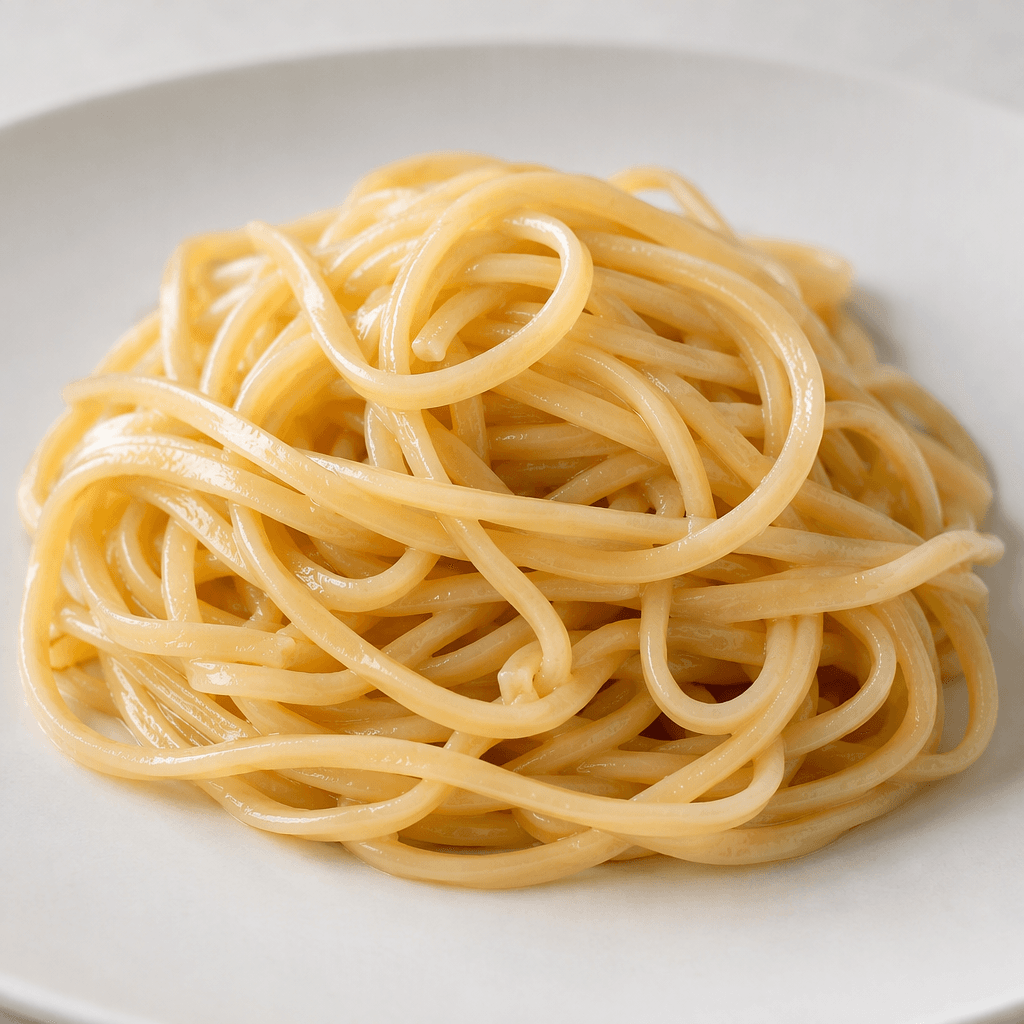
Gluten-Free Pasta Calories
Gluten-free, usually made from corn, rice, or legume flour
In season: Spring · Summer · Autumn · Winter
CALORIES
GI
POTASSIUM
FIBER
Quick answer
1 cup (medium) of Gluten-Free Pasta (150 g) has 218 calories. That works out to 145 calories per 100 g. It contains 45 g of carbs, 5.3 g of protein, 1 g of fat and 3.3 g of fiber. Its 60 mg of Phosphorus covers 9% of the Daily Value. Its glycemic index is 50 (medium), so it raises blood sugar at a moderate pace.
What is Gluten-Free Pasta?
Gluten-Free Pasta is pasta made without wheat, commonly using corn, rice or legume flours. It comes in familiar shapes, though the blend of flours affects how it cooks and feels; some varieties are tender, while others hold a firmer bite.
Across the English-speaking world, it is served much like regular pasta, with tomato, pesto or creamy sauces, or tossed with vegetables for a quick meal. Its nutritional profile is mainly carbohydrate, with relatively modest protein in many varieties. Cooking times vary, so check the package and taste a piece before draining; pairing it with beans, lentils or vegetables can make a more filling plate.
Gluten-Free Pasta Nutrition Facts
Selected: 100 g
145
KCAL / 100G
Carbs
30g
· 11% DV
Protein
3.5g
· 7% DV
Fat
0.7g
· 1% DV
Fiber
2.2g
· 8% DV
DV is the share of the daily value covered, on a 2,000 kcal reference diet.
Calories come from: Carbs 86% · Protein 10% · Fat 4%
Gluten-Free Pasta Vitamins & Minerals
Vitamins
B1
0.03mg · 3% DV
B3
0.3mg · 2% DV
B6
0.03mg · 2% DV
Biotin
0.5µg · 2% DV
Minerals
Phosphorus
40mg · 6% DV
Magnesium
10mg · 2% DV
Calcium
7mg · 1% DV
Selenium
0.6µg · 1% DV
How Nutritious Is Gluten-Free Pasta?
Nutrient density
Medium
How many vitamins, minerals and how much fiber this food carries per calorie. A high score means a lot of nutrition for few calories.
Satiety score
Medium
An EatBetter score computed from fiber, protein and calorie density. A high score means staying full longer on the same calories.
Both scores are calculated per 100 g and do not change with the selected portion. The satiety score is EatBetter's own calculation, not a clinical measure.
Gluten-Free Pasta Glycemic Index
GLYCEMIC INDEX
GLYCEMIC LOAD
Accounts for portion size — a more realistic measure than GI alone.
How to Burn Off Gluten-Free Pasta
To burn the 145 calories in 100 g:
🚶
Walking (5 km/h)
🏃
Running (8 km/h)
🚴
Cycling
🏊
Swimming
Times are calculated with the MET equation for a 70 kg adult. Actual burn varies with your weight, age and pace.
Is Gluten-Free Pasta Processed?
NOVA 3
Processed
1. Unprocessed
2. Minimally Processed
3. Processed
4. Ultra-Processed
NOVA classifies foods into 4 groups by industrial processing. NOVA 1 (unprocessed) is the healthiest.
Does Gluten-Free Pasta Contain Allergens?
No known major allergens
Which Diets Is Gluten-Free Pasta Good For?
Vegan
✓ Suitable
Vegetarian
✓ Suitable
Gluten-Free
✓ Suitable
Dairy-Free
— Not suitable
Mediterranean
✓ Suitable
Paleo
— Not suitable
Whole30
— Not suitable
DASH
— Not suitable
Keto
— Not suitable
Low FODMAP
— Not suitable
Gluten-Free Pasta Fat Profile
SATURATED
0.15g
MONOUNSATURATED
0.08g
POLYUNSATURATED
0.13g
Omega 6:3 ratio 9:1
Above the ideal 4:1 (9:1).
Compare Gluten-Free Pasta
Foods Similar to Gluten-Free Pasta
Frequently Asked Questions About Gluten-Free Pasta
Does gluten-free pasta taste different from regular pasta?
Yes, gluten-free pasta can taste and feel different, depending on its flour. Corn- and rice-based varieties often have a softer or less elastic texture, while pasta made with lentil or chickpea flour has a more noticeable, earthy flavor.
What is gluten-free pasta made from?
Gluten-free pasta is commonly made from rice flour, corn flour, or legumes such as lentils and chickpeas. Some varieties combine several flours, and the blend affects the pasta’s flavor, firmness, and cooking behavior.
How do you cook gluten-free pasta without it sticking?
Cook gluten-free pasta in plenty of boiling water and stir gently during the first few minutes. Check it before the package’s suggested time is up, then drain promptly; overcooking makes many varieties soft and more likely to stick.
Why does gluten-free pasta fall apart?
Gluten-free pasta can fall apart when it is overcooked or handled roughly. Unlike wheat pasta, it has no gluten network to give it elasticity, so taste it early and lift or stir it gently after draining.
Can people with celiac disease eat gluten-free pasta?
Yes, people with celiac disease can eat gluten-free pasta that is labeled safe for them and protected from cross-contact. Cook it with clean cookware and utensils, and avoid water or equipment that has touched regular wheat pasta.
Should you rinse gluten-free pasta after cooking?
Usually, no: don’t rinse gluten-free pasta if you’re serving it hot, because its surface starch helps sauce cling. For a cold pasta salad, rinsing it under cold water can stop the cooking and reduce sticking.
Can gluten-free pasta replace regular pasta in recipes?
Yes, gluten-free pasta can usually replace wheat pasta in pasta dishes, but the texture may be less elastic and the cooking time can differ. Cook it separately, check it early, and combine it with the sauce just before serving.
Which sauces go best with gluten-free pasta?
Tomato, pesto, and vegetable-based sauces work well with gluten-free pasta. Delicate rice- or corn-based shapes can soften if left simmering in sauce, so cook the sauce separately and toss everything together shortly before serving.
How long does cooked gluten-free pasta last in the fridge?
Cooked gluten-free pasta keeps for about 3–4 days in a covered container in the refrigerator. Chill it promptly after cooking, and reheat it with a splash of water or sauce to help restore moisture.
Is gluten-free pasta healthier than regular pasta?
Not automatically. Gluten-free pasta is useful for people who need to avoid gluten, but its nutritional value depends on the flour; some rice- or corn-based varieties have less fiber and protein than whole-wheat pasta.
Have another question about Gluten-Free Pasta?
Ask the AI nutrition coach — calories, portions, alternatives and more, answered in seconds in the app.

Scan calories with your camera
Instant AI nutrition analysis

Nutrition data compiled from USDA FoodData Central and scientific sources.