

Ready & Packaged Foods
All →Vegetables & Legumes
All →Desserts & Confectionery
All →Meat & Protein
All →Grains & Bakery
All →Beverages
All →Milk & Dairy
All →

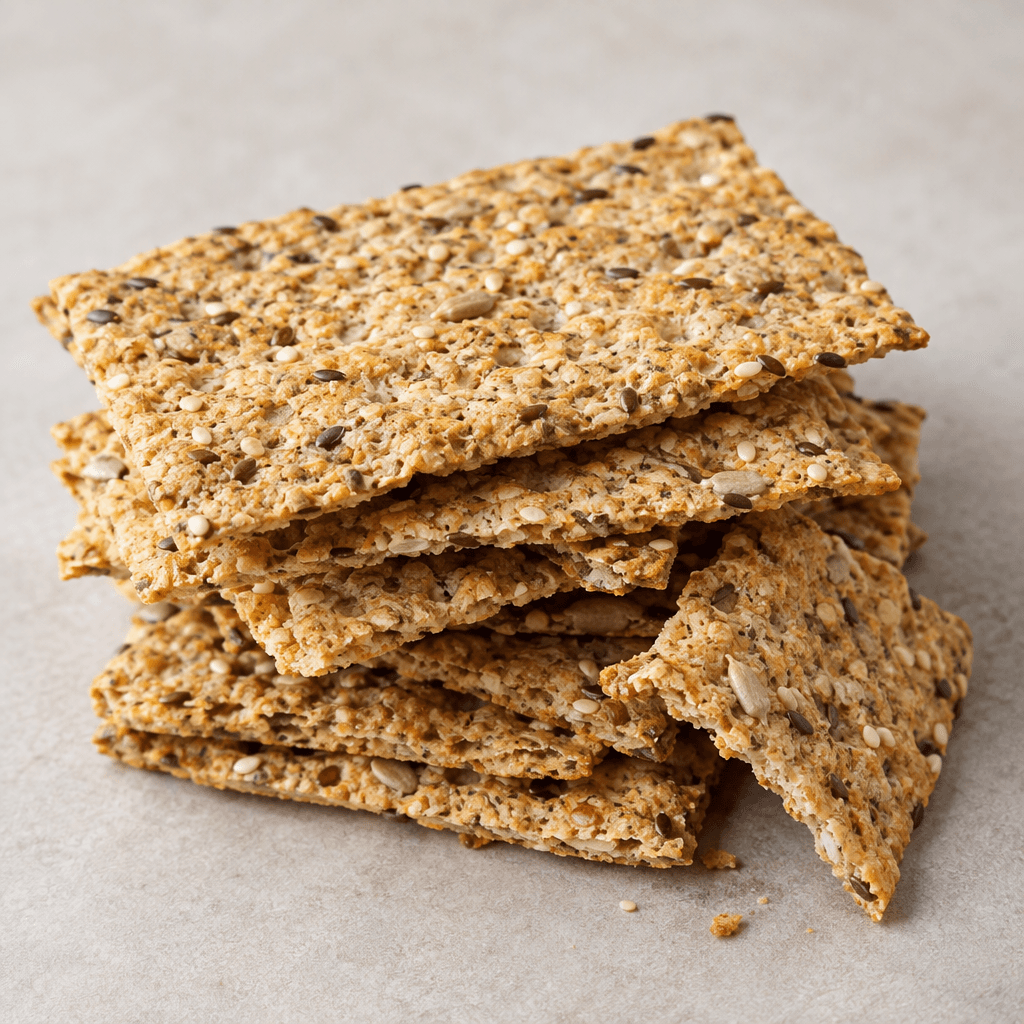
Gluten-free multigrain cracker Calories
Gluten-free, multigrain, fiber source, snack
CALORIES
GI
POTASSIUM
FIBER
Quick answer
5 piece (medium) of Gluten-free multigrain cracker (30 g) has 129 calories. That works out to 430 calories per 100 g. It contains 22.5 g of carbs, 2.6 g of protein, 3.6 g of fat and 2.4 g of fiber. Its 0.1 mg of B1 covers 10% of the Daily Value. Its glycemic index is 65 (medium), so it raises blood sugar at a moderate pace.
What is Gluten-free multigrain cracker?
A gluten-free multigrain cracker is a thin, crisp snack made from a blend of grains. It has a dry, crunchy bite and a gently toasted grain flavour, and can be eaten on its own or topped. It is a cracker rather than a dish tied to one particular regional tradition.
Enjoy it as a quick snack, or serve it with cheese, hummus, or sliced vegetables; it also works as a crisp base for breakfast toppings. The grains provide fibre, with 8 g per 100 g, while the crackers are also relatively high in carbohydrates. For a more filling snack, pair a few with a protein-rich topping, or add fresh vegetables for extra volume.
Gluten-free multigrain cracker Nutrition Facts
Selected: 100 g
430
KCAL / 100G
Carbs
75g
· 27% DV
Protein
8.5g
· 17% DV
Fat
12g
· 15% DV
Fiber
8g
· 29% DV
DV is the share of the daily value covered, on a 2,000 kcal reference diet.
Calories come from: Carbs 68% · Protein 8% · Fat 24%
Gluten-free multigrain cracker Vitamins & Minerals
Vitamins
B1
0.38mg · 32% DV
B3
2.1mg · 13% DV
B6
0.18mg · 11% DV
B2
0.12mg · 9% DV
Minerals
Manganese
1mg · 43% DV
Sodium
480mg · 21% DV
Phosphorus
120mg · 17% DV
Magnesium
68mg · 16% DV
How Nutritious Is Gluten-free multigrain cracker?
Nutrient density
Medium
How many vitamins, minerals and how much fiber this food carries per calorie. A high score means a lot of nutrition for few calories.
Satiety score
Medium
An EatBetter score computed from fiber, protein and calorie density. A high score means staying full longer on the same calories.
Both scores are calculated per 100 g and do not change with the selected portion. The satiety score is EatBetter's own calculation, not a clinical measure.
Gluten-free multigrain cracker Glycemic Index
GLYCEMIC INDEX
GLYCEMIC LOAD
Accounts for portion size — a more realistic measure than GI alone.
How to Burn Off Gluten-free multigrain cracker
To burn the 430 calories in 100 g:
🚶
Walking (5 km/h)
🏃
Running (8 km/h)
🚴
Cycling
🏊
Swimming
Times are calculated with the MET equation for a 70 kg adult. Actual burn varies with your weight, age and pace.
Is Gluten-free multigrain cracker Processed?
NOVA 3
Processed
1. Unprocessed
2. Minimally Processed
3. Processed
4. Ultra-Processed
NOVA classifies foods into 4 groups by industrial processing. NOVA 1 (unprocessed) is the healthiest.
Does Gluten-free multigrain cracker Contain Allergens?
No known major allergens
Which Diets Is Gluten-free multigrain cracker Good For?
Vegan
✓ Suitable
Vegetarian
✓ Suitable
Gluten-Free
✓ Suitable
Dairy-Free
— Not suitable
Mediterranean
✓ Suitable
Paleo
— Not suitable
Whole30
— Not suitable
DASH
— Not suitable
Keto
— Not suitable
Low FODMAP
— Not suitable
Gluten-free multigrain cracker Fat Profile
SATURATED
2.1g
MONOUNSATURATED
3.8g
POLYUNSATURATED
5.2g
Omega 6:3 ratio 16.2:1
Above the ideal 4:1 (16.2:1).
Compare Gluten-free multigrain cracker
Foods Similar to Gluten-free multigrain cracker
Frequently Asked Questions About Gluten-free multigrain cracker
What is a gluten-free multigrain cracker made from?
A gluten-free multigrain cracker is a crisp, thin snack made from a blend of grain flours, and sometimes seeds. The exact blend varies by product; rice, corn, buckwheat, or quinoa may be used, so “multigrain” does not mean one fixed recipe.
How do you eat a gluten-free multigrain cracker?
Eat a gluten-free multigrain cracker plain or use it as a crisp base for toppings. Hummus, cheese, avocado, or sliced vegetables all work well; add moist toppings just before eating so the cracker does not soften.
Is a gluten-free multigrain cracker the same as a rice cake?
No. A gluten-free multigrain cracker is usually a thin, baked crisp with a blend of grain flours, while a rice cake is typically made mainly from puffed rice pressed into shape. Their texture and flavor are different.
Can you use a gluten-free multigrain cracker instead of bread?
Yes, a gluten-free multigrain cracker can stand in for bread for a small snack, but it is not as flexible or filling to use as a sandwich base. Try it open-faced with a topping rather than folding it around fillings.
How should you store a gluten-free multigrain cracker after opening?
Keep a gluten-free multigrain cracker in an airtight container in a cool, dry place after opening. Exposure to air and humidity makes it lose its crunch, so seal the package promptly rather than leaving it open in a cupboard.
Why does a gluten-free multigrain cracker go soft?
A gluten-free multigrain cracker goes soft when it absorbs moisture from the air or from wet toppings. Store it tightly sealed and add spreads shortly before serving; briefly warming softened crackers in a low oven may restore some crispness.
Can you make a gluten-free multigrain cracker at home?
Yes. Mix gluten-free grain flours and seeds with water and a little oil, roll the dough very thin, and cut it into pieces. Bake until dry and crisp; thicker pieces will be harder to crisp evenly.
Is a gluten-free multigrain cracker healthy?
It can be a convenient crunchy snack, especially with a topping that adds protein, such as hummus or cheese. “Multigrain” does not automatically mean whole grain, so the blend and the rest of the meal matter when choosing how to use it.
Does a gluten-free multigrain cracker raise blood sugar?
It can: gluten-free multigrain crackers still contain carbohydrates, which can raise blood glucose. Pairing a few crackers with protein or fat, such as eggs or nut butter, can make the snack more balanced than eating them alone.
Is a gluten-free multigrain cracker safe for someone with celiac disease?
Only if the product is reliably labeled gluten-free and protected from gluten cross-contact during production. People with celiac disease should choose products with clear gluten-free assurance; if suitability is uncertain, ask their dietitian or doctor.
Have another question about Gluten-free multigrain cracker?
Ask the AI nutrition coach — calories, portions, alternatives and more, answered in seconds in the app.

Scan calories with your camera
Instant AI nutrition analysis

Nutrition data compiled from USDA FoodData Central and scientific sources.