

Ready & Packaged Foods
All →Vegetables & Legumes
All →Desserts & Confectionery
All →Meat & Protein
All →Grains & Bakery
All →Beverages
All →Milk & Dairy
All →

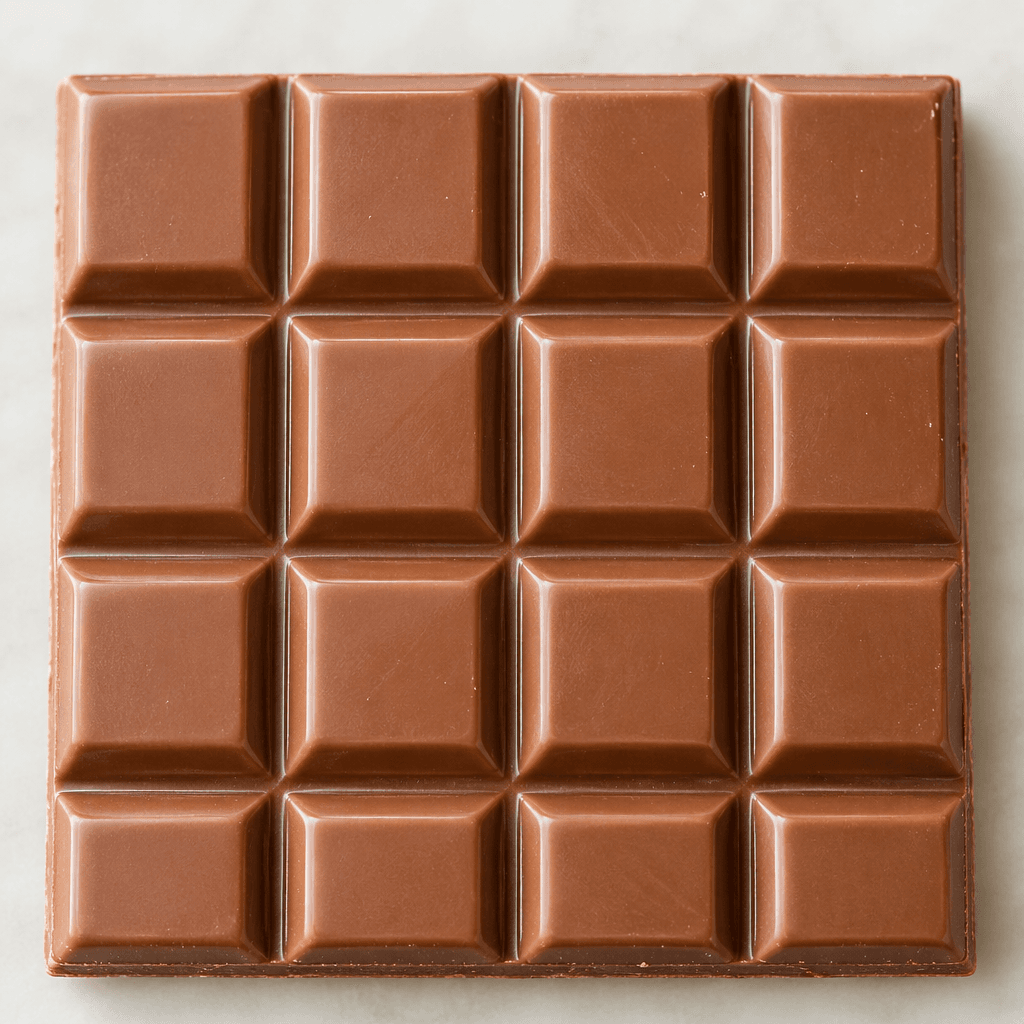
Gluten-free milk chocolate Calories
Gluten-free, milk chocolate confection
CALORIES
GI
POTASSIUM
FIBER
Quick answer
1 piece (small) of Gluten-free milk chocolate (10 g) has 54 calories. That works out to 535 calories per 100 g. It contains 5.9 g of carbs, 0.8 g of protein, 3 g of fat and 0.3 g of fiber. Its glycemic index is 42 (medium), so it raises blood sugar at a moderate pace.
What is Gluten-free milk chocolate?
Gluten-free milk chocolate is a sweet chocolate made with cocoa ingredients, milk and sugar, without gluten-containing cereal ingredients. Milk chocolate became popular in Europe, and this version keeps its familiar mild cocoa flavour while being made for people avoiding gluten. Its smooth, creamy texture and gently sweet taste make it easy to enjoy on its own.
It is commonly eaten as a small treat, paired with tea or coffee, or melted into baking and desserts. Like other milk chocolate, it is energy-dense and provides more fat and carbohydrate than protein. If you need to avoid gluten, check the package for production and cross-contact information; a small piece is an easy way to keep the treat modest.
Gluten-free milk chocolate Nutrition Facts
Selected: 100 g
535
KCAL / 100G
Carbs
59.4g
· 22% DV
Protein
7.6g
· 15% DV
Fat
29.7g
· 38% DV
Fiber
3.4g
· 12% DV
DV is the share of the daily value covered, on a 2,000 kcal reference diet.
Calories come from: Carbs 44% · Protein 6% · Fat 50%
Gluten-free milk chocolate Vitamins & Minerals
Vitamins
B2
0.31mg · 24% DV
B12
0.5µg · 21% DV
B5
0.45mg · 9% DV
Vitamin A
62µg · 7% DV
Minerals
Phosphorus
208mg · 30% DV
Calcium
189mg · 19% DV
Zinc
2mg · 18% DV
Magnesium
63mg · 15% DV
How Nutritious Is Gluten-free milk chocolate?
Nutrient density
Low
How many vitamins, minerals and how much fiber this food carries per calorie. A high score means a lot of nutrition for few calories.
Satiety score
Low
An EatBetter score computed from fiber, protein and calorie density. A high score means staying full longer on the same calories.
Both scores are calculated per 100 g and do not change with the selected portion. The satiety score is EatBetter's own calculation, not a clinical measure.
Gluten-free milk chocolate Glycemic Index
GLYCEMIC INDEX
GLYCEMIC LOAD
Accounts for portion size — a more realistic measure than GI alone.
How to Burn Off Gluten-free milk chocolate
To burn the 535 calories in 100 g:
🚶
Walking (5 km/h)
🏃
Running (8 km/h)
🚴
Cycling
🏊
Swimming
Times are calculated with the MET equation for a 70 kg adult. Actual burn varies with your weight, age and pace.
Is Gluten-free milk chocolate Processed?
NOVA 3
Processed
1. Unprocessed
2. Minimally Processed
3. Processed
4. Ultra-Processed
NOVA classifies foods into 4 groups by industrial processing. NOVA 1 (unprocessed) is the healthiest.
Does Gluten-free milk chocolate Contain Allergens?
Contains these allergens:
Which Diets Is Gluten-free milk chocolate Good For?
Vegan
— Not suitable
Vegetarian
✓ Suitable
Gluten-Free
✓ Suitable
Dairy-Free
— Not suitable
Mediterranean
— Not suitable
Paleo
— Not suitable
Whole30
— Not suitable
DASH
— Not suitable
Keto
— Not suitable
Low FODMAP
— Not suitable
Gluten-free milk chocolate Fat Profile
SATURATED
18.1g
MONOUNSATURATED
8.7g
POLYUNSATURATED
1.2g
Omega 6:3 ratio 22:1
Above the ideal 4:1 (22:1).
Compare Gluten-free milk chocolate
Foods Similar to Gluten-free milk chocolate
Frequently Asked Questions About Gluten-free milk chocolate
Is gluten-free milk chocolate safe for people with celiac disease?
Yes, gluten-free milk chocolate can suit people with celiac disease when it is made and handled to prevent gluten cross-contact. Chocolate containing wafers or cookie pieces, or made on shared equipment, may pose a risk if production controls are inadequate.
Does gluten-free milk chocolate contain dairy?
Yes, gluten-free milk chocolate usually contains milk powder or other milk ingredients. Gluten-free means it does not contain gluten; it does not mean dairy-free, so it may not be suitable for someone with a milk allergy.
Is gluten-free milk chocolate vegan?
No, gluten-free milk chocolate usually contains milk ingredients, so it is not vegan. The gluten-free claim relates to gluten, not animal-derived ingredients; choose chocolate specifically made and labeled as vegan if avoiding dairy.
What makes gluten-free milk chocolate different from regular milk chocolate?
Gluten-free milk chocolate is made without gluten-containing ingredients and is produced to avoid gluten cross-contact. Its milk, cocoa, and sugar base can be much like regular milk chocolate, though recipes and added ingredients vary by product.
What ingredients can add gluten to milk chocolate?
Wafers, cookie pieces, and malt ingredients can add gluten to milk chocolate. Even a plain bar can be exposed through shared production equipment, so a gluten-free claim depends on both the ingredients and manufacturing controls.
Can gluten-free milk chocolate be used for baking?
Yes, gluten-free milk chocolate works in cookies, cakes, and ganache. To keep the finished dessert gluten-free, use gluten-free flour and check that any other additions, such as baking decorations or fillings, do not introduce gluten.
How do you melt gluten-free milk chocolate without burning it?
Break the gluten-free milk chocolate into small pieces and melt it gently over a bain-marie, keeping water out of the bowl. Stir often and remove it from the heat as soon as it is mostly melted; milk chocolate scorches easily.
How should gluten-free milk chocolate be stored?
Store gluten-free milk chocolate sealed in a cool, dry place away from sunlight and strong odors. Heat can soften it, while moisture can affect its surface; refrigeration is usually unnecessary unless the room is very warm.
Why does gluten-free milk chocolate get a white coating?
A white film is often cocoa butter or sugar crystals brought to the surface by temperature changes or moisture, rather than mold. It can affect texture and appearance; discard the chocolate if it also smells or tastes unusual.
Can people with diabetes eat gluten-free milk chocolate?
Yes, people with diabetes can include gluten-free milk chocolate in a measured portion, but gluten-free does not mean sugar-free. Its sugar can affect blood glucose, so follow your own glucose-monitoring and meal plan.
Have another question about Gluten-free milk chocolate?
Ask the AI nutrition coach — calories, portions, alternatives and more, answered in seconds in the app.

Scan calories with your camera
Instant AI nutrition analysis

Nutrition data compiled from USDA FoodData Central and scientific sources.