

Ready & Packaged Foods
All →Vegetables & Legumes
All →Desserts & Confectionery
All →Meat & Protein
All →Grains & Bakery
All →Beverages
All →Milk & Dairy
All →

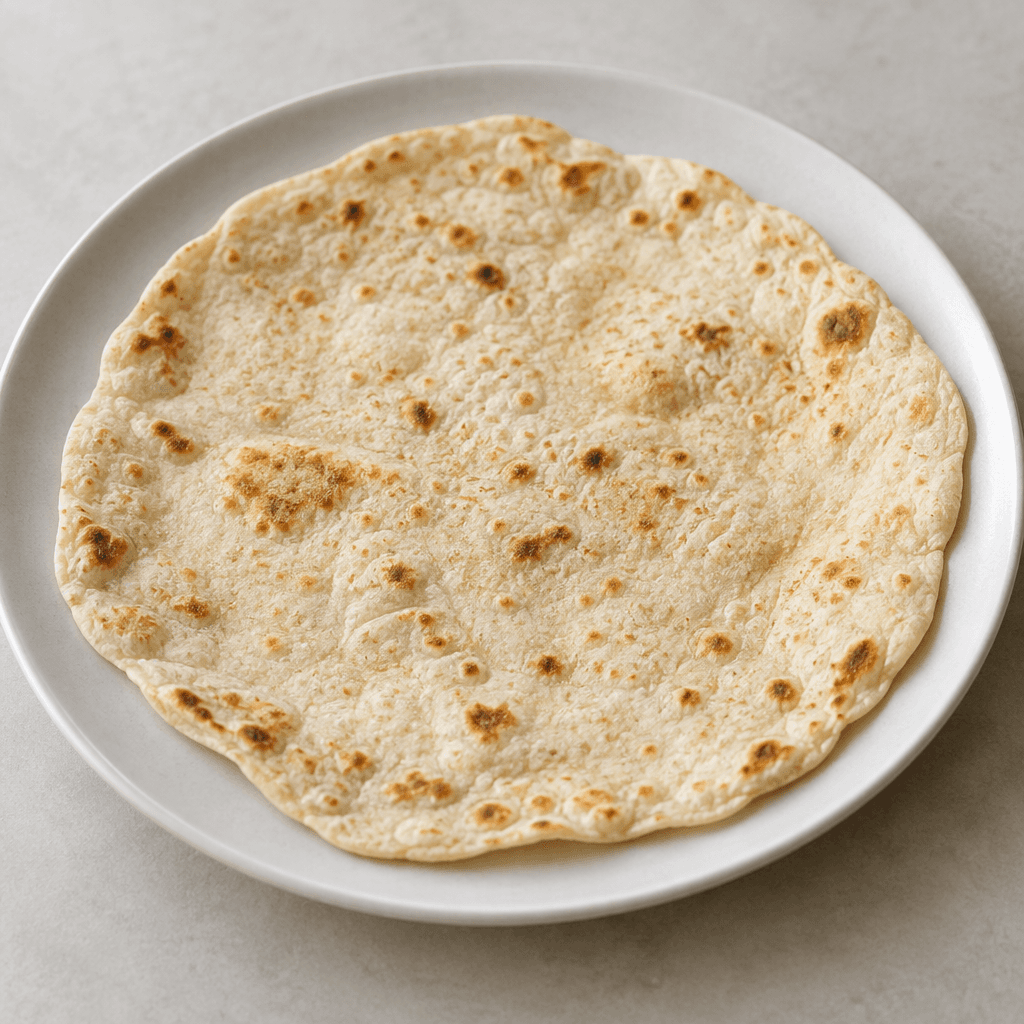
Gluten-Free Lavash Calories
Gluten-free, thin flatbread, low allergen risk
In season: Spring · Summer · Autumn · Winter
CALORIES
GI
POTASSIUM
FIBER
Quick answer
1 piece (medium) of Gluten-Free Lavash (60 g) has 156 calories. That works out to 260 calories per 100 g. It contains 32.4 g of carbs, 2.7 g of protein, 1.5 g of fat and 2.7 g of fiber. Its 204 mg of Sodium covers 9% of the Daily Value. Its glycemic index is 70 (high), so it raises blood sugar quickly.
What is Gluten-Free Lavash?
Gluten-Free Lavash is a thin, flexible flatbread made with gluten-free flour instead of the wheat flour used in traditional lavash. Lavash is widely eaten across Turkey, the Caucasus and neighbouring parts of West Asia, with recipes and shapes varying by region; this version adapts the familiar bread for gluten-free diets.
Its mild flavour and soft texture make it easy to roll around kebabs, grilled vegetables or other fillings, or to serve alongside dips and salads. It is mainly a carbohydrate source, with 54 g of carbohydrates per 100 g. For a more balanced wrap, add vegetables and a filling with protein, and warm it briefly if you prefer it softer and more pliable.
Gluten-Free Lavash Nutrition Facts
Selected: 100 g
260
KCAL / 100G
Carbs
54g
· 20% DV
Protein
4.5g
· 9% DV
Fat
2.5g
· 3% DV
Fiber
4.5g
· 16% DV
DV is the share of the daily value covered, on a 2,000 kcal reference diet.
Calories come from: Carbs 84% · Protein 7% · Fat 9%
Gluten-Free Lavash Vitamins & Minerals
Vitamins
B1
0.12mg · 10% DV
B3
1.2mg · 8% DV
Biotin
1.5µg · 5% DV
B2
0.05mg · 4% DV
Minerals
Sodium
340mg · 15% DV
Zinc
1mg · 9% DV
Phosphorus
55mg · 8% DV
Iron
1mg · 6% DV
How Nutritious Is Gluten-Free Lavash?
Nutrient density
Medium
How many vitamins, minerals and how much fiber this food carries per calorie. A high score means a lot of nutrition for few calories.
Satiety score
Medium
An EatBetter score computed from fiber, protein and calorie density. A high score means staying full longer on the same calories.
Both scores are calculated per 100 g and do not change with the selected portion. The satiety score is EatBetter's own calculation, not a clinical measure.
Gluten-Free Lavash Glycemic Index
GLYCEMIC INDEX
GLYCEMIC LOAD
Accounts for portion size — a more realistic measure than GI alone.
How to Burn Off Gluten-Free Lavash
To burn the 260 calories in 100 g:
🚶
Walking (5 km/h)
🏃
Running (8 km/h)
🚴
Cycling
🏊
Swimming
Times are calculated with the MET equation for a 70 kg adult. Actual burn varies with your weight, age and pace.
Is Gluten-Free Lavash Processed?
NOVA 3
Processed
1. Unprocessed
2. Minimally Processed
3. Processed
4. Ultra-Processed
NOVA classifies foods into 4 groups by industrial processing. NOVA 1 (unprocessed) is the healthiest.
Does Gluten-Free Lavash Contain Allergens?
No known major allergens
Which Diets Is Gluten-Free Lavash Good For?
Vegan
✓ Suitable
Vegetarian
✓ Suitable
Gluten-Free
✓ Suitable
Dairy-Free
— Not suitable
Mediterranean
✓ Suitable
Paleo
— Not suitable
Whole30
— Not suitable
DASH
— Not suitable
Keto
— Not suitable
Low FODMAP
— Not suitable
Gluten-Free Lavash Fat Profile
SATURATED
0.5g
MONOUNSATURATED
0.7g
POLYUNSATURATED
0.25g
Omega 6:3 ratio 6:1
Above the ideal 4:1 (6:1).
Compare Gluten-Free Lavash
Foods Similar to Gluten-Free Lavash
Frequently Asked Questions About Gluten-Free Lavash
What is gluten-free lavash made from?
Gluten-free lavash is made with flours and starches that do not contain wheat gluten, often including rice or corn flour. Recipes may also use a binder to help the flatbread hold together, so ingredients vary by brand and recipe.
How do you keep gluten-free lavash from cracking when rolled?
Warm gluten-free lavash briefly before rolling it. Heat makes it more pliable, while cold or dried-out flatbread is more likely to crack; avoid overfilling it, especially with ingredients that are chunky or stiff.
Can gluten-free lavash be used instead of tortillas?
Yes, gluten-free lavash can stand in for a tortilla in wraps and quick skillet meals. It is usually larger and thinner, so fold or trim it to fit, and warm it first to make it easier to handle.
Should you heat gluten-free lavash before eating it?
No, gluten-free lavash does not have to be heated before eating if it is ready to eat. Warming it briefly in a dry skillet can make it softer and easier to roll, particularly when preparing a wrap.
Can gluten-free lavash be used as a pizza base?
Yes, gluten-free lavash can work as a thin, quick pizza base. Add a light layer of sauce and toppings, then bake until the edges are crisp; heavy or wet toppings can make the flatbread soggy.
How do you stop gluten-free lavash wraps from getting soggy?
Keep wet fillings such as sauces and juicy vegetables away from the lavash until serving, or spread a drier ingredient between the bread and the filling. Assemble the wrap shortly before eating rather than letting it sit.
Does gluten-free lavash need a binder in homemade recipes?
Often, yes: a binder such as psyllium husk or xanthan gum can help homemade gluten-free lavash stay together because it has no gluten network. The amount depends on the flour blend, so follow a recipe designed for that blend.
Can gluten-free lavash be frozen?
Yes, gluten-free lavash freezes well when sealed against air. Separate pieces with parchment so they do not stick together, thaw them before use, and warm briefly to restore a softer texture.
What can you serve with gluten-free lavash?
Gluten-free lavash pairs well with dips, grilled vegetables, hummus, and kebabs. Serve it warm alongside the meal or use it to wrap the fillings; keep moist dips separate until serving to prevent the bread from softening.
Is gluten-free lavash safe for someone with celiac disease?
It can be, but only when the product is labeled gluten-free and made with suitable controls to prevent cross-contact. A flatbread made from gluten-free ingredients is not automatically safe if it was prepared on contaminated equipment or surfaces.
Have another question about Gluten-Free Lavash?
Ask the AI nutrition coach — calories, portions, alternatives and more, answered in seconds in the app.

Scan calories with your camera
Instant AI nutrition analysis

Nutrition data compiled from USDA FoodData Central and scientific sources.