

Ready & Packaged Foods
All →Vegetables & Legumes
All →Desserts & Confectionery
All →Meat & Protein
All →Grains & Bakery
All →Beverages
All →Milk & Dairy
All →

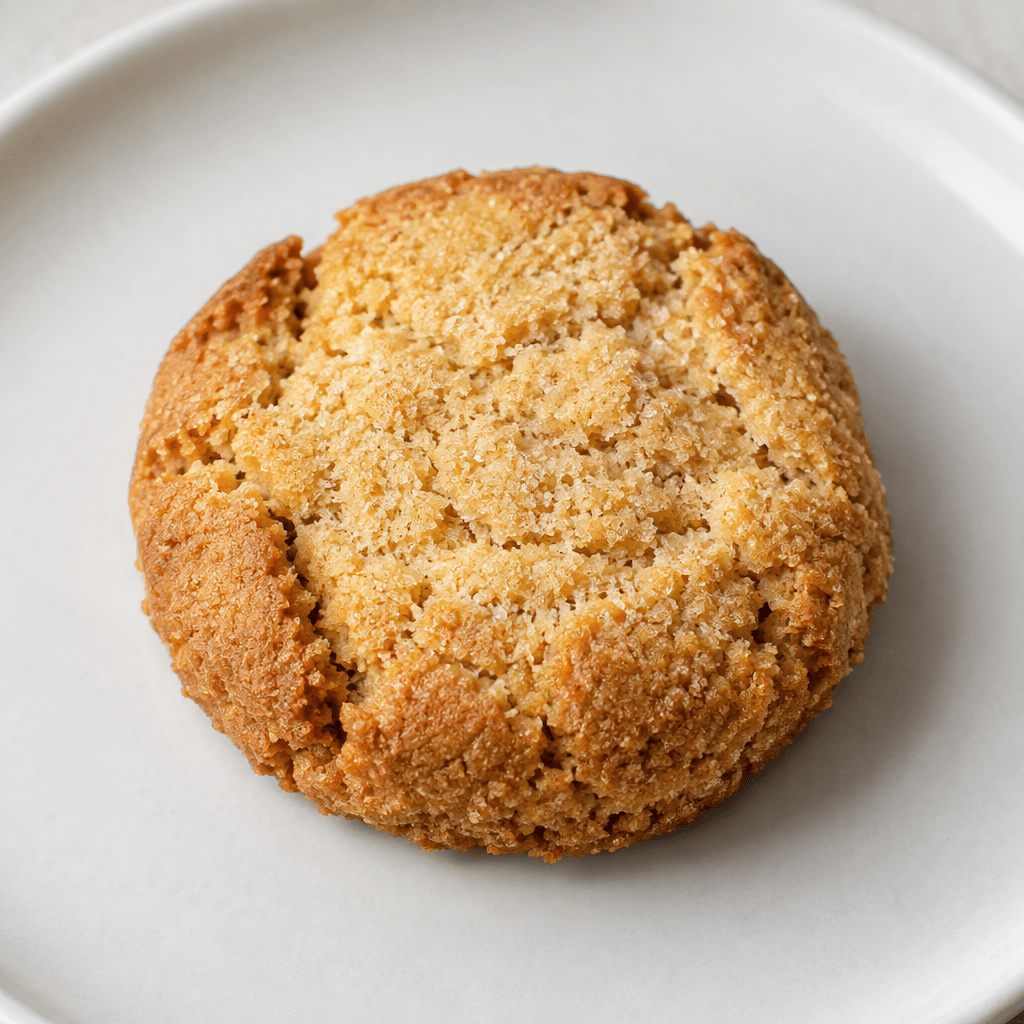
Gluten-free cookie Calories
Gluten-free, typically made with almond flour, rice flour, or oat flour. Suitable for celiac and gluten-sensitive individuals.
In season: Spring · Summer · Autumn · Winter
CALORIES
GI
POTASSIUM
FIBER
Quick answer
1 piece (medium) of Gluten-free cookie (25 g) has 118 calories. That works out to 470 calories per 100 g. It contains 16.3 g of carbs, 1.3 g of protein, 5.3 g of fat and 0.7 g of fiber. Its glycemic index is 60 (high), so it raises blood sugar quickly.
What is Gluten-free cookie?
A gluten-free cookie is a sweet baked biscuit made without wheat or other gluten-containing grains. Recipes often use almond, rice or oat flour instead, so the ingredients and texture vary: some cookies are crisp, while others have a tender, sandy crumb and lightly cracked edges. They may also include sugar, eggs or dairy, depending on the recipe.
Enjoy one with tea or coffee as a snack, or serve it as a simple dessert. It is generally richer in carbohydrates and fat than protein, so it is best thought of as a treat rather than a filling source of protein. If you need to avoid gluten for coeliac disease, check the label and cross-contamination information; a gluten-free name alone does not guarantee every product is suitable.
Gluten-free cookie Nutrition Facts
Selected: 100 g
470
KCAL / 100G
Carbs
65g
· 24% DV
Protein
5.2g
· 10% DV
Fat
21g
· 27% DV
Fiber
2.8g
· 10% DV
DV is the share of the daily value covered, on a 2,000 kcal reference diet.
Calories come from: Carbs 55% · Protein 4% · Fat 41%
Gluten-free cookie Vitamins & Minerals
Vitamins
B1
0.07mg · 6% DV
Vitamin E
0.7mg · 5% DV
B2
0.05mg · 4% DV
B5
0.18mg · 4% DV
Minerals
Sodium
210mg · 9% DV
Phosphorus
48mg · 7% DV
Iron
1mg · 6% DV
Selenium
3.2µg · 6% DV
How Nutritious Is Gluten-free cookie?
Nutrient density
Low
How many vitamins, minerals and how much fiber this food carries per calorie. A high score means a lot of nutrition for few calories.
Satiety score
Low
An EatBetter score computed from fiber, protein and calorie density. A high score means staying full longer on the same calories.
Both scores are calculated per 100 g and do not change with the selected portion. The satiety score is EatBetter's own calculation, not a clinical measure.
Gluten-free cookie Glycemic Index
GLYCEMIC INDEX
GLYCEMIC LOAD
Accounts for portion size — a more realistic measure than GI alone.
How to Burn Off Gluten-free cookie
To burn the 470 calories in 100 g:
🚶
Walking (5 km/h)
🏃
Running (8 km/h)
🚴
Cycling
🏊
Swimming
Times are calculated with the MET equation for a 70 kg adult. Actual burn varies with your weight, age and pace.
Is Gluten-free cookie Processed?
NOVA 3
Processed
1. Unprocessed
2. Minimally Processed
3. Processed
4. Ultra-Processed
NOVA classifies foods into 4 groups by industrial processing. NOVA 1 (unprocessed) is the healthiest.
Does Gluten-free cookie Contain Allergens?
Contains these allergens:
Which Diets Is Gluten-free cookie Good For?
Vegan
— Not suitable
Vegetarian
✓ Suitable
Gluten-Free
✓ Suitable
Dairy-Free
— Not suitable
Mediterranean
— Not suitable
Paleo
— Not suitable
Whole30
— Not suitable
DASH
— Not suitable
Keto
— Not suitable
Low FODMAP
— Not suitable
Gluten-free cookie Fat Profile
SATURATED
7.2g
MONOUNSATURATED
7.8g
POLYUNSATURATED
2.1g
Omega 6:3 ratio 30:1
Above the ideal 4:1 (30:1).
Compare Gluten-free cookie
Foods Similar to Gluten-free cookie
Frequently Asked Questions About Gluten-free cookie
What is a gluten-free cookie made of?
A gluten-free cookie is usually made with flour such as rice, almond, or certified gluten-free oat flour instead of wheat flour. Recipes often use eggs, starch, or another binder to hold the dough together and give the cookie structure.
How do you make gluten-free cookies that aren't crumbly?
Use a recipe with a binder, such as eggs or starch, and let the baked gluten-free cookies cool before moving them. Gluten normally gives dough elasticity, so gluten-free dough needs the right balance of moisture and binding ingredients to hold its shape.
Do gluten-free cookies taste different from regular cookies?
Yes, gluten-free cookies can taste and feel different because the flour changes the result. Almond flour gives a richer, nuttier flavor, while rice flour is milder; blends are often used to make the texture closer to a wheat-flour cookie.
Can people with celiac disease eat gluten-free cookies?
Yes, if the gluten-free cookie is made and handled without cross-contact with gluten. Shared baking trays, utensils, and work surfaces can contaminate it, so people with celiac disease should choose cookies made under suitable gluten-control practices.
Which flour works best in a gluten-free cookie?
There is no single best flour for every gluten-free cookie: rice flour gives a lighter, often crisp texture, while almond flour makes cookies richer and more tender. A flour blend can balance texture, but oat flour should be certified gluten-free for celiac safety.
Why are gluten-free cookies so dry?
Gluten-free cookies can turn dry when they are overbaked or when the flour absorbs more moisture than the recipe allows. Remove them when the edges are set, even if the centers seem soft; they firm up as they cool.
Can you freeze gluten-free cookies?
Yes, gluten-free cookies freeze well once fully cooled. Store them in an airtight freezer-safe container, separating layers with parchment paper, and thaw at room temperature. You can also freeze portions of cookie dough and bake them later.
How should you store gluten-free cookies to keep them fresh?
Store gluten-free cookies in an airtight container after they have cooled completely. Crisp cookies stay crisp best in a dry place, while softer varieties can be refrigerated; bring chilled cookies back to room temperature before serving for a better texture.
Can you use oat flour in a gluten-free cookie?
Yes, oat flour works in a gluten-free cookie and adds a mild, characteristic flavor. For someone with celiac disease, use oats specifically labeled gluten-free because oats can be contaminated with wheat during growing or processing.
Are gluten-free cookies healthier than regular cookies?
Not necessarily; a gluten-free cookie can still contain plenty of sugar and fat. Gluten-free describes the ingredients and suitability for avoiding gluten, not a lower-sugar or more nutritious recipe, so compare the ingredients and choose based on your needs.
Have another question about Gluten-free cookie?
Ask the AI nutrition coach — calories, portions, alternatives and more, answered in seconds in the app.

Scan calories with your camera
Instant AI nutrition analysis

Nutrition data compiled from USDA FoodData Central and scientific sources.