

Ready & Packaged Foods
All →Vegetables & Legumes
All →Desserts & Confectionery
All →Meat & Protein
All →Grains & Bakery
All →Beverages
All →Milk & Dairy
All →

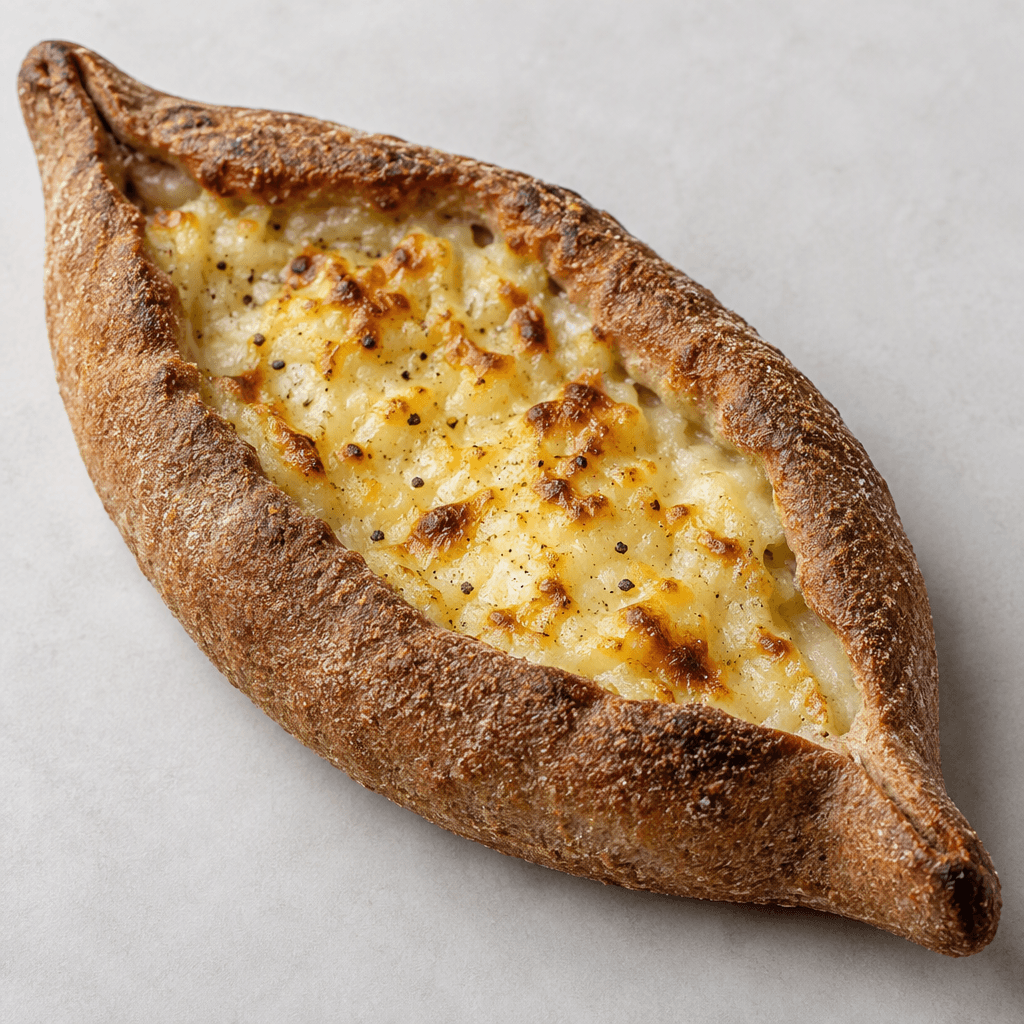
Gluten-Free Buckwheat Pide Calories
Traditional pide made with gluten-free buckwheat flour
In season: Spring · Summer · Autumn · Winter
CALORIES · 100 G
GI
POTASSIUM · 100 G
FIBER · 100 G
Quick answer
1 piece (medium) of Gluten-Free Buckwheat Pide (120 g) has 264 calories. That works out to 220 calories per 100 g. It contains 50.4 g of carbs, 6.6 g of protein, 3 g of fat and 5 g of fiber. Its 0.8 mg of Manganese covers 37% of the Daily Value. Its glycemic index is 48 (medium), so it raises blood sugar at a moderate pace.
Gluten-Free Buckwheat Pide Nutrition Facts
Selected: 1 piece (medium) · 120 g
264
KCAL / 120G
Carbs
50.4g
· 18% DV
Protein
6.6g
· 13% DV
Fat
3g
· 4% DV
Fiber
5g
· 18% DV
DV is the share of the daily value covered, on a 2,000 kcal reference diet.
Calories come from: Carbs 79% · Protein 10% · Fat 11%
Gluten-Free Buckwheat Pide nutrition facts table · 1 piece (medium) (120 g)
| Nutrient | Amount | % DV |
|---|---|---|
| Calories | 264 kcal | |
| Total fat | 3 g | 4% |
| Saturated fat | 0.48 g | 2% |
| Trans fat | 0 g | |
| Sodium | 384 mg | 17% |
| Total carbohydrate | 50.4 g | 18% |
| Fiber | 5 g | 18% |
| Protein | 6.6 g | 13% |
Calories: Calories measure energy. Average daily need is 2,000 kcal. Excess calories are stored as fat, too few cause weight loss.
Carbs: Your body's primary energy source. The brain runs exclusively on carbs. Daily need: 275g.
Protein: Essential for muscle repair and cell growth. Daily need: 50g. Keeps you full and boosts metabolism.
Fat: Needed for hormone production and vitamin absorption. Daily need: 78g. Limit saturated fats, choose unsaturated.
Fiber: Critical for digestive health and satiety. Daily need: 28g. Stabilizes blood sugar, lowers cholesterol.

Log this food in EatBetter
100,000+ people use it
- Get your daily calorie target
- Snap your meal, log it in seconds
- See every vitamin and mineral

📸 Scan the code to get the app free.

How Many Calories in 1 Medium Gluten-Free Buckwheat Pide?
| Serving | Amount | Calories |
|---|---|---|
| 1 piece (medium) | 120 g | 264 kcal |
| 1 slice (thin) | 40 g | 88 kcal |
| 1 slice (thick) | 60 g | 132 kcal |
| 1 piece (small) | 80 g | 176 kcal |
| 2 slice (medium) | 80 g | 176 kcal |
| 100 g | 100 g | 220 kcal |
| 1 serving (medium) | 150 g | 330 kcal |
| 1 piece (large) | 180 g | 396 kcal |
| 1 serving (large) | 200 g | 440 kcal |
Calculated from 220 calories per 100 g.
Frequently Asked Questions About Gluten-Free Buckwheat Pide
How do you make gluten-free buckwheat pide?
Gluten-free buckwheat pide is made by mixing buckwheat flour with water, yeast and salt, then shaping and baking the dough. Buckwheat dough is less stretchy than wheat dough, so handle it gently and follow the recipe’s instructions for any binder.
Why does gluten-free buckwheat pide dough crack or fall apart?
Gluten-free buckwheat pide dough can crack because it lacks gluten, which normally gives dough stretch and structure. Add water gradually if it feels dry, and use the psyllium or other binder called for in the recipe to help it hold its shape.
Is gluten-free buckwheat pide safe for people with celiac disease?
Buckwheat itself is naturally gluten-free, but gluten-free buckwheat pide can be contaminated during milling, preparation or baking. People with celiac disease should choose pide made with verified gluten-free ingredients and prepared with controls against cross-contact.
What is gluten-free buckwheat pide made of?
Gluten-free buckwheat pide is based on buckwheat flour, usually combined with water, yeast and salt. Some recipes add a binder or other gluten-free flours because buckwheat alone does not make an elastic dough; fillings vary by style.
What fillings work well in gluten-free buckwheat pide?
Cheese, spinach, potato, vegetables and seasoned meat all work as fillings for gluten-free buckwheat pide. Keep the filling centered and avoid overstuffing, since the less elastic dough may tear when you fold or shape the pide.
How is gluten-free buckwheat pide different from regular pide?
Gluten-free buckwheat pide uses buckwheat flour instead of wheat flour, so its crust is typically less chewy and its dough is harder to stretch. Buckwheat also gives the pide a distinct, earthy flavor rather than the mild taste of wheat pide.
How do you shape gluten-free buckwheat pide without tearing it?
Shape gluten-free buckwheat pide gently with damp hands or on parchment rather than stretching it like wheat dough. Press it into an oval or boat shape, and smooth small cracks with a little water before adding the filling.
How should you store and reheat gluten-free buckwheat pide?
Cool gluten-free buckwheat pide before refrigerating it in an airtight container, then reheat it in an oven or skillet. A microwave is quicker but can soften the crust; freeze the pide if you need to keep it longer.
Can you freeze gluten-free buckwheat pide?
Yes, gluten-free buckwheat pide can be frozen once it has cooled. Wrap individual portions or separate them with parchment to prevent sticking, then thaw and reheat before serving, or warm them directly in the oven from frozen.
What should you serve with gluten-free buckwheat pide?
Serve gluten-free buckwheat pide with salad, yogurt or a soup that suits its filling. If you are preparing it for someone with celiac disease, make sure the sides and serving utensils are also protected from gluten cross-contact.
Gluten-Free Buckwheat Pide Vitamins & Minerals
Vitamins
B3
2.28mg · 14% DV
B1
0.16mg · 13% DV
Biotin
3µg · 10% DV
B5
0.48mg · 10% DV
Minerals
Manganese
0.84mg · 37% DV
Copper
0.22mg · 24% DV
Sodium
384mg · 17% DV
Magnesium
62mg · 15% DV
Potassium ⭐
144mg · 4% DV
Gluten-Free Buckwheat Pide Glycemic Index
GLYCEMIC INDEX
GLYCEMIC LOAD
Accounts for portion size — a more realistic measure than GI alone.
How to Burn Off Gluten-Free Buckwheat Pide
To burn the 264 calories in 1 piece (medium) (120 g):
🚶
Walking (5 km/h)
🏃
Running (8 km/h)
🚴
Cycling
🏊
Swimming
Times are calculated with the MET equation for a 70 kg adult. Actual burn varies with your weight, age and pace.
What is Gluten-Free Buckwheat Pide?
Gluten-free buckwheat pide is a Turkish-style flatbread made with buckwheat flour instead of ordinary wheat flour. Pide is commonly shaped into an oval or boat-like loaf and baked; recipes for this version may include yeast and other ingredients to help the dough hold together. Buckwheat gives it a gently earthy, nutty flavour, while the texture can be denser or more crumbly than a conventional pide.
In Turkey, pide is served alongside meals or shared at the table, and this version also works with breakfast spreads, dips or soup. It is mainly a carbohydrate source, with 4.2 g of fibre per 100 g. Pair it with eggs, beans, yoghurt or vegetables for a more filling meal, and follow the recipe or pack instructions when warming it, as gluten-free loaves can dry out quickly.
How Nutritious Is Gluten-Free Buckwheat Pide?
Nutrient density
Medium
How many vitamins, minerals and how much fiber this food carries per calorie. A high score means a lot of nutrition for few calories.
Satiety score
Medium
An EatBetter score computed from fiber, protein and calorie density. A high score means staying full longer on the same calories.
Both scores are calculated per 100 g and do not change with the selected portion. The satiety score is EatBetter's own calculation, not a clinical measure.
Is Gluten-Free Buckwheat Pide Processed?
NOVA 3
Processed
1. Unprocessed
2. Minimally Processed
3. Processed
4. Ultra-Processed
NOVA classifies foods into 4 groups by industrial processing. NOVA 1 (unprocessed) is the healthiest.
Does Gluten-Free Buckwheat Pide Contain Allergens?
No known major allergens
Which Diets Is Gluten-Free Buckwheat Pide Good For?
Vegan
✓ Suitable
Vegetarian
✓ Suitable
Gluten-Free
✓ Suitable
Dairy-Free
— Not suitable
Mediterranean
✓ Suitable
Paleo
— Not suitable
Whole30
— Not suitable
DASH
— Not suitable
Keto
— Not suitable
Low FODMAP
— Not suitable
Gluten-Free Buckwheat Pide Fat Profile
SATURATED
0.48g
MONOUNSATURATED
0.6g
POLYUNSATURATED
0.84g
Omega 6:3 ratio 6.6:1
Above the ideal 4:1 (6.6:1).
Compare Gluten-Free Buckwheat Pide
Foods Similar to Gluten-Free Buckwheat Pide
Have another question about Gluten-Free Buckwheat Pide?
Ask the AI nutrition coach — calories, portions, alternatives and more, answered in seconds in the app.

Scan calories with your camera
Instant AI nutrition analysis

Nutrition data compiled from USDA FoodData Central and scientific sources.