

Ready & Packaged Foods
All →Vegetables & Legumes
All →Desserts & Confectionery
All →Meat & Protein
All →Grains & Bakery
All →Beverages
All →Milk & Dairy
All →

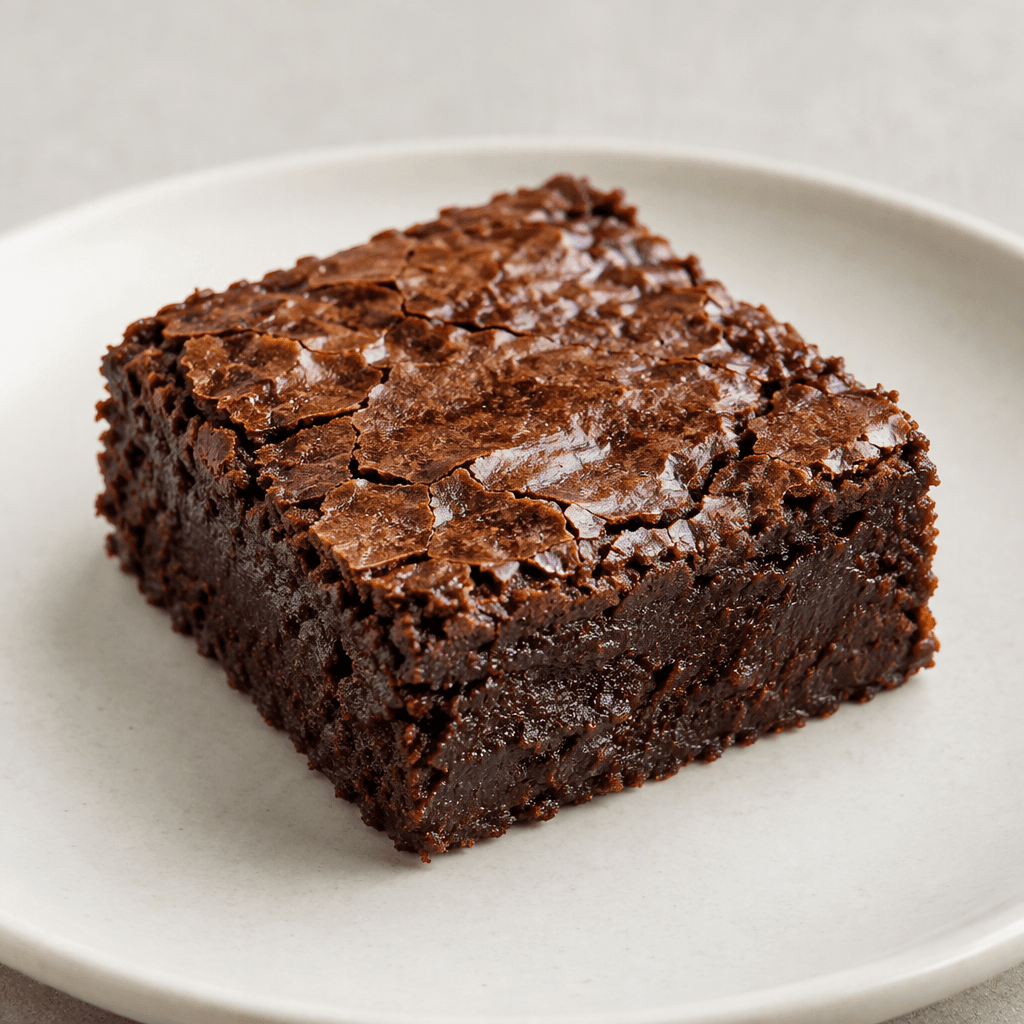
Gluten-free brownie Calories
Gluten-free, chocolate, dessert
In season: Spring · Summer · Autumn · Winter
CALORIES
GI
POTASSIUM
FIBER
Quick answer
1 piece (medium) of Gluten-free brownie (60 g) has 246 calories. That works out to 410 calories per 100 g. It contains 32.4 g of carbs, 3.1 g of protein, 11.4 g of fat and 2.1 g of fiber. Its 0.1 mg of Copper covers 12% of the Daily Value. Its glycemic index is 45 (medium), so it raises blood sugar at a moderate pace.
What is Gluten-free brownie?
A gluten-free brownie is a version of the dense, chocolate-rich American bake made without wheat flour. Recipes vary: they may use a gluten-free flour blend, starch or ground nuts alongside chocolate or cocoa, sugar, fat and eggs.
It is typically fudgy and moist inside, with a slightly crisp or cracked top. In the United States it is often served as a casual dessert or snack, plain or warmed with ice cream; elsewhere, a small square also goes well with coffee or tea. It is rich in carbohydrates and fat, with comparatively little protein, so it makes a filling treat rather than an everyday staple. For a lighter serving, keep the piece modest and add fresh fruit.
Gluten-free brownie Nutrition Facts
Selected: 100 g
410
KCAL / 100G
Carbs
54g
· 20% DV
Protein
5.2g
· 10% DV
Fat
19g
· 24% DV
Fiber
3.5g
· 13% DV
DV is the share of the daily value covered, on a 2,000 kcal reference diet.
Calories come from: Carbs 53% · Protein 5% · Fat 42%
Gluten-free brownie Vitamins & Minerals
Vitamins
B2
0.12mg · 9% DV
Biotin
2.2µg · 7% DV
B1
0.07mg · 6% DV
Vitamin E
0.9mg · 6% DV
Minerals
Phosphorus
85mg · 12% DV
Iron
2mg · 11% DV
Zinc
1mg · 9% DV
Magnesium
32mg · 8% DV
How Nutritious Is Gluten-free brownie?
Nutrient density
Low
How many vitamins, minerals and how much fiber this food carries per calorie. A high score means a lot of nutrition for few calories.
Satiety score
Low
An EatBetter score computed from fiber, protein and calorie density. A high score means staying full longer on the same calories.
Both scores are calculated per 100 g and do not change with the selected portion. The satiety score is EatBetter's own calculation, not a clinical measure.
Gluten-free brownie Glycemic Index
GLYCEMIC INDEX
GLYCEMIC LOAD
Accounts for portion size — a more realistic measure than GI alone.
How to Burn Off Gluten-free brownie
To burn the 410 calories in 100 g:
🚶
Walking (5 km/h)
🏃
Running (8 km/h)
🚴
Cycling
🏊
Swimming
Times are calculated with the MET equation for a 70 kg adult. Actual burn varies with your weight, age and pace.
Is Gluten-free brownie Processed?
NOVA 3
Processed
1. Unprocessed
2. Minimally Processed
3. Processed
4. Ultra-Processed
NOVA classifies foods into 4 groups by industrial processing. NOVA 1 (unprocessed) is the healthiest.
Does Gluten-free brownie Contain Allergens?
Contains these allergens:
Which Diets Is Gluten-free brownie Good For?
Vegan
— Not suitable
Vegetarian
✓ Suitable
Gluten-Free
✓ Suitable
Dairy-Free
— Not suitable
Mediterranean
— Not suitable
Paleo
— Not suitable
Whole30
— Not suitable
DASH
— Not suitable
Keto
— Not suitable
Low FODMAP
— Not suitable
Gluten-free brownie Fat Profile
SATURATED
7.4g
MONOUNSATURATED
6.2g
POLYUNSATURATED
1.5g
Omega 6:3 ratio 18.6:1
Above the ideal 4:1 (18.6:1).
Compare Gluten-free brownie
Foods Similar to Gluten-free brownie
Frequently Asked Questions About Gluten-free brownie
Are gluten-free brownies safe for people with celiac disease?
Yes, gluten-free brownies can be suitable for people with celiac disease if they are protected from cross-contact with wheat, barley, or rye. Bakery brownies may be handled on shared surfaces, so ask how they are prepared rather than relying on the name alone.
How do you make gluten-free brownies fudgy?
Use a recipe with plenty of chocolate and fat, and avoid overmixing the batter. Take the gluten-free brownies out while the centre is still slightly soft; they will continue to set as they cool, keeping the texture fudgy rather than cakey.
Why are my gluten-free brownies crumbly?
Gluten-free brownies can crumble when the batter has too little binding, the flour blend is too dry, or the brownies are cut while warm. Let them cool fully before slicing, and use a recipe formulated for the specific gluten-free flour blend.
Can I make gluten-free brownies with almond flour?
Yes, almond flour works in gluten-free brownies, but it makes them richer and denser than many starch-based flour blends. Use a recipe designed for almond flour; swapping it cup-for-cup into another recipe can change how the brownies hold together.
Can you make gluten-free brownies without xanthan gum?
Yes, gluten-free brownies can be made without xanthan gum, especially when eggs and chocolate help bind the batter. Choose a recipe that leaves it out; simply removing xanthan gum from a recipe that relies on it may make the brownies fragile.
Can I use cocoa powder instead of chocolate in gluten-free brownies?
Yes, some gluten-free brownie recipes use cocoa powder instead of melted chocolate, but the ingredients are not interchangeable in equal amounts. Melted chocolate also contributes fat and sugar, so choose a cocoa-based recipe rather than making a direct swap.
Can I make gluten-free brownies from a boxed mix?
Yes, boxed mixes can make gluten-free brownies conveniently. Follow the mix’s directions for added ingredients and baking, and if the brownies are for someone with celiac disease, check that preparation will avoid contact with gluten-containing foods.
How do I know when gluten-free brownies are done baking?
Gluten-free brownies are ready when the edges look set and a tester inserted near the centre comes out with moist crumbs rather than wet batter. Do not wait for the tester to be completely clean, or the brownies may turn dry.
Can gluten-free brownies be made dairy-free too?
Yes, gluten-free brownies can also be made dairy-free by using a suitable plant-based fat and dairy-free chocolate. Check every ingredient in the recipe, since some chocolate and brownie mixes contain milk even when they contain no gluten.
How should I store gluten-free brownies to keep them moist?
Let gluten-free brownies cool completely, then keep them in an airtight container so they do not dry out. If you refrigerate them, bring a portion to room temperature before serving for a softer, fudgier texture.
Have another question about Gluten-free brownie?
Ask the AI nutrition coach — calories, portions, alternatives and more, answered in seconds in the app.

Scan calories with your camera
Instant AI nutrition analysis

Nutrition data compiled from USDA FoodData Central and scientific sources.