

Ready & Packaged Foods
All →Vegetables & Legumes
All →Desserts & Confectionery
All →Meat & Protein
All →Grains & Bakery
All →Beverages
All →Milk & Dairy
All →

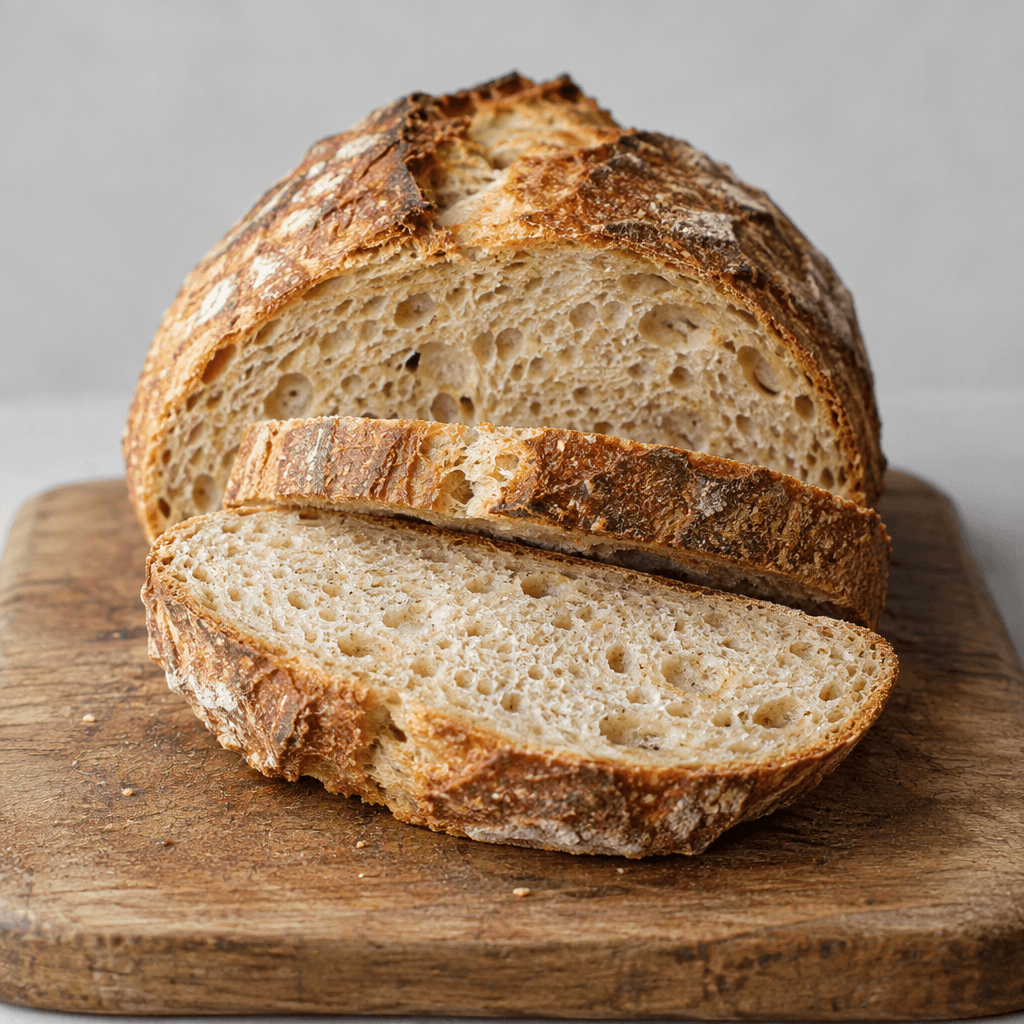
Gluten-free bread Calories
Gluten-free, typically made with rice flour, corn flour, or potato starch
CALORIES
GI
POTASSIUM
FIBER
Quick answer
1 slice (medium) of Gluten-free bread (35 g) has 84 calories. That works out to 240 calories per 100 g. It contains 16.8 g of carbs, 1.4 g of protein, 1.2 g of fat and 1.4 g of fiber. Its 122.5 mg of Sodium covers 5% of the Daily Value. Its glycemic index is 75 (high), so it raises blood sugar quickly.
What is Gluten-free bread?
Gluten-free bread is made without wheat, barley or rye, using alternatives such as rice flour, corn flour or potato starch. Recipes vary: some include yeast and other ingredients to help bind the loaf, so the crumb can be quite different from one loaf to another.
It often has a firm, slightly crumbly interior and a browned crust; toasting can improve its texture. People eat it at breakfast, as toast or alongside soup, and it works well with familiar toppings such as eggs, avocado or nut butter. It is mainly a source of carbohydrate, with 4 g of fibre per 100 g in the figures shown. For a more filling snack or meal, pair a slice with a protein-rich topping or a bowl of beans.
Gluten-free bread Nutrition Facts
Selected: 100 g
240
KCAL / 100G
Carbs
48g
· 17% DV
Protein
4g
· 8% DV
Fat
3.5g
· 4% DV
Fiber
4g
· 14% DV
DV is the share of the daily value covered, on a 2,000 kcal reference diet.
Calories come from: Carbs 80% · Protein 7% · Fat 13%
Gluten-free bread Vitamins & Minerals
Vitamins
B3
1.2mg · 8% DV
B1
0.08mg · 7% DV
B5
0.2mg · 4% DV
B2
0.04mg · 3% DV
Minerals
Sodium
350mg · 15% DV
Zinc
1mg · 9% DV
Iron
1mg · 6% DV
Selenium
3µg · 5% DV
How Nutritious Is Gluten-free bread?
Nutrient density
Low
How many vitamins, minerals and how much fiber this food carries per calorie. A high score means a lot of nutrition for few calories.
Satiety score
Medium
An EatBetter score computed from fiber, protein and calorie density. A high score means staying full longer on the same calories.
Both scores are calculated per 100 g and do not change with the selected portion. The satiety score is EatBetter's own calculation, not a clinical measure.
Gluten-free bread Glycemic Index
GLYCEMIC INDEX
GLYCEMIC LOAD
Accounts for portion size — a more realistic measure than GI alone.
How to Burn Off Gluten-free bread
To burn the 240 calories in 100 g:
🚶
Walking (5 km/h)
🏃
Running (8 km/h)
🚴
Cycling
🏊
Swimming
Times are calculated with the MET equation for a 70 kg adult. Actual burn varies with your weight, age and pace.
Is Gluten-free bread Processed?
NOVA 3
Processed
1. Unprocessed
2. Minimally Processed
3. Processed
4. Ultra-Processed
NOVA classifies foods into 4 groups by industrial processing. NOVA 1 (unprocessed) is the healthiest.
Does Gluten-free bread Contain Allergens?
No known major allergens
Which Diets Is Gluten-free bread Good For?
Vegan
✓ Suitable
Vegetarian
✓ Suitable
Gluten-Free
✓ Suitable
Dairy-Free
— Not suitable
Mediterranean
✓ Suitable
Paleo
— Not suitable
Whole30
— Not suitable
DASH
— Not suitable
Keto
— Not suitable
Low FODMAP
— Not suitable
Gluten-free bread Fat Profile
SATURATED
0.6g
MONOUNSATURATED
1g
POLYUNSATURATED
1.2g
Omega 6:3 ratio 15:1
Above the ideal 4:1 (15:1).
Compare Gluten-free bread
Foods Similar to Gluten-free bread
Frequently Asked Questions About Gluten-free bread
What is gluten-free bread made of?
Gluten-free bread is commonly made with rice flour, corn flour, or starches such as potato or tapioca. Recipes often add ingredients like psyllium, xanthan gum, or eggs to help bind the dough and give the loaf structure.
Why does gluten-free bread taste different from regular bread?
Gluten-free bread can taste different because its flours and starches have distinct flavors and lack gluten’s chewy texture. Some loaves are mild and soft, while others taste more earthy or feel denser, depending on the flour blend.
Why does gluten-free bread crumble so easily?
Gluten-free bread lacks gluten’s elastic network, so slices may fall apart more easily. A binder such as psyllium can help hold a homemade loaf together, and letting it cool fully before slicing helps prevent a crumbly center.
How do you make gluten-free bread rise?
Gluten-free bread rises with yeast or another leavening agent, but it will not stretch and trap gas like wheat dough. A suitable flour blend and binder help it hold its shape; follow a recipe designed for gluten-free baking rather than swapping flour one-for-one.
How should you store gluten-free bread?
Store gluten-free bread in an airtight bag or container at room temperature if you’ll eat it soon. Heat and moisture can encourage mold, so discard the loaf if you see mold rather than cutting off just the affected slice.
Can you freeze gluten-free bread?
Yes, gluten-free bread freezes well. Freeze slices with parchment between them in a sealed freezer bag, then take out only what you need. The slices can go straight into a toaster or be thawed before serving.
Is gluten-free bread safe for people with celiac disease?
Yes, gluten-free bread can be suitable for people with celiac disease when it is protected from gluten cross-contact. Choose bread made under appropriate gluten-free controls, and avoid crumbs or shared utensils and toaster surfaces that have touched wheat bread.
Can you toast gluten-free bread?
Yes, gluten-free bread can be toasted, and toasting often gives it a firmer, crispier texture. If you need to avoid gluten, use a dedicated toaster or a clean toaster bag so crumbs from wheat bread do not contaminate it.
Is gluten-free bread healthier than regular bread?
No, gluten-free bread is not automatically healthier than regular bread. It is necessary for people who must avoid gluten, but some varieties rely heavily on refined starches; compare ingredients and choose a loaf with whole-grain flours when available.
Why is gluten-free bread so expensive?
Gluten-free bread often costs more because its specialty flours and binders can be pricier, and it may be produced in smaller batches with controls to prevent gluten cross-contact. Prices vary by brand, loaf size, and where it is sold.
Have another question about Gluten-free bread?
Ask the AI nutrition coach — calories, portions, alternatives and more, answered in seconds in the app.

Scan calories with your camera
Instant AI nutrition analysis

Nutrition data compiled from USDA FoodData Central and scientific sources.