

Ready & Packaged Foods
All →Vegetables & Legumes
All →Desserts & Confectionery
All →Meat & Protein
All →Grains & Bakery
All →Beverages
All →Milk & Dairy
All →

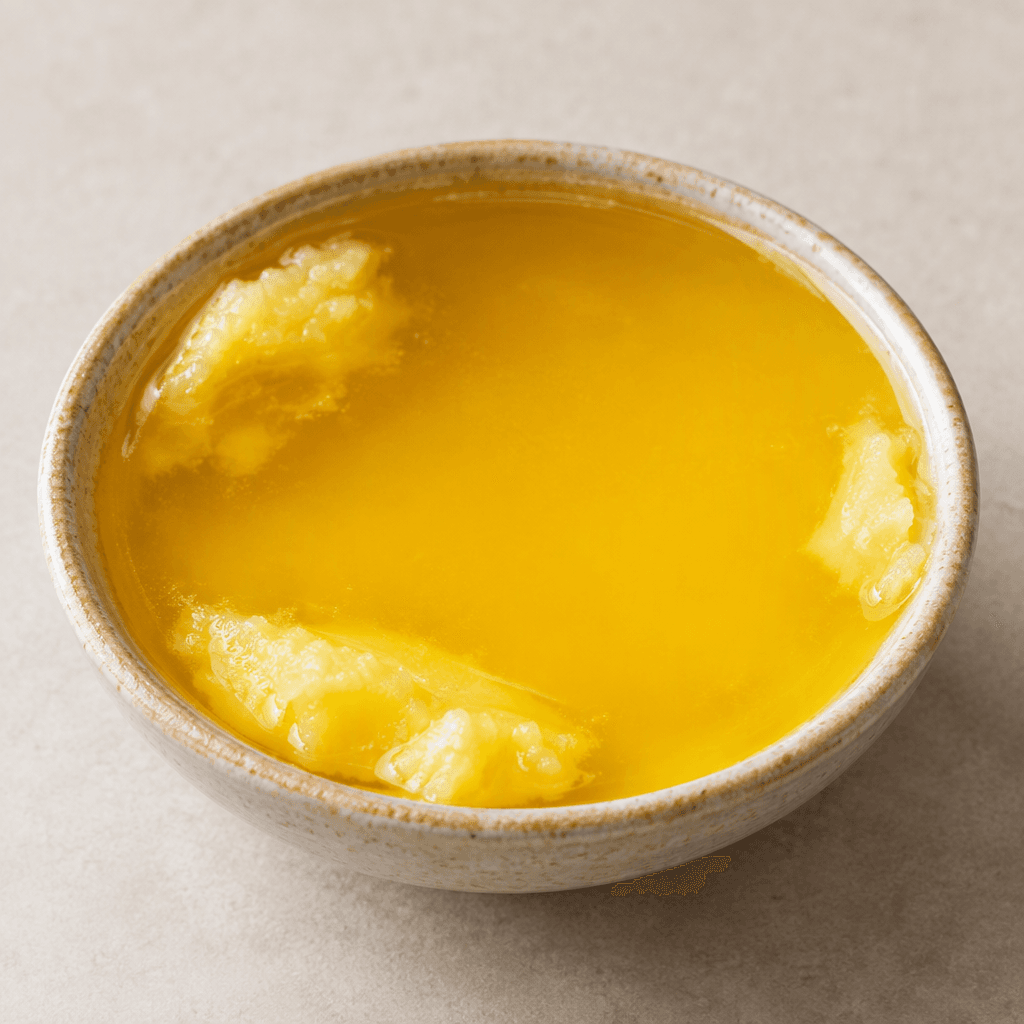
Ghee Calories
Clarified butter, high smoke point, lactose-free
In season: Spring · Summer · Autumn · Winter
CALORIES
GI
POTASSIUM
FIBER
Quick answer
1 tablespoon (medium) of Ghee (13 g) has 117 calories. That works out to 900 calories per 100 g. It contains 0 g of carbs, 0 g of protein, 13 g of fat and 0 g of fiber. Its 104 µg of Vitamin A covers 12% of the Daily Value. Its glycemic index is 0 (low), so it raises blood sugar slowly.
What is Ghee?
Ghee is clarified butter, made by gently heating butter until its water evaporates and the milk solids separate. It has deep roots in South Asian cooking, where it is valued for its golden colour, smooth texture and rich, slightly nutty flavour. At room temperature it may be soft or partly solid, while melting into a clear, glossy fat when warmed.
In India and neighbouring regions, it is spooned over rice and lentils, used to season vegetables and spices, and added to breads and sweets. Elsewhere, it works much like butter for sautéing or enriching a dish, with a high smoke point that suits hotter cooking. It is almost entirely fat, so a small spoonful brings plenty of richness; use it sparingly or combine it with oil for a lighter finish.
Ghee Nutrition Facts
Selected: 100 g
900
KCAL / 100G
Carbs
0g
· 0% DV
Protein
0g
· 0% DV
Fat
100g
· 128% DV
Fiber
0g
· 0% DV
DV is the share of the daily value covered, on a 2,000 kcal reference diet.
Calories come from: Carbs 0% · Protein 0% · Fat 100%
Ghee Vitamins & Minerals
Vitamins
Vitamin A
800µg · 89% DV
Vitamin D
7µg · 35% DV
Vitamin E
2.8mg · 19% DV
B5
0.5mg · 10% DV
Minerals
Calcium
18mg · 2% DV
Selenium
1µg · 2% DV
Iodine
1µg · 1% DV
Phosphorus
6mg · 1% DV
How Nutritious Is Ghee?
Nutrient density
Low
How many vitamins, minerals and how much fiber this food carries per calorie. A high score means a lot of nutrition for few calories.
Satiety score
Low
An EatBetter score computed from fiber, protein and calorie density. A high score means staying full longer on the same calories.
Both scores are calculated per 100 g and do not change with the selected portion. The satiety score is EatBetter's own calculation, not a clinical measure.
Ghee Glycemic Index
GLYCEMIC INDEX
GLYCEMIC LOAD
Accounts for portion size — a more realistic measure than GI alone.
How to Burn Off Ghee
To burn the 900 calories in 100 g:
🚶
Walking (5 km/h)
🏃
Running (8 km/h)
🚴
Cycling
🏊
Swimming
Times are calculated with the MET equation for a 70 kg adult. Actual burn varies with your weight, age and pace.
Is Ghee Processed?
NOVA 2
Minimally Processed
1. Unprocessed
2. Minimally Processed
3. Processed
4. Ultra-Processed
NOVA classifies foods into 4 groups by industrial processing. NOVA 1 (unprocessed) is the healthiest.
Does Ghee Contain Allergens?
Contains these allergens:
Which Diets Is Ghee Good For?
Vegan
— Not suitable
Vegetarian
— Not suitable
Gluten-Free
✓ Suitable
Dairy-Free
— Not suitable
Mediterranean
✓ Suitable
Paleo
✓ Suitable
Whole30
— Not suitable
DASH
— Not suitable
Keto
✓ Suitable
Low FODMAP
— Not suitable
Ghee Fat Profile
SATURATED
60g
MONOUNSATURATED
28g
POLYUNSATURATED
3g
Omega 6:3 ratio 5.5:1
Above the ideal 4:1 (5.5:1).
Compare Ghee
Foods Similar to Ghee
Frequently Asked Questions About Ghee
What is ghee, and how is it different from butter?
Ghee is butter heated until its water evaporates and its milk solids separate, leaving clarified butterfat. It has a concentrated, slightly nutty flavor and generally handles higher cooking temperatures than ordinary butter without burning as quickly.
Is ghee healthier than butter?
Ghee is not automatically healthier than butter; both are concentrated dairy fats. Ghee has less lactose and milk solids because they are removed during clarification, while butter has a softer, creamier flavor and is often easier to spread.
Can you cook with ghee at high heat?
Yes, ghee works well for high-heat cooking. Removing the milk solids makes it less prone to scorching than butter, so you can use it to sear meat, sauté vegetables, or fry foods.
How do you make ghee at home?
Make ghee by gently heating unsalted butter until its water evaporates and the milk solids settle and turn golden. Skim off the foam, then strain the clear fat into a clean, dry jar without disturbing the solids at the bottom.
Is ghee lactose-free?
Ghee is usually very low in lactose, or contains none, because most milk solids are removed during preparation. It is still made from dairy, so people with a milk-protein allergy should not assume it is safe for them.
Does ghee need to be refrigerated?
No, ghee does not usually need refrigeration if it is stored in a cool, dark place in a tightly sealed, dry container. Keep water and food particles out of the jar, and discard it if it develops an off smell or taste.
What does ghee taste like?
Ghee tastes rich and buttery, with a toasted, slightly nutty aroma from the browned milk solids. Its flavor is more concentrated than butter’s, so a small amount can noticeably change the taste of rice, vegetables, or curries.
Can you use ghee instead of butter?
Yes, ghee can replace butter in many sautéing and cooking recipes, especially when the food is cooked over high heat. It is not a perfect swap in baking, where butter’s water content and texture help determine how the recipe turns out.
Can you put ghee in coffee?
Yes, ghee can be blended into hot coffee for a richer, creamier texture. A blender or milk frother helps it mix evenly, but adding ghee does not reduce the coffee’s caffeine or make it a weight-loss drink.
Does ghee help with weight loss?
No, ghee does not cause weight loss. It is a concentrated fat, so adding it on top of your usual foods can increase your overall energy intake; using it in place of another cooking fat is a more sensible approach.
Have another question about Ghee?
Ask the AI nutrition coach — calories, portions, alternatives and more, answered in seconds in the app.

Scan calories with your camera
Instant AI nutrition analysis

Nutrition data compiled from USDA FoodData Central and scientific sources.