

Ready & Packaged Foods
All →Vegetables & Legumes
All →Desserts & Confectionery
All →Meat & Protein
All →Grains & Bakery
All →Beverages
All →Milk & Dairy
All →

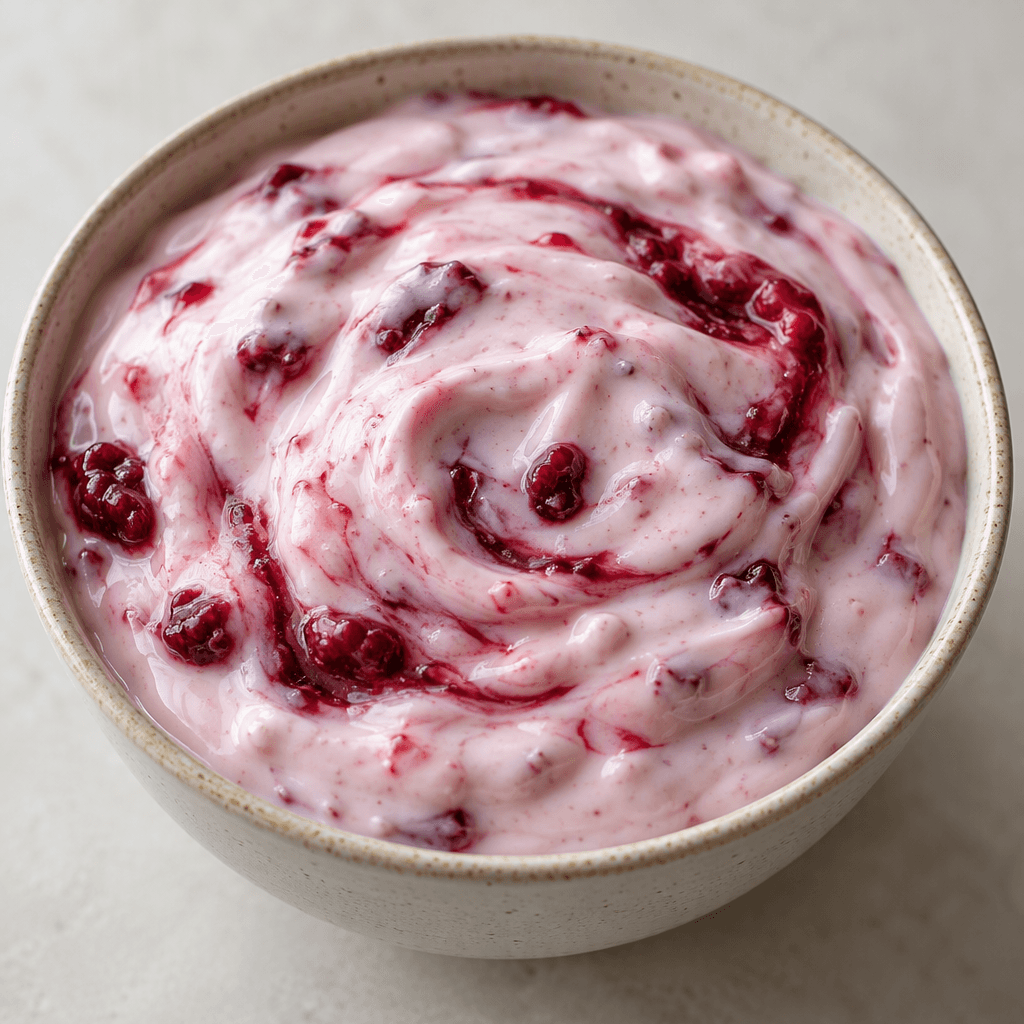
Red berry fruit yogurt Calories
Probiotic yogurt with red berries
CALORIES · 100 G
GI
POTASSIUM · 100 G
FIBER · 100 G
Quick answer
1 pack (mini) of Red berry fruit yogurt (115 g) has 113 calories. That works out to 98 calories per 100 g. It contains 17.5 g of carbs, 4.1 g of protein, 2.8 g of fat and 0.7 g of fiber. Its 0.4 µg of B12 covers 18% of the Daily Value. Its glycemic index is 38 (low), so it raises blood sugar slowly.
Red berry fruit yogurt Nutrition Facts
Selected: 1 pack (mini) · 115 g
113
KCAL / 115G
Carbs
17.5g
· 6% DV
Protein
4.1g
· 8% DV
Fat
2.8g
· 4% DV
Fiber
0.7g
· 3% DV
DV is the share of the daily value covered, on a 2,000 kcal reference diet.
Calories come from: Carbs 63% · Protein 15% · Fat 22%
Red berry fruit yogurt nutrition facts table · 1 pack (mini) (115 g)
| Nutrient | Amount | % DV |
|---|---|---|
| Calories | 113 kcal | |
| Total fat | 2.8 g | 4% |
| Saturated fat | 1.73 g | 9% |
| Trans fat | 0.09 g | |
| Sodium | 55 mg | 2% |
| Total carbohydrate | 17.5 g | 6% |
| Fiber | 0.7 g | 3% |
| Protein | 4.1 g | 8% |
Calories: Calories measure energy. Average daily need is 2,000 kcal. Excess calories are stored as fat, too few cause weight loss.
Carbs: Your body's primary energy source. The brain runs exclusively on carbs. Daily need: 275g.
Protein: Essential for muscle repair and cell growth. Daily need: 50g. Keeps you full and boosts metabolism.
Fat: Needed for hormone production and vitamin absorption. Daily need: 78g. Limit saturated fats, choose unsaturated.
Fiber: Critical for digestive health and satiety. Daily need: 28g. Stabilizes blood sugar, lowers cholesterol.

Log this food in EatBetter
100,000+ people use it
- Get your daily calorie target
- Snap your meal, log it in seconds
- See every vitamin and mineral

📸 Scan the code to get the app free.

How Many Calories in 1 Mini Pack of Red berry fruit yogurt?
| Serving | Amount | Calories |
|---|---|---|
| 1 pack (mini) | 115 g | 113 kcal |
| 2 tablespoon (medium) | 30 g | 29 kcal |
| 4 tablespoon (medium) | 60 g | 59 kcal |
| 100 g | 100 g | 98 kcal |
| 1 serving (small) | 125 g | 123 kcal |
| 1 cup (small) | 150 g | 147 kcal |
| 1 cup (medium) | 200 g | 196 kcal |
| 1 serving (large) | 250 g | 245 kcal |
Calculated from 98 calories per 100 g.
Frequently Asked Questions About Red berry fruit yogurt
Does red berry fruit yogurt contain probiotics?
Yes, it is described as probiotic yogurt with red berries. Its live cultures may support a healthy gut microbiota, but they do not treat disease, and the specific cultures can vary between product formulations.
What berries are in red berry fruit yogurt?
The exact fruit blend can vary by market and formulation; “red berry” does not identify one fixed recipe. Check the ingredient list if you need to know whether a particular berry, such as strawberry or raspberry, is included.
Does red berry fruit yogurt have added sugar?
Fruit yogurt is often sweetened, and the fruit also contributes naturally occurring sugars. The amount of added sugar depends on the formulation, so compare the ingredient list with plain yogurt if you are choosing a less-sweet option.
Can you cook with red berry fruit yogurt?
Yes, but it works best in cold dishes such as dips or toppings. Heating yogurt can make it split, and cooking it removes the benefit of its live cultures, so stir it in after the food has cooled instead.
Can you freeze red berry fruit yogurt?
Yes, but freezing and thawing can make it watery or grainy, so the texture may not be pleasant to eat by the spoonful. It is more suitable for blending into a smoothie while still frozen.
How long does red berry fruit yogurt last after opening?
Keep it covered in the refrigerator and eat it promptly after opening. Use a clean spoon each time, and discard it if it has been left out for a long time or develops an unusual smell or appearance.
Can babies eat red berry fruit yogurt?
Babies who have started solids can generally have yogurt, but a plain, unsweetened option is a better everyday choice than sweetened red berry fruit yogurt. Avoid serving it as a drink to babies under 12 months.
Is red berry fruit yogurt suitable for someone with lactose intolerance?
Not necessarily. It is made from dairy, and although some people with lactose intolerance tolerate yogurt better than milk, this product may still cause symptoms. Choose a lactose-free alternative if you know dairy yogurt affects you.
Can you add red berry fruit yogurt to overnight oats?
Yes, stir it into oats before refrigerating them overnight. It adds a fruity, creamy flavor; add extra milk if the mixture becomes too thick, and keep the oats chilled until you are ready to eat them.
Is red berry fruit yogurt healthier than plain yogurt?
Not automatically. Red berry fruit yogurt offers fruit flavor and probiotic cultures, while plain yogurt gives you more control over sweetness and toppings. Choose based on your preference, and add fresh berries to plain yogurt for a less-sweet version.
Red berry fruit yogurt Vitamins & Minerals
Vitamins
B12
0.44µg · 18% DV
B2
0.21mg · 16% DV
Biotin
2.42µg · 8% DV
B5
0.4mg · 8% DV
Minerals
Phosphorus
110mg · 16% DV
Calcium
144mg · 14% DV
Iodine
10µg · 7% DV
Selenium
3.57µg · 6% DV
Potassium ⭐
190mg · 6% DV
Sodium
55mg · 2% DV
Red berry fruit yogurt Glycemic Index
GLYCEMIC INDEX
GLYCEMIC LOAD
Accounts for portion size — a more realistic measure than GI alone.
How to Burn Off Red berry fruit yogurt
To burn the 113 calories in 1 pack (mini) (115 g):
🚶
Walking (5 km/h)
🏃
Running (8 km/h)
🚴
Cycling
🏊
Swimming
Times are calculated with the MET equation for a 70 kg adult. Actual burn varies with your weight, age and pace.
What is Red berry fruit yogurt?
Red berry fruit yogurt is a ready-to-eat dairy product combining yogurt with red berries, sold in convenient individual packs. It has a creamy texture and a tangy, fruity taste, usually sweeter than plain yogurt. It works well at breakfast or as a quick snack, eaten on its own or spooned over oats or cereal; elsewhere, it can also be served with fresh fruit or granola.
Its nutrition is a mix of dairy protein and carbohydrates from the fruit and yogurt preparation. At 3.6 g of protein per 100 g, it is a modest source rather than a high-protein meal. Add nuts or oats for a more substantial snack, or pair a smaller portion with fresh fruit if you want something lighter.
How Nutritious Is Red berry fruit yogurt?
Nutrient density
Medium
How many vitamins, minerals and how much fiber this food carries per calorie. A high score means a lot of nutrition for few calories.
Satiety score
Medium
An EatBetter score computed from fiber, protein and calorie density. A high score means staying full longer on the same calories.
Both scores are calculated per 100 g and do not change with the selected portion. The satiety score is EatBetter's own calculation, not a clinical measure.
Is Red berry fruit yogurt Processed?
NOVA 3
Processed
1. Unprocessed
2. Minimally Processed
3. Processed
4. Ultra-Processed
NOVA classifies foods into 4 groups by industrial processing. NOVA 1 (unprocessed) is the healthiest.
Does Red berry fruit yogurt Contain Allergens?
Contains these allergens:
Which Diets Is Red berry fruit yogurt Good For?
Vegan
— Not suitable
Vegetarian
✓ Suitable
Gluten-Free
— Not suitable
Dairy-Free
— Not suitable
Mediterranean
✓ Suitable
Paleo
— Not suitable
Whole30
— Not suitable
DASH
— Not suitable
Keto
— Not suitable
Low FODMAP
— Not suitable
Red berry fruit yogurt Fat Profile
SATURATED
1.73g
MONOUNSATURATED
0.69g
POLYUNSATURATED
0.13g
Omega 6:3 ratio 3:1
Below the ideal 4:1 — a good omega balance.
Compare Red berry fruit yogurt
Foods Similar to Red berry fruit yogurt
Have another question about Red berry fruit yogurt?
Ask the AI nutrition coach — calories, portions, alternatives and more, answered in seconds in the app.

Scan calories with your camera
Instant AI nutrition analysis

Nutrition data compiled from USDA FoodData Central and scientific sources.