

Ready & Packaged Foods
All →Vegetables & Legumes
All →Desserts & Confectionery
All →Meat & Protein
All →Grains & Bakery
All →Beverages
All →Milk & Dairy
All →

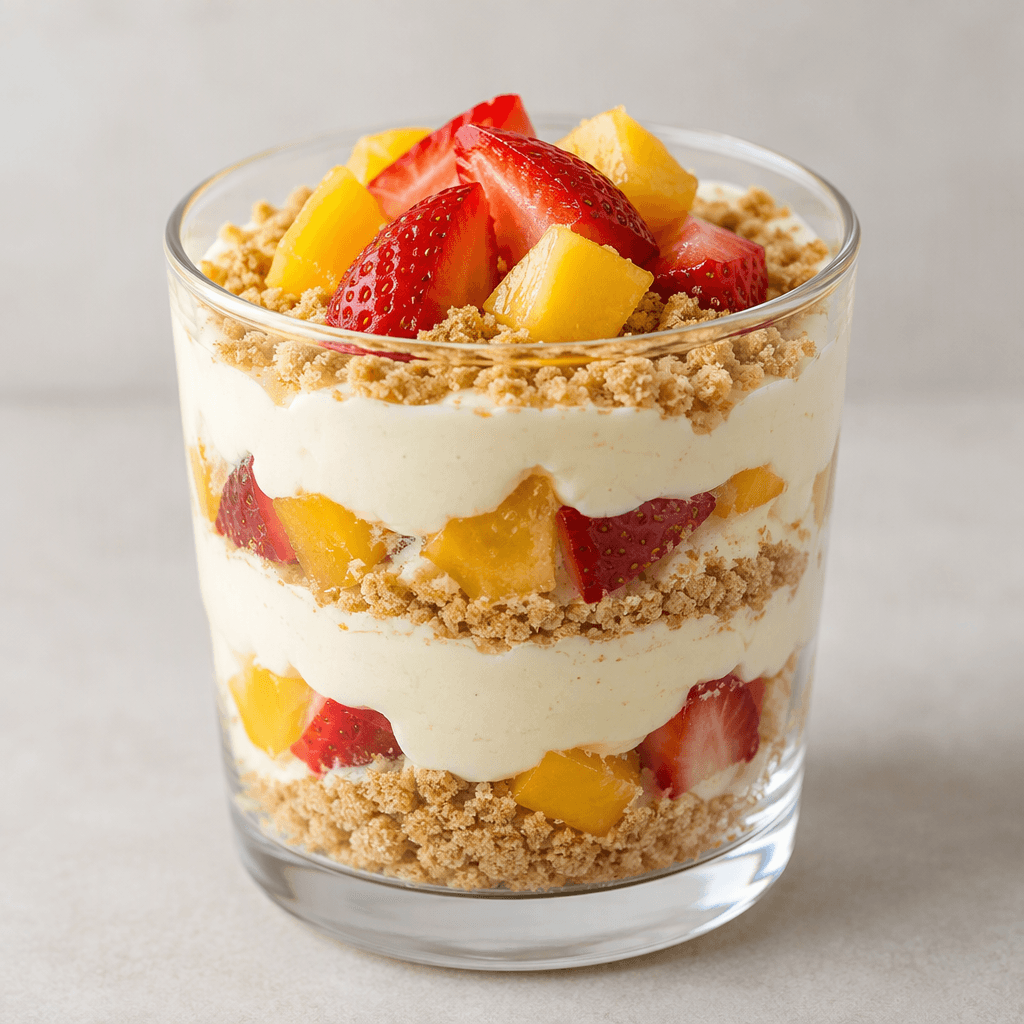
Fruit Magnolia Calories
Fresh fruit, creamy dessert, biscuit base
In season: Spring · Summer · Autumn · Winter
CALORIES · 100 G
GI
POTASSIUM · 100 G
FIBER · 100 G
Quick answer
1 cup (medium) of Fruit Magnolia (140 g) has 224 calories. That works out to 160 calories per 100 g. It contains 34.3 g of carbs, 4.3 g of protein, 7.3 g of fat and 1.8 g of fiber. Its 86.8 mg of Phosphorus covers 12% of the Daily Value. Its glycemic index is 55 (medium), so it raises blood sugar at a moderate pace.
Fruit Magnolia Nutrition Facts
Selected: 1 cup (medium) · 140 g
224
KCAL / 140G
Carbs
34.3g
· 12% DV
Protein
4.3g
· 9% DV
Fat
7.3g
· 9% DV
Fiber
1.8g
· 6% DV
DV is the share of the daily value covered, on a 2,000 kcal reference diet.
Calories come from: Carbs 62% · Protein 8% · Fat 30%
Fruit Magnolia nutrition facts table · 1 cup (medium) (140 g)
| Nutrient | Amount | % DV |
|---|---|---|
| Calories | 224 kcal | |
| Total fat | 7.3 g | 9% |
| Saturated fat | 3.78 g | 19% |
| Trans fat | 0.04 g | |
| Sodium | 66 mg | 3% |
| Total carbohydrate | 34.3 g | 12% |
| Fiber | 1.8 g | 6% |
| Protein | 4.3 g | 9% |
Calories: Calories measure energy. Average daily need is 2,000 kcal. Excess calories are stored as fat, too few cause weight loss.
Carbs: Your body's primary energy source. The brain runs exclusively on carbs. Daily need: 275g.
Protein: Essential for muscle repair and cell growth. Daily need: 50g. Keeps you full and boosts metabolism.
Fat: Needed for hormone production and vitamin absorption. Daily need: 78g. Limit saturated fats, choose unsaturated.
Fiber: Critical for digestive health and satiety. Daily need: 28g. Stabilizes blood sugar, lowers cholesterol.

Log this food in EatBetter
100,000+ people use it
- Get your daily calorie target
- Snap your meal, log it in seconds
- See every vitamin and mineral

📸 Scan the code to get the app free.

How Many Calories in 1 Cup of Fruit Magnolia?
| Serving | Amount | Calories |
|---|---|---|
| 1 cup (medium) | 140 g | 224 kcal |
| 1 cup (small) | 90 g | 144 kcal |
| 100 g | 100 g | 160 kcal |
| 1 serving (small) | 100 g | 160 kcal |
| 1 piece (medium) | 120 g | 192 kcal |
| 1 serving (large) | 160 g | 256 kcal |
| 1 piece (large) | 180 g | 288 kcal |
| 1 cup (large) | 200 g | 320 kcal |
Calculated from 160 calories per 100 g.
Frequently Asked Questions About Fruit Magnolia
What is fruit magnolia dessert?
Fruit magnolia is a chilled, layered dessert made with milk pudding, crushed biscuits and pieces of fresh fruit. It is commonly served in individual glass cups, where the pale cream and fruit layers remain visible.
How do you make fruit magnolia?
Make fruit magnolia by cooking a milk-based pudding until thick, cooling it, then layering it in cups with crushed biscuits and chopped fruit. Chill the assembled cups before serving so the layers settle and the biscuit softens slightly.
What fruit goes best in fruit magnolia?
Strawberries, bananas, peaches and berries all work well in fruit magnolia. Choose ripe but firm fruit, and drain juicy pieces before layering; add banana close to serving time because cut banana browns quickly.
What biscuits are used in fruit magnolia?
Plain tea biscuits or graham-style crackers are commonly used in fruit magnolia because they crush easily and complement the creamy pudding. Vanilla wafers also work, giving the dessert a sweeter, more pronounced biscuit layer.
Why is my fruit magnolia pudding runny?
Fruit magnolia usually turns runny when the pudding was not cooked long enough to thicken or watery fruit releases liquid into the cups. Cook the pudding while stirring until it clearly coats a spoon, then cool it fully before assembling.
How long does fruit magnolia last in the fridge?
Fruit magnolia keeps for about two days when covered and refrigerated. Fresh fruit gradually softens and releases moisture, so the cups taste and look best soon after assembly; do not leave them sitting at room temperature for extended periods.
Can you make fruit magnolia the night before?
Yes, fruit magnolia can be assembled the night before and chilled, which gives the layers time to settle. For fresher-looking fruit, save the topping until just before serving, especially if it includes banana or soft berries.
Can fruit magnolia be frozen?
Fruit magnolia can be frozen, but it usually loses its smooth texture after thawing: the pudding may separate, the biscuits soften and the fruit can become watery. Refrigerating it is a better way to store prepared cups.
Where did fruit magnolia originate?
Fruit magnolia as commonly served in Turkey is a local take on layered milk pudding and biscuits, associated by name with Magnolia Bakery’s banana pudding in New York. Turkish versions often add assorted fruit and are served in glass cups.
How do you stop bananas from turning brown in fruit magnolia?
Add banana to fruit magnolia shortly before serving to limit browning from exposure to air. A little lemon juice can slow discoloration, but use only a small amount so it does not overpower the creamy pudding.
Fruit Magnolia Vitamins & Minerals
Vitamins
Vitamin C
9.8mg · 11% DV
B2
0.13mg · 10% DV
Vitamin A
77µg · 9% DV
B5
0.42mg · 8% DV
Minerals
Phosphorus
87mg · 12% DV
Calcium
91mg · 9% DV
Copper
0.07mg · 8% DV
Iodine
9.8µg · 7% DV
Potassium ⭐
196mg · 6% DV
Sodium
66mg · 3% DV
Fruit Magnolia Glycemic Index
GLYCEMIC INDEX
GLYCEMIC LOAD
Accounts for portion size — a more realistic measure than GI alone.
How to Burn Off Fruit Magnolia
To burn the 224 calories in 1 cup (medium) (140 g):
🚶
Walking (5 km/h)
🏃
Running (8 km/h)
🚴
Cycling
🏊
Swimming
Times are calculated with the MET equation for a 70 kg adult. Actual burn varies with your weight, age and pace.
What is Fruit Magnolia?
Fruit Magnolia is a Turkish-style layered dessert made with a milk pudding or soft custard, crushed biscuits and fruit. It is a popular café and home-made variation of the magnolia pudding served in Turkey, rather than a single fixed recipe; the fruit can change with the season or the cook.
Usually chilled in a clear glass, it combines smooth, creamy layers with tender fruit and a little biscuit crunch. It is often served after a meal or alongside coffee, and works well as an individual dessert. Its energy comes largely from the biscuit and sweetened cream, while the dairy contributes some protein; it provides 160 calories per 100 g. For a lighter cup, use more fruit and a thinner layer of biscuit and cream.
How Nutritious Is Fruit Magnolia?
Nutrient density
Low
How many vitamins, minerals and how much fiber this food carries per calorie. A high score means a lot of nutrition for few calories.
Satiety score
Medium
An EatBetter score computed from fiber, protein and calorie density. A high score means staying full longer on the same calories.
Both scores are calculated per 100 g and do not change with the selected portion. The satiety score is EatBetter's own calculation, not a clinical measure.
Is Fruit Magnolia Processed?
NOVA 3
Processed
1. Unprocessed
2. Minimally Processed
3. Processed
4. Ultra-Processed
NOVA classifies foods into 4 groups by industrial processing. NOVA 1 (unprocessed) is the healthiest.
Does Fruit Magnolia Contain Allergens?
Contains these allergens:
Which Diets Is Fruit Magnolia Good For?
Vegan
— Not suitable
Vegetarian
— Not suitable
Gluten-Free
— Not suitable
Dairy-Free
— Not suitable
Mediterranean
✓ Suitable
Paleo
— Not suitable
Whole30
— Not suitable
DASH
— Not suitable
Keto
— Not suitable
Low FODMAP
— Not suitable
Fruit Magnolia Fat Profile
SATURATED
3.78g
MONOUNSATURATED
1.82g
POLYUNSATURATED
0.21g
Omega 6:3 ratio 5:1
Above the ideal 4:1 (5:1).
Compare Fruit Magnolia
Foods Similar to Fruit Magnolia
Have another question about Fruit Magnolia?
Ask the AI nutrition coach — calories, portions, alternatives and more, answered in seconds in the app.

Scan calories with your camera
Instant AI nutrition analysis

Nutrition data compiled from USDA FoodData Central and scientific sources.